
@Lorenzo Protocol #lorenzoProtocol $BANK


Have you ever wondered what happens when a protocol decides to marry Bitcoin’s value with DeFi’s composability — and what that marriage could mean for everyday yield and liquidity? anya has followed Lorenzo Protocol closely, and what reads like a technical footnote on paper becomes, in practice, a catalogue of subtle benefits that show up only when markets wobble and opportunities open. Lorenzo’s architecture is built to tokenize staking mechanisms and create liquid, tradable derivatives of staked BTC — a design choice that changes how liquidity flows through the crypto economy. 
At its core, the first practical benefit is liquidity without sacrifice. Owners of large, illiquid BTC positions historically faced a choice: keep BTC parked to capture long-term upside, or free it up to chase yield. Lorenzo’s Liquid Principal Tokens (LPTs) and Yield Accruing Tokens (YATs) promise a middle road — letting holders extract tradable exposure while their underlying assets still benefit from staking and protocol-level yields. That composability means those assets can plug into DEX liquidity pools, lend/borrow markets, or automated strategies across chains, increasing usable capital in ways that simple HODLing cannot.
A second, quieter advantage is macro-resilience: when BTC or ETH moves violently, liquid derivatives smooth user behavior. Instead of panic-selling BTC on spot markets, institutional or retail holders can rebalance by trading LPTs or YATs — instruments that react differently to on-chain yields and market price action. This dampener effect can reduce forced selling pressure on base coins and create alternative liquidity corridors that help stabilize plasma-like layers and sidechains that rely on BTC/ETH collateral dynamics. In other words, tokenized staking can act like shock absorbers in turbulent markets. 
Third, Lorenzo’s move into yield-tailored stable products — notably the USD1 Plus OTF — reframes how stablecoins compete for real-world adoption. By blending RWA yield, DeFi returns, liquidity positions, and quant strategies into one on-chain product, Lorenzo is targeting enterprises and treasuries that want stable returns without juggling multiple counterparties. That productization of “stable yield” is a growth vector for merchants and cross-border B2B use cases, which also ties into recent strategic partnerships the project announced to scale payment rails. These partnerships are not just PR: they’re attempts to anchor stable utility to on-chain primitives.
Fourth, developers gain a playground. Lorenzo’s cross-chain design and appchain ambitions let builders create bespoke dApps that leverage tokenized BTC liquidity — lending markets that accept LPTs as collateral, yield aggregators that fold in YAT streams, or prediction markets settled in tokenized-stake instruments. This modularity nudges capital toward innovations that previously required arcane custody or wrapped-asset engineering, lowering integration friction for teams building on Cosmos, BNB Chain, and EVM-compatible rails. The open-source repos and betanet docs suggest an emphasis on interoperability that developers will appreciate.
Fifth, the investor psychology shift matters. When a protocol offers liquid, yield-bearing alternatives to holding base coins, capital allocation decisions change. Traders might rotate between BANK, BTC derivatives, and stable yield products depending on macro signals — meaning Lorenzo can benefit from fee generation across AMMs, staking, and structured products. Market rates across BTC, ETH, and major stablecoins therefore influence demand for Lorenzo’s tokens: when BTC dominance spikes, tokenized-BTC instruments attract attention; when stable yields tighten, USD1-style products gain traction. Monitoring cross-market rate correlations becomes crucial for anyone using these instruments. 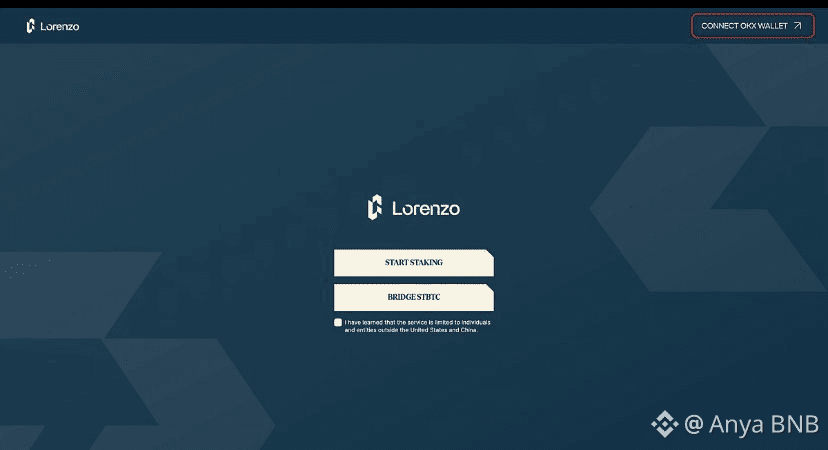
Sixth, risk layering becomes more expressive. Rather than a binary “stake or sell” risk profile, users can choose YATs for yield-focused exposure or LPTs for liquidity-first strategies. Protocol-level insurance, multi-sig custody for staking, and diversification across on-chain yield engines can be composed into user strategies — effectively turning retail portfolios into mini institutional stacks without intermediaries. That granularity opens new risk budgeting strategies that weren’t broadly accessible before tokenized staking took hold.
Finally, the headline utility — governance and ecosystem growth — completes the picture. BANK token holders gain voting power to steer product launches, partnerships, and emission schedules, aligning incentives between users, builders, and backers. Combined with active listings, analytics on liquidity, and growing market interest reflected in price feeds and market-cap metrics, Lorenzo’s utility story is not just theoretical: it’s playing out across launchpads, DEX liquidity events, and strategic partnerships that push the protocol from experiment toward usable infrastructure. For anyone tracking where DeFi goes next, tokenized staking and stable-yield composability deserve a front-row seat.
