

 Unseen by most users, the difference between a pleasant social tap and a frustrating confirmation screen is entirely technical — and Kite built its stack so that micro-actions feel instant and nearly free. At the core is a separation of concerns: lightweight event recording for every social interaction, and periodic settlement for the small-value transfers those events imply. That means a like, a tip, or a task completion becomes an auditable on-chain receipt without forcing every tiny action through slow, expensive finality. The Agent Passport, verifiable credentials, and native support for stablecoins let the network issue cryptographic receipts and route conditional payments while pushing gas-heavy settlement into aggregated batches — giving users the illusion that the blockchain simply “keeps up.”
The platform’s identity-first model is emotional as well as technical: agents (bots, services, or user proxies) are given cryptographic passports that encode what they are allowed to do, how much they can spend, and which services they may touch. That passport is not just a static ID; it is a capability container that enforces spending limits, selective disclosure and service-level guarantees at protocol level. When an agent performs an action, Kite mints a signed, on-chain receipt tied to the passport — a provable event that frees interfaces from asking for repeated consent or expensive re-auth steps, and reduces friction for people who just want to get something done. The design flips the familiar mental load: users trust their agent once and keep playing, rather than being interrupted by fees and confirmations every few seconds.
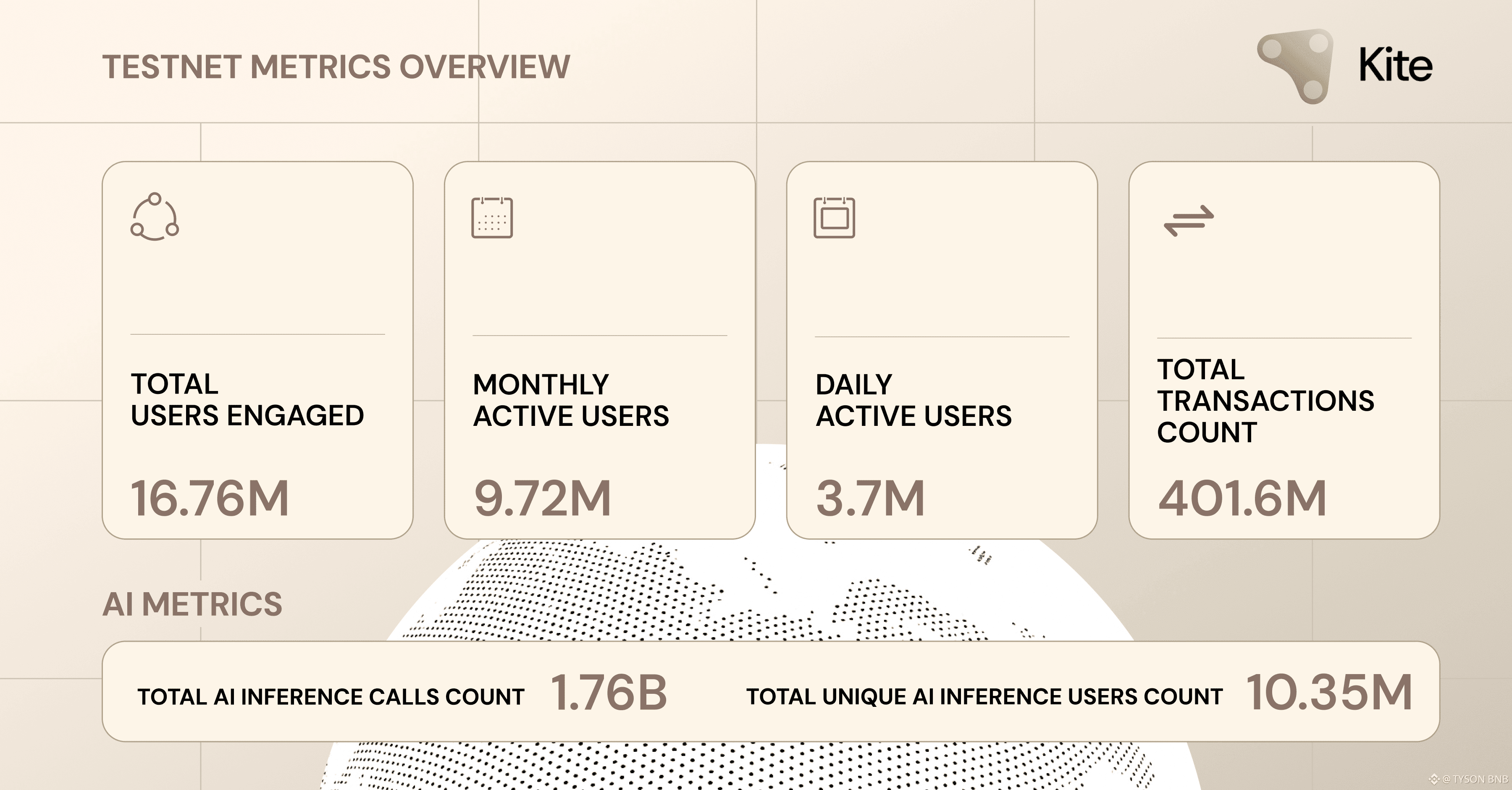
Underneath that identity layer sits an execution fabric optimized for tiny, high-volume messages. Kite’s documentation and network metrics highlight near-zero gas fees and sub-second blocks on testnets, which is possible because the chain treats most social interactions as attestations and uses specialized modules to batch final settlement and stablecoin movement. In practice this means the chain accepts millions of signed receipts, stores them immutably, and then reconciles value transfers on consolidated settlement lanes — native stablecoin rails and x402-compatible intent messages let those consolidated settlements be fast, auditable, and cost-efficient. By moving expensive operations off the hot path, Kite turns many user actions into cheap, verifiable events rather than full-cost token transfers.
Kite also leans on modern payment standards and partner integrations to keep unit costs low. The project’s native support for the x402 Agent Payment Standard — and announced integrations backed by major players — create standardized, machine-readable payment intents that agents can use to negotiate, escrow, and settle without bespoke glue code. That reduces integration friction for third-party services, and because the intents carry cryptographic conditions (who may claim funds, under which SLA, and with which proofs), the system can safely hold funds in protocol lanes and release them only when on-chain receipts validate the SLA. The result is a network that supports micro-payments at scale without relying on centralized custodians to sit between payer and payee.
Resilience and privacy are baked into the same architecture that delivers speed. Kite’s DID/VC model and selective disclosure let an agent prove capability or reputation without revealing unnecessary personal data; this reduces the need for repeated KYC hops that would otherwise add cost and latency. At the same time, the protocol’s receipts and proof logs act as auditable anchors: any disputed delivery can be resolved by inspecting proofs anchored to an immutable ledger, lowering counterparty risk and minimizing expensive off-chain dispute cycles. Those design choices let marketplaces, shops, and micro-services accept agent payments with far less overhead than legacy payment rails.
Finally, the human payoff is immediate and practical: a social app where small actions are rewarded or monetized without users feeling nickel-and-dimed builds habit and trust. Kite’s approach—agent passports, event receipts, batched settlements, x402 intent rails, and native stablecoin plumbing—creates a predictable, low-friction substrate for high-frequency social activity. Builders get an SDK and templates so they can register agents, set spending caps and SLAs, and publish services into an Agent Store; end users get fast interactions and predictable costs; and services gain a reliable settlement backbone that scales. The architecture is intentionally pragmatic: minimize per-action cost, preserve security and auditability, and make high-volume social economics feel as natural as tapping a screen.

