

I came to know about @Yield Guild Games in 2021. People said you could make money by playing games.. For people who didn’t have work, it felt like a new way to survive.YGG’s early promise was simple: if a game lets players earn crypto, then wouldn’t it make sense to help more people get into those games? That straightforward insight framed as scholarships for NFTs opened doors for thousands of players who lacked capital but had time and grit. Looking back now, that was only the beginning. What YGG is becoming feels like a completely different chapter. 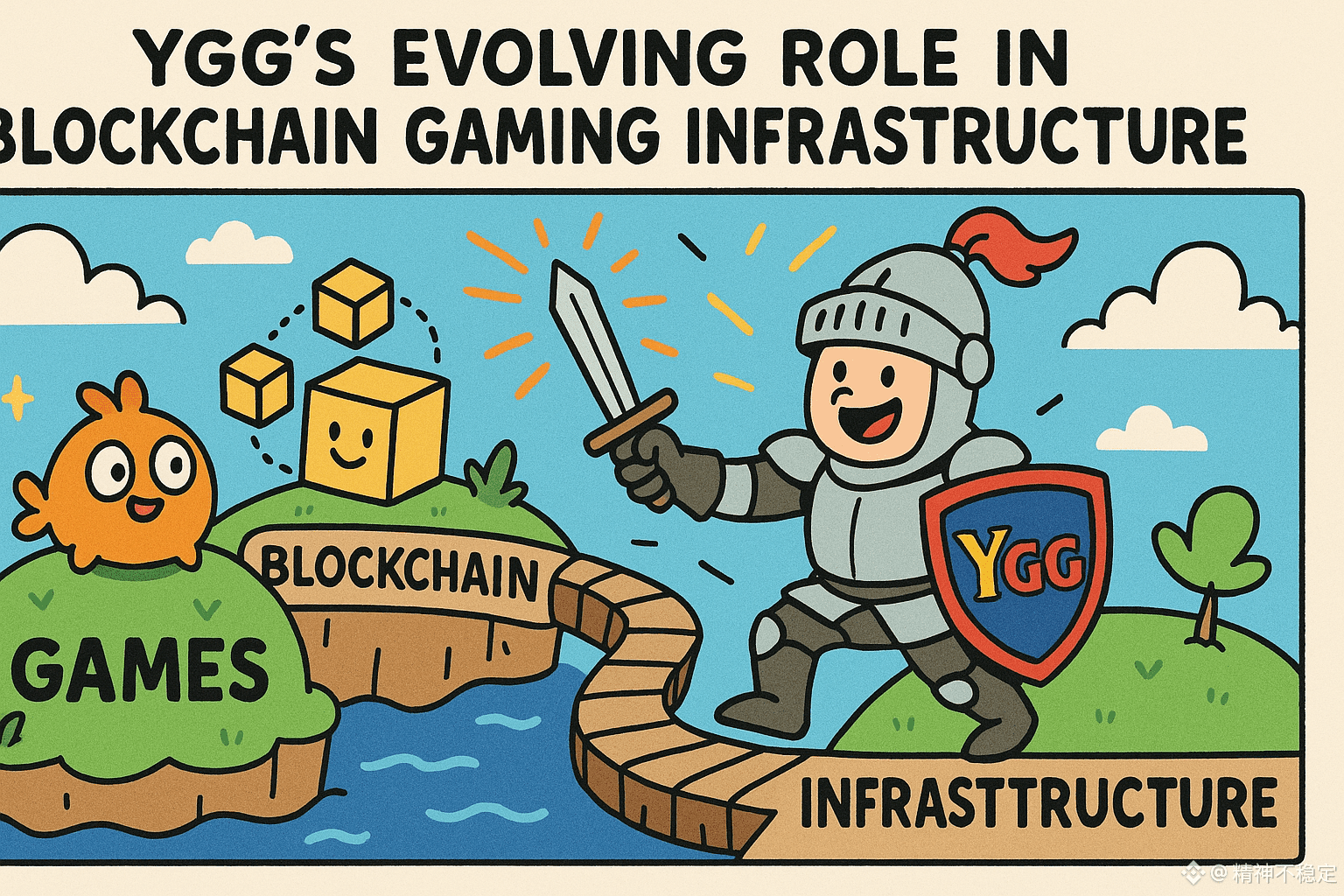
In 2025, you can’t talk about YGG without noticing how much the narrative has shifted. The old image of a guild lending assets to “scholars” has grown into something more structural, more integrated into the broader blockchain gaming ecosystem. Instead of just facilitating access to earnings opportunities, YGG is redefining how value flows—infrastructure, publishing, reputation systems, and communal coordination are becoming core parts of its identity.
So why is this happening?
Because blockchain gaming isn’t the same as it was when play-to-earn first started it has changed a lot.The headline-driven hype is lower right now, and more teams are focused on practical value and sustainability. That’s why infrastructure builders—projects creating tools others rely on—look stronger than the rest YGG is trying to do just that: move beyond opportunistic earning mechanics toward foundational pieces of blockchain gaming’s connective tissue.
At the heart of this evolution is a deeper embrace of decentralized governance and community ownership. YGG has long been a DAO in name, but its practical role in decision-making and asset allocation was still growing. Today, the native YGG token isn’t just a governance symbol; it’s an active coordination layer.
Token holders can influence the plan, support expansion, and connect incentives across games and guild work. That kind of setup matters—and it’s tough to replicate. .
One of the most tangible examples of what’s changing is YGG Play, a publishing arm that barely existed a couple of years ago and now feels central to the guild’s roadmap. The approach is no longer just “help players earn.” It’s “help developers launch and sustain games that fit into a larger Web3 ecosystem.” YGG Play isn’t just putting its name on projects. It is providing growth support, player acquisition frameworks, and even revenue-sharing models that are enforceable via smart contracts. That’s a big step toward operational maturity.
There’s something almost poetic about this transition. A guild that once aggregated idle assets and loaned them out is now in the business of building.The first game under this publishing wing is LOL Land. People are noticing it because the game is fun and easy to play, and the system behind it is made to work in the long run with help from the community—not just quick token hype. It doesn’t feel like the early Web3 boom-and-crash games.
But beyond publishing, YGG is also investing in systems that help guilds and players coordinate onchain. The idea of Onchain Guilds—modular tools for treasuries, membership badges, governance dashboards, even “soulbound” reputation tokens—points to a future where identity and contribution are verifiable and portable across games. That may not sound flashy, but it’s one of those subtle innovations that could matter deeply if blockchain games become more interconnected over time. It’s the difference between being a player in many isolated economies and part of a cohesive digital social structure.
There’s also a financial dimension that illustrates maturity. YGG isn’t just holding assets; they have begun active capital deployment, including allocating tens of millions of tokens into ecosystem pools designed to generate yield and support long-term objectives. That’s a more sophisticated treasury strategy than simply buying NFTs and hoping they appreciate—it’s about deliberate, mission-aligned stewardship.
But with all growth comes real risk.
When the crypto market is unstable, projects feel it fast. Token price swings, security issues, and changing investor interest can all reduce the resources and breathing room YGG needs to execute its vision. Some argue that blockchain gaming still hasn’t found its “killer app” that rivals mainstream titles in player numbers. Others quietly question whether governance-heavy DAOs can react quickly enough in a fast-moving environment. These aren’t abstract concerns—they’re practical headwinds that YGG and others must navigate.
What’s striking to me, though, is how YGG seems to be learning from its own history. There’s an acknowledgment—implicit or explicit—that community systems built purely on earning potential aren’t enough. Instead, frameworks that reward participation, creative contribution, sustained engagement, and shared ownership may be more resilient.
The change might look minor, but it’s important. It suggests the organization is responding to feedback and market signals, not just doing what used to work.
It also points to a wider shift in blockchain gaming—guilds are no longer “extra”; they’re core.. They are infrastructure nodes in a decentralized network of players, developers, and economies. YGG’s transformation from a facilitator of entry into an architect of systems supporting that entry feels emblematic of the sector’s broader maturation.
In the end, watching YGG now feels less like following a single project and more like tracking an experiment in digital social coordination. Whether it ultimately flourishes or stumbles, it’s testing ideas about ownership, value creation, and collective participation that matter beyond any one token or game. For an industry still finding its footing, there’s a rare value in that.
@Yield Guild Games #YGGPlay $YGG
