
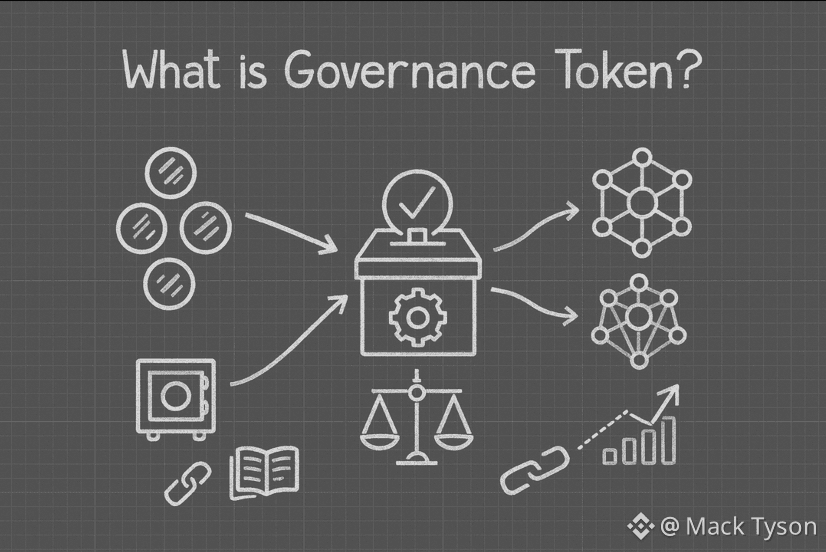
As decentralised finance matures, tokens are no longer just tools for speculation—they are becoming coordination mechanisms that align users, builders, and liquidity around long-term growth. The @Lorenzo Protocol (BANK) token is designed precisely with this philosophy in mind. Its governance structure, incentive alignment, and veBANK system together form a framework that rewards commitment over short-term behavior.
Governance Model: From Ownership to Participation
The #lorenzoprotocol (BANK) token functions as the backbone of protocol governance. Rather than concentrating decision-making power in a small group, governance is distributed among token holders who actively participate in shaping the protocol’s direction.
Through on-chain proposals and voting, #lorenzoprotocol (BANK) holders can influence parameters such as yield strategy deployment, treasury usage, and future product integrations. This model ensures that control evolves with the community, not against it.
Incentive Alignment: Rewarding Long-Term Engagement
A common problem in DeFi is misaligned incentives—users chase short-term rewards, while protocols seek sustainable growth. $BANK addresses this by tying benefits to duration and commitment.
Instead of rewarding passive holding alone, the system encourages active participation. Users who engage with governance, provide liquidity, or commit capital for longer periods are better positioned to capture protocol-generated value. This creates a natural alignment between individual incentives and network health.
veBANK: The Commitment Layer
The veBANK system (vote-escrowed BANK) is central to this alignment. By locking BANK tokens for a chosen time period, users receive veBANK, which grants:
Enhanced voting power in governance decisions
Boosted incentives across protocol products
Priority influence over future emissions and strategy focus
The longer the lock duration, the greater the influence—shifting power toward participants who demonstrate long-term belief in the ecosystem rather than short-term speculation.
Why veBANK Matters
veBANK transforms governance from a passive right into an active responsibility. It reduces circulating supply pressure while strengthening decision-making quality. More importantly, it creates a feedback loop: those most invested in the protocol’s future are the ones shaping it.
Conclusion
The BANK token is not just a governance asset—it is an economic coordination tool. Through its governance model, incentive alignment, and veBANK system, $BANK introduces a more disciplined, sustainable approach to decentralized protocol growth. For Binance users seeking to understand the next evolution of DeFi governance, BANK offers a clear and compelling case study.

