
The cryptocurrency landscape continues to evolve with innovative tokenomics models that aim to balance early supporter rewards with long-term sustainability. @KITE AI two-phase token design represents a strategic approach to token distribution that recognizes the critical importance of timing in building a successful blockchain ecosystem.
At its core KITE's model divides the token lifecycle into two distinct phases. The first phase focuses on rewarding early adopters and building initial momentum. During this period tokens are distributed to community members who take on the risk of supporting an unproven project. These pioneers provide essential liquidity and help establish the network effects necessary for the platform to gain traction. The early phase typically features more generous reward mechanisms to compensate participants for their faith in the project's potential.
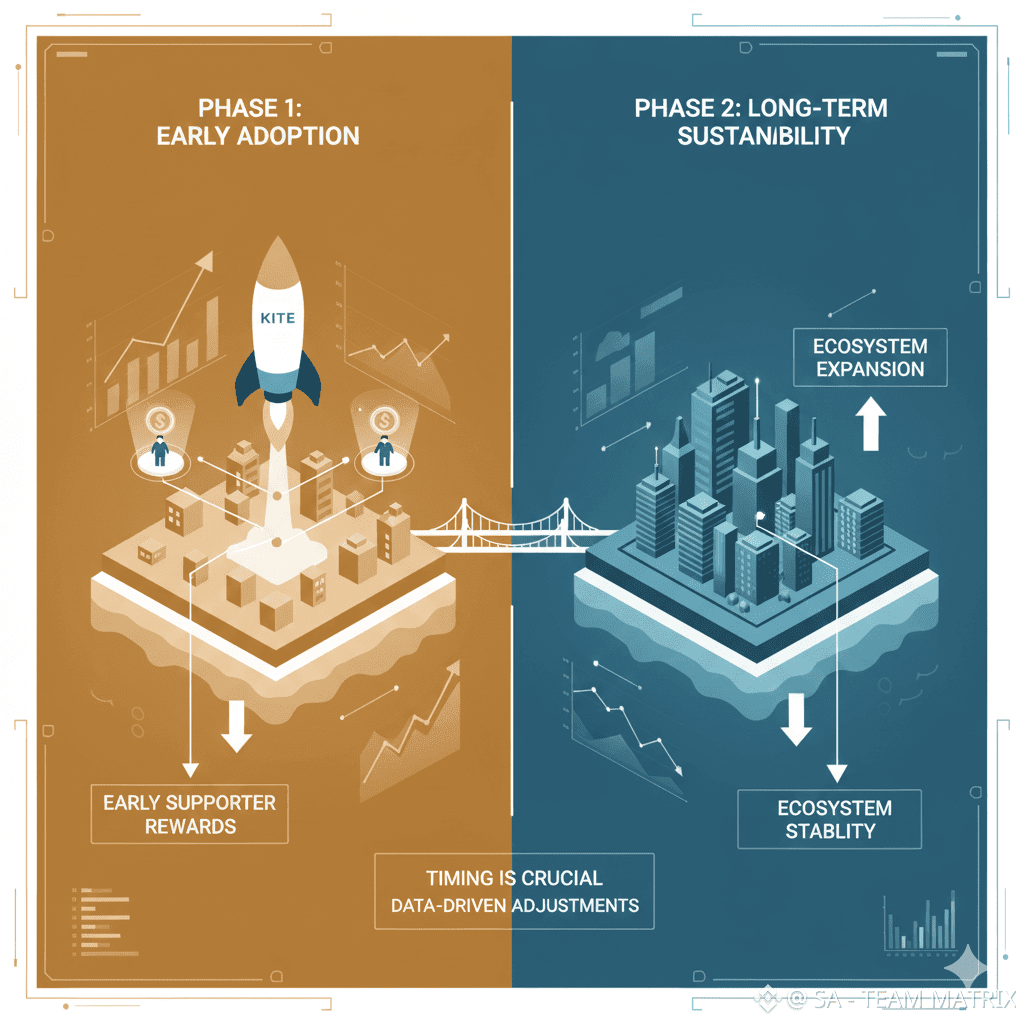
The second phase transitions to a more sustainable model designed for long-term growth. Once the network achieves critical mass the token distribution shifts to support ongoing development and ecosystem expansion. This phase emphasizes stability over rapid growth and ensures that the project can maintain momentum beyond the initial hype cycle that often characterizes new token launches.
The timing between these phases matters enormously for several reasons. Transitioning too early can alienate early supporters who expected continued high rewards for their risk-taking. These community members often become the most vocal advocates for a project and losing their enthusiasm can damage network growth. However waiting too long to shift phases creates its own problems. Extended high-reward periods can lead to unsustainable tokenomics where dilution erodes value for all holders.
KITE's approach recognizes that different stakeholders have different time horizons and risk tolerances. Early adopters seek outsized returns that justify their leap of faith into an unproven ecosystem. Later participants prioritize stability and predictable returns over explosive growth potential. By explicitly designing for both groups through phased implementation KITE aims to build a more robust and diverse community.
The two-phase design also allows the project team to gather data and adjust parameters between phases. Early phase metrics provide insights into user behavior and market dynamics that inform second-phase decisions. This learning period reduces the risk of catastrophic tokenomics failures that have plagued other projects.
Critics of two-phase designs argue they create artificial scarcity in early stages and potentially disadvantage later entrants. However defenders counter that this mirrors traditional startup investing where early investors accept higher risk for potentially higher returns. The key difference is that blockchain projects must balance these dynamics transparently and equitably.
For KITE success depends on clear communication about phase transitions and maintaining community trust throughout both periods. Token holders need confidence that the shift from phase one to phase two serves the project's long-term interests rather than benefiting only insiders or early whales.
Ultimately KITE's two-phase token design reflects a maturing understanding of crypto economics. Rather than assuming one-size-fits-all tokenomics can serve a project throughout its lifecycle this approach acknowledges that timing matters and different stages require different incentive structures. Whether this model proves superior to alternatives remains to be seen but it represents thoughtful innovation in an industry still learning how to build sustainable decentralized ecosystems.

