
In the rhythm of crypto markets, where tokens vie for attention like fireflies in the night, Lorenzo Protocol (symbol BANK) has been flickering brighter—almost silently—but undeniably drawing smart capital into its orbit. What started as a niche decentralized finance (DeFi) project has evolved into something that buzzes with strategic depth rather than meme hype, and that’s precisely why traders with experience are watching closely. This isn’t just about price moves; it’s about structural innovation in how traditional asset management is being translated into blockchain form.
Bridging Traditional Finance and On-Chain Intelligence
Lorenzo Protocol isn’t another yield farming gimmick where liquidity providers chase the highest APR and exit at whim. At its core, Lorenzo is building on-chain asset management structures that mimic institutional financial products—think tokenized versions of diversified funds with clear strategy rules, transparent allocation logic, and a foundation inspired by traditional finance, all on public blockchains.
This design is intentionally less flashy but far more substantial. The idea is to give users access to yield strategies—such as quantitative trading, vault optimization, volatility plays, and real-world asset integration—without requiring deep financial expertise or opaque custodial systems. Lorenzo’s Financial Abstraction Layer is essentially a programmable brain that routes capital into smart strategies and reports on performance on-chain.
Smart traders often dislike noise, but they love innovation that redefines fundamentals. Lorenzo checks that box.
Under the Hood: What Lorenzo Actually Does
What sets Lorenzo apart is how it tackles Bitcoin liquidity and institutional-grade products—not by reinventing the wheel, but by integrating timeless financial practice with automated blockchain systems. The protocol supports tokenized funds, such as USD1+ On-Chain Traded Funds (OTFs), which aggregate yields from diversified sources into a single tradable token you can hold or redeem.
Stablecoin holders can tap into these diversified yield engines without jumping from farm to farm. Integrations with real-world assets (RWA) and structured strategies seek to bring predictability and stability—attributes long associated with TradFi but rare in DeFi until now.
This kind of structural thinking—making yield not just another variable in a smart contract but something engineered with broader financial logics—is one reason Lorenzo is earning thoughtful attention instead of hype-driven speculation.
Strategic Recognition: Binance Listings and Ecosystem Support
One of the moments that clearly turned heads in the broader market was when Lorenzo Protocol’s BANK token was added to Binance’s ecosystem—spot markets, margin products, convertible services, and Flexible Earn options all opened up around it.
Such listings aren’t trivial. Binance’s selection indicates that a project has passed basic scrutiny and possesses the infrastructure appeal that institutional and retail audiences both can engage with. Alongside that, trading competitions and promotional windows were run to increase active participation, offering shared rewards to traders who traded BANK within designated protocol interfaces
Smart money pays attention not when the spotlight is loudest, but when infrastructure support grows quietly under the surface.
Liquifying Bitcoin Without Losing It
Bitcoin has long been king of store-of-value, but it has lacked programmable liquidity relative to blockchains designed for smart contracts. Lorenzo’s approach is to turn idle Bitcoin into liquid, yield-bearing derivatives like stBTC (staking derivatives) and wrapped tokens like enzoBTC—while maintaining a connection to Bitcoin’s original value proposition.
This isn’t a gimmick: it’s an answer to a structural inefficiency. By unlocking yield while preserving liquidity and on-chain usability, Lorenzo gives BTC holders the flexibility to earn while staying engaged with DeFi. That dynamic—earning yield and maintaining position in your principal asset—resonates with sophisticated capital that doesn’t want to sell to earn.
BANK: More Than Just a Token
The BANK token isn’t merely a speculative ticker. It functions as governance and utility backbone for everything that happens in the protocol. Token holders influence strategic directions, product additions, fee structures, and ecosystem incentives. Some users also lock BANK to receive veBANK, which amplifies governance power and incentives, aligning long-term commitment with protocol health.
Smart capital loves alignment mechanisms. When a protocol incentivizes long-term, committed participants through governance rights and value accrual structures rather than transient rewards, that’s a meaningful signal.
Volatility, Events, and Market Reaction
Though Lorenzo isn’t always in the headlines, it has had its market moments. After its Binance Futures debut, the token saw sharp swings as traders digested liquidity and profit-taking activity. That volatility wasn’t due to structural failure but to market mechanics, often tied to leveraged positions.
Meanwhile, overall trading volume and broad attention have spiked in ways that suggest real market activity—not just coordinated pumps. Protocol features like liquidity events and strategic airdrops provoked speculative volume, but still within frameworks that traders can engage with systematically.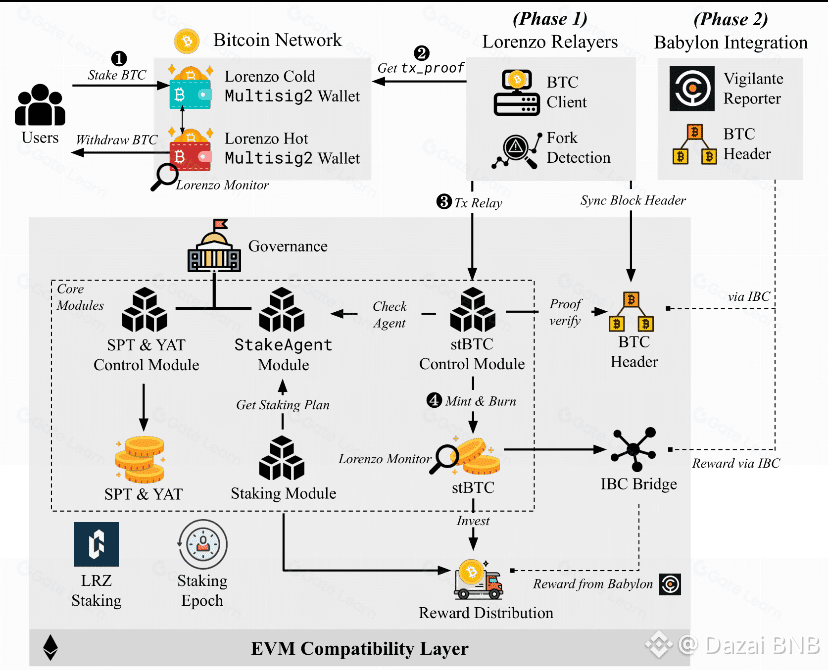
Smart Money Sees What Others Miss
What makes Lorenzo Protocol’s recent traction fascinating is where it’s gaining it from. It’s not purely retail buzz or meme amplification. It’s infrastructure, architectural depth, governance alignment, and integration with major platforms that is quietly attracting experienced capital looking beyond short-term momentum.
For those in markets who think beyond tweets and charts, Lorenzo represents a convergence of real financial mechanisms and web3 transparency. That’s a narrative slowly gathering steam—and one that seasoned traders often appreciate long before wider audiences catch on
The Quiet Revolution in On-Chain Finance
As crypto continues evolving past the early hype cycles, projects that marry depth with clarity are gaining disproportionate attention among knowledgeable participants. Lorenzo’s mission to create structured, institutionally friendly financial products on-chain is exactly the sort of fundamental innovation that could reshape how capital is managed in decentralized systems—if not today, then almost inevitably over time.
Smart money doesn’t chase noise; it builds positions where underlying systems are strengthening. Whether Lorenzo Protocol eventually becomes a central pillar of on-chain asset management or stands as a notable example of this next phase, its quiet rise is worth watching.
@Lorenzo Protocol #LorenzoProtocol $BANK


