

@Lorenzo Protocol A lot of crypto “asset management” has looked like a second job: scanning dashboards, hopping between protocols, and trying to remember why you opened a position in the first place. Lately, the tone has shifted. People still want self-custody and transparency, but they’re tired of being their own fund manager. That fatigue is one reason Lorenzo’s smart vault routing keeps popping up. It’s not a new desire; it’s the old desire for delegation, but with receipts and rules.
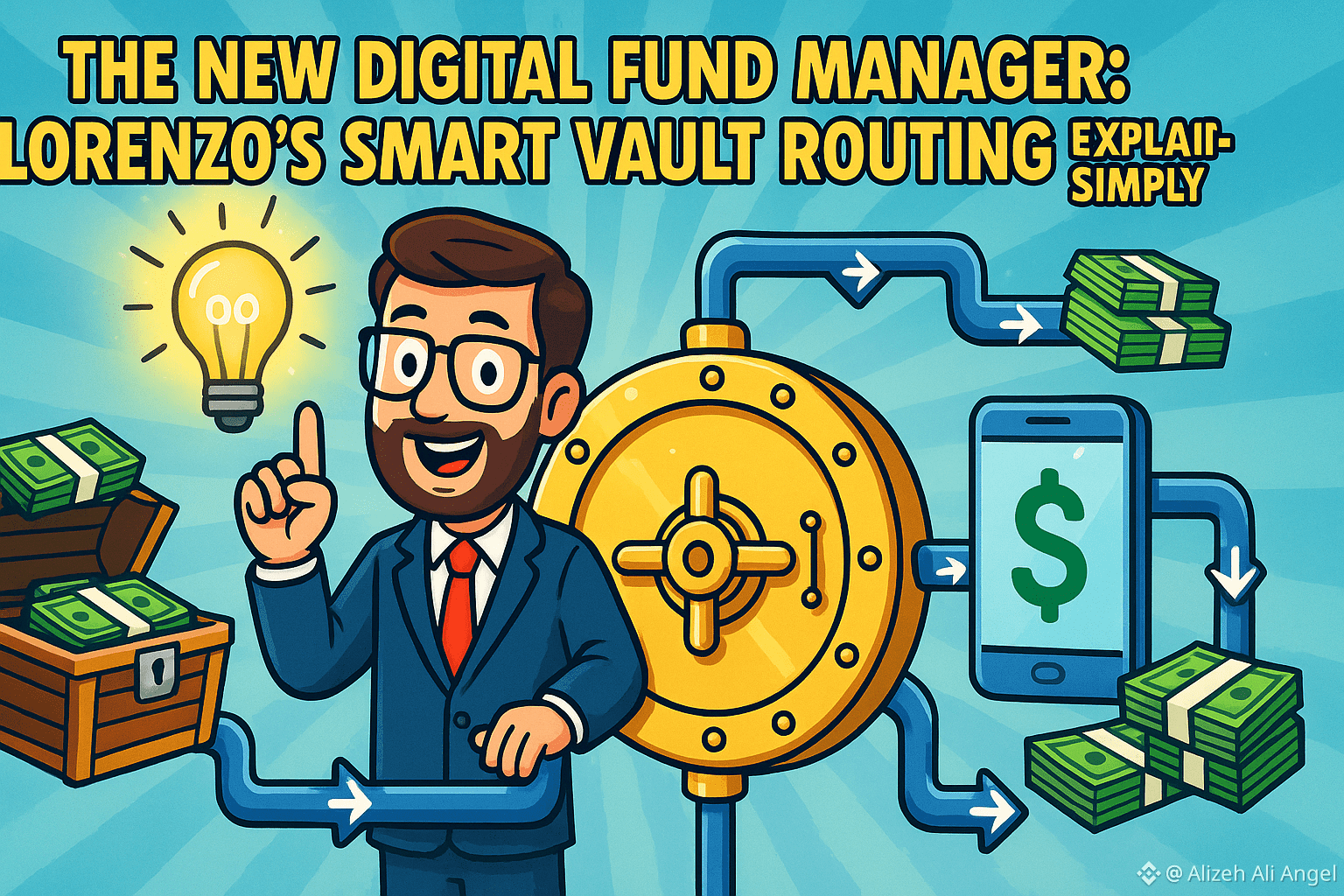
In Lorenzo’s world, a vault is a smart contract that accepts deposits and keeps score. You put assets in and receive a token that represents your share. If the vault’s underlying positions do well, that share grows in value; if they do poorly, it shrinks. The “routing” part is what happens after you deposit: instead of you manually moving funds between strategies, the system allocates capital according to rules set in advance. Binance describes Lorenzo coordinating this through a “Financial Abstraction Layer” that manages capital allocation, strategy execution, performance tracking, and yield distribution.
The mechanism is easier to picture when you separate simple vaults from composed vaults. A simple vault is one container for one strategy. The exposure is narrow, which makes it easier to reason about, even if the strategy itself is complex. A composed vault is a wrapper that can hold multiple simple vaults and rebalance between them so the overall mix stays close to defined targets and risk limits. I think of it like a playlist: a simple vault is one track on repeat; a composed vault is the queue that reshuffles songs so the mood stays roughly where you said you wanted it.
Calling this a “digital fund manager” isn’t just a metaphor, because Lorenzo isn’t limited to purely on-chain execution. Some yield generation can come from off-chain strategies run by approved managers or automated systems, with performance reported back on-chain and reflected in measures like net asset value. Withdrawals, in those cases, may involve settlement through custody partners before assets return to the vault contract. That design choice is worth sitting with, because it changes the meaning of “trustless.” You’re trusting code for accounting, and you’re trusting operators for execution where the chain can’t do the job alone.
So why is this idea trending now, rather than in the earlier era of frantic yield chasing? Part of it is scar tissue. After enough incentive programs vanished and enough “safe” protocols weren’t, the word people reach for is structure. They want to know what is supposed to happen when markets turn, not just what happens when liquidity is deep and volatility is polite. Another part is that stablecoins have become ordinary tools for payments and savings, which pushes a different question forward: what do you do with idle balances without turning every user into a trader? Lorenzo’s recent positioning has leaned into this, framing itself as the missing yield layer and arguing that many platforms need plug-and-play yield backends, not more dashboards.
It also helps that Lorenzo has products that line up with what people are talking about right now. One is Bitcoin yield. There are routes designed to let users capture staking-style rewards without staking native BTC directly, often by using wrapped or vault-based representations. Another is fund-like wrappers that feel familiar: tokenized fund structures that can package different strategies into something you can hold and trade, without micromanaging the moving parts.
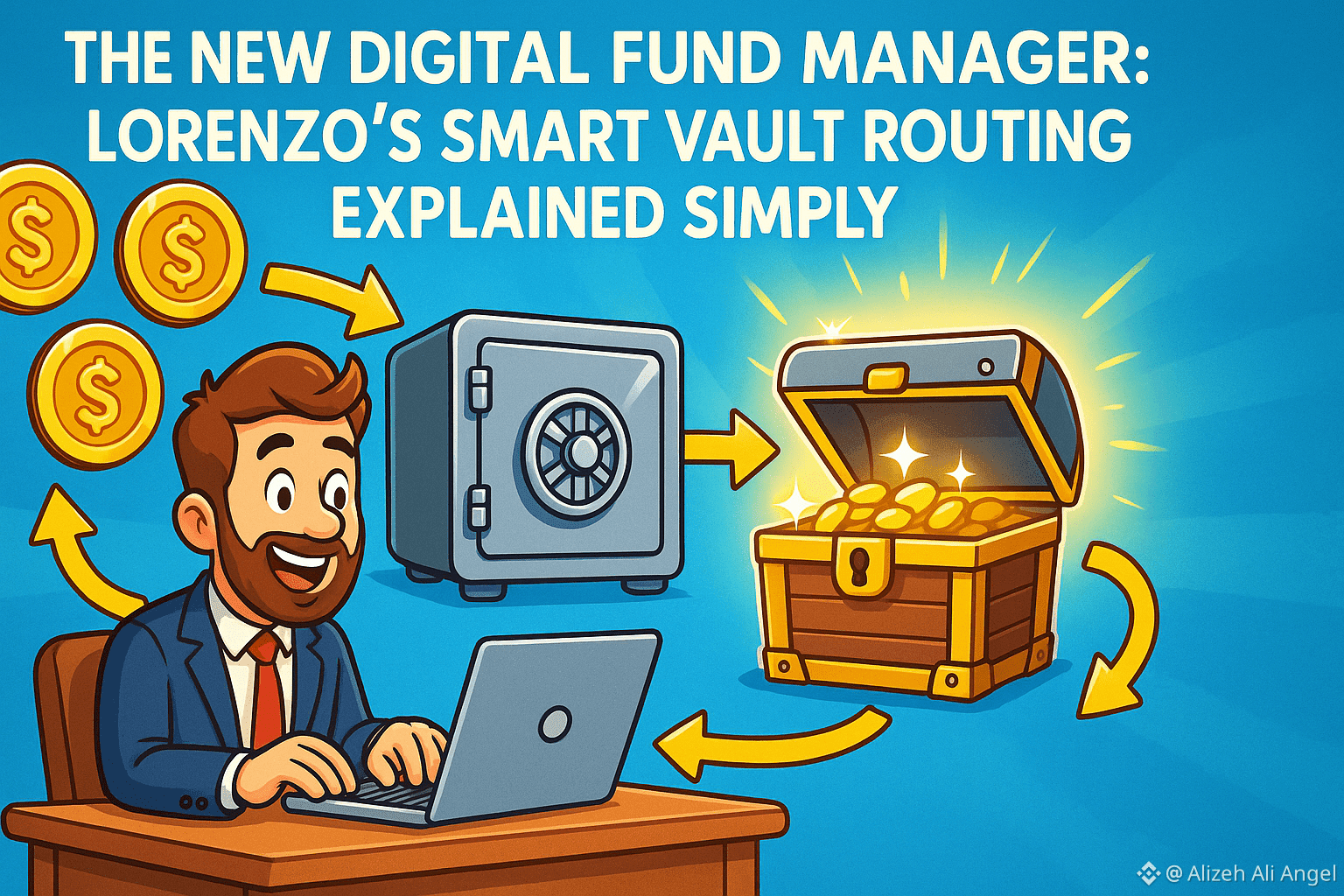
There’s real progress here, but it’s not the kind that shows up as a dramatic one-day headline. The progress is the packaging and the discipline around it: clear share tokens, defined settlement paths, periodic reporting, and governance hooks. When a system like this reaches major exchange listings and becomes something the market has to price, that’s a signal it’s moved from “concept” to infrastructure—still risky, still evolving, but no longer theoretical.
When I read about smart vault routing, I don’t hear “set it and forget it.” I hear “choose your trade-offs clearly.” Routing systems are only as good as their constraints: what strategies are allowed, what triggers rebalancing, what happens in thin liquidity, and how errors get handled. Off-chain execution adds another layer of questions, not because it’s automatically suspicious, but because it’s operationally messy. Reporting can lag. Counterparties can fail. A strategy can be profitable and still be fragile if it relies on a narrow set of venues or assumptions.
The healthiest way to think about Lorenzo’s smart vault routing is as a design attempt, not a promise. It tries to make complex strategy execution usable without making it invisible. Done well, it offers a middle ground between DIY DeFi and traditional finance black boxes: you delegate mechanics, but you still hold an on-chain representation of your share, and you can judge the system by how consistently it reports, settles, and sticks to its own rules. That’s a future many people want, but it’s also a future that demands more responsibility from builders and more curiosity from users.



