

In 2025, Web3 players treat token talk like patch notes: scan for the changes that matter, ignore the filler. @Yield Guild Games has been forced into that same discipline. The era when a guild token could lean on “future utility” is basically over. What’s interesting about YGG’s recent moves is that they don’t try to win back trust with bigger numbers. They try to make the token behave like a membership tool that shows up in practical, repeated moments of play and participation, without asking players to pretend speculation is a game mechanic.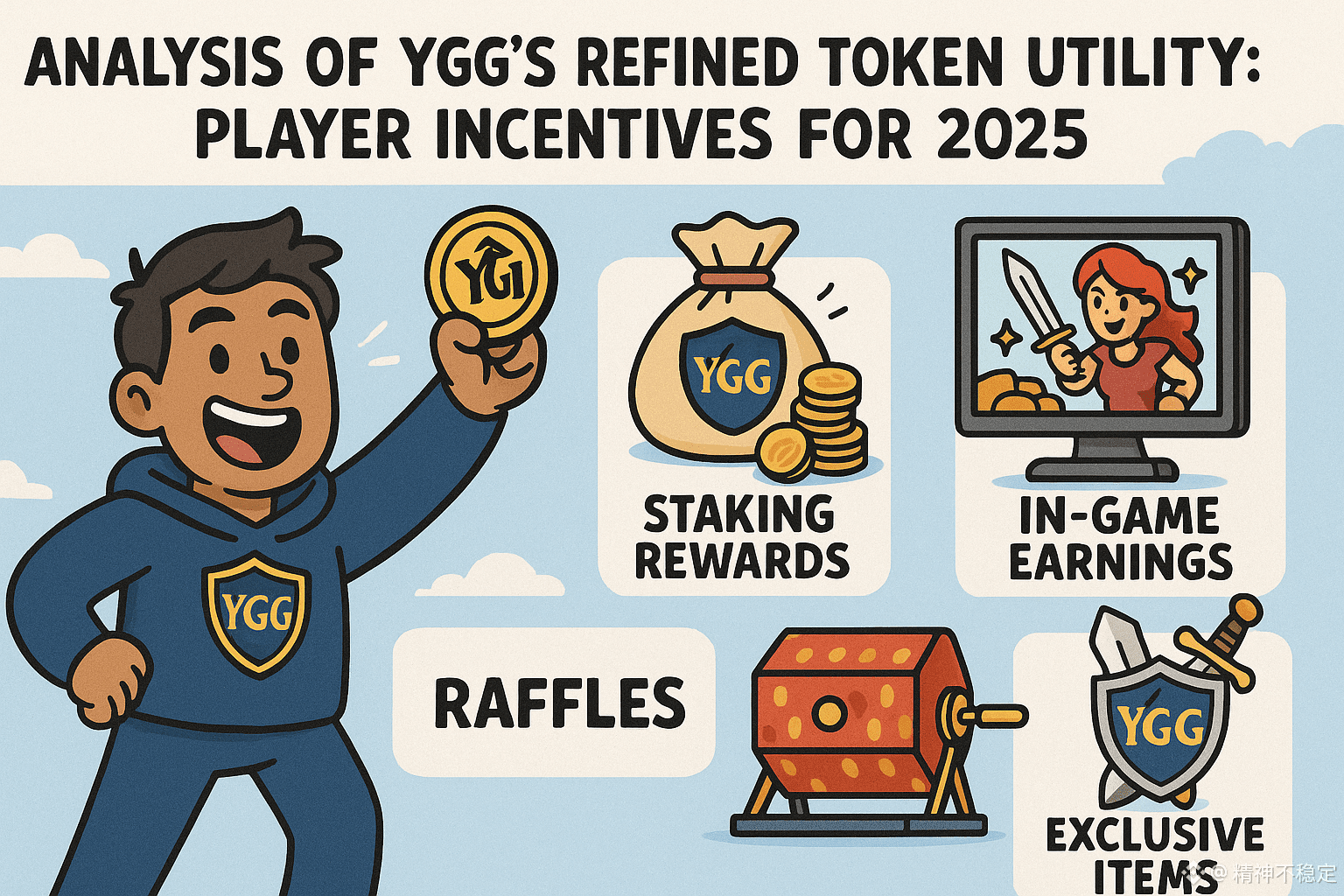
The sharpest shift is how YGG reframes incentives as something you earn through consistent contribution rather than something you receive for merely showing up. The Guild Advancement Program became the clearest expression of this logic, not because it was perfect, but because it made incentives legible. Players weren’t just “earning”; they were completing quests, joining community challenges, and stacking progress across different games and activities. When Season 10 closed as the program’s final run, YGG reported 76,841 questers and framed the wrap-up as a transition point, including a defined timeline for rewards claiming and the closing of staking tied to that program. That matters for incentives because it signals a willingness to end structures that have become stale, even if they were popular, and to admit that token utility has to evolve rather than endlessly accumulate features.
That end-of-GAP detail also hints at something bigger: YGG seems to be separating “progress” from “yield.” In early play-to-earn cycles, those two ideas were welded together, and it created obvious problems. If the best strategy is to optimize extraction, players act like extractors. YGG’s more refined approach is to reward behaviors that look like healthy community participation—learning, competing, collaborating, creating—and then attach token-related benefits to that activity. When a program can say, plainly, staking will close on a specific date and a new structure will follow, it’s a sign they’re trying to avoid zombie incentives that continue only because shutting them down is politically painful.
At the same time, YGG’s token utility is becoming more modular across chains and contexts, which is a quiet but meaningful incentive improvement. Launching YGG on Abstract in May 2025 is a good example, not because another chain listing is inherently exciting, but because the rationale focuses on onboarding friction—shared key storage, social logins, passkeys, and the general effort to make transactions feel less like a ceremony. Players don’t wake up hoping for chain abstraction; they wake up hoping the game works. When token utility rides on smoother access, the token stops feeling like a separate financial layer and starts feeling like a portable account feature that can travel with the player.
YGG also tightened the relationship between token utility and real economic activity inside its ecosystem. The August 2025 buyback, funded from LOL Land revenues, is a concrete signal that the organization wants the token to reflect operational performance, not just narrative momentum. Buybacks can be controversial, and they don’t magically create player value on their own, but as an incentive cue they tell players, “We’re measuring something real, and we’re willing to tie treasury actions to it.” That’s a different vibe from the older model where incentives mostly came from emissions and partnerships that players couldn’t verify.
On the player side, one of the more thoughtful utility experiments is YGG’s direction toward reputation and progression—specifically the idea that tokens can be locked into player identity as a measure of standing, translating tokens and achievements into something like experience points. That’s a subtle design choice with big incentive consequences. If your status in the community is built over time, and if it’s tied to verifiable participation rather than short-term farming, you get a stronger reason to stick around. You also get a reason to care about your behavior, because reputation systems punish obvious abuse more effectively than pure payout schedules ever will.
Then there’s the liquidity angle, which is easy to dismiss as “DeFi stuff,” but it’s actually part of the incentive refinement too. When YGG introduced a YGG-RON liquidity pool farming rewards program around the same time as GAP Season 9, it created a way for holders to contribute to market health—liquidity and accessibility—while earning rewards that were clearly spelled out, including a daily distribution figure shared publicly. The important part isn’t the farming itself; it’s that YGG is experimenting with incentives that support the token’s usability rather than only paying for attention.
Finally, YGG’s shift toward onchain guild structures and treasury deployment reads like an attempt to make incentives sustainable at the source. Allocating 50 million YGG tokens to an ecosystem pool under a dedicated onchain guild mandate is less about dangling rewards in front of players and more about building a financial engine that can support programs without constantly leaning on new emissions. Players may not feel that move immediately, but they’ll feel its absence if incentives keep coming from temporary marketing budgets instead of repeatable operations.
Put together, YGG’s refined token utility in 2025 looks less like a single killer feature and more like a rebalancing. The token is being pulled away from one-dimensional “earn” narratives and pushed into a set of roles: access, identity, coordination, and funding. The player incentive story becomes clearer when you view it this way. YGG isn’t trying to bribe players into believing. It’s trying to build reasons for players to return, to participate in ways that leave the ecosystem stronger, and to feel that their time produces something more durable than a temporary payout.
@Yield Guild Games #YGGPlay $YGG
