

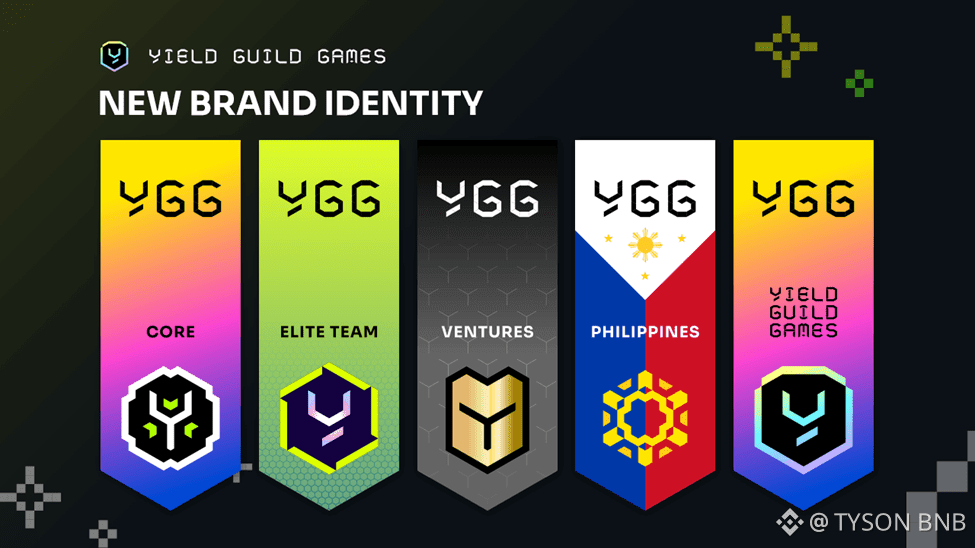
 Imagine a small, shining ribbon stitched to a player's profile — not something they can sell, trade, or flip for a quick gain, but a quiet, unmoveable mark of who they are inside a game and inside a community. That is the emotional power YGGPlay is tapping into with non-tradeable, soulbound-style badges: a simple artifact that tells other players and studios, “this person showed up, contributed, led, or learned.” Because these badges live on-chain and cannot be transferred, they promise a reputation that follows the player across seasons and titles instead of getting lost in a game’s internal database.
Which brings us to why that ribbon matters more than it sounds. Games have always been social — guilds, leaderboards, the whispered lore of who’s trustworthy in a raid — but in Web2 that social memory is fragile and local. YGGPlay’s approach treats reputation like a durable good: you earn a non-tradeable badge by doing the work (running quests, moderating, organizing tournaments, testing builds) and it becomes part of your on-chain story. That matters because matchmaking, rewards, and even hiring decisions increasingly depend on signals you can actually trust. A badge that can’t be sold is a signal that’s harder to fake, and when multiple platforms honor the same classes of badges, a woven reputation forms that’s bigger than any single game.
There’s a deeply human arc behind this technical design. Think of a new player who shows up, nervous, afraid their time will be wasted. When they earn a first non-transferable badge — a “first raid leader” or “community mentor” — it’s not a balance-sheet event; it’s a private moment of recognition that keeps them coming back. Over months that badge can level or evolve, becoming a shorthand for trust that helps guild leaders recruit, matchmakers pair teammates, and studios identify community-first players. YGG’s experiments with seasonal and dynamic badges illustrate how these credentials can be more than one-off trophies; they can be living records that reflect ongoing contribution rather than a single highlight reel.
Badges also solve a set of cold, real problems. Matchmaking algorithms need reliable inputs; marketplaces and secondary markets corrupt social signals when achievements can be bought; and community managers need ways to filter for honest collaborators. Non-tradeable badges change the math: they become verifiable credentials that unlock roles (moderator, early tester), access (private betas, launchpads), and even economic opportunities (revenue share, quest-stipends) without the rot of speculation. YGG’s own Guild Protocol even prescribes non-transferable membership badges tied to guilds, showing the deliberate move from tradable collectibles to reputation-first assets.
But the approach is not a panacea; it asks us to weigh new tradeoffs. Public reputation recorded on-chain can erode privacy and amplify mistakes; who decides what merits a badge — and what removes one — becomes a governance question; and there’s a risk of creating brittle aristocracies where a few badge-rich players gatekeep opportunities. Thoughtful design can soften these edges: dynamic badges that level up (or downgrade), contextual metadata (what the badge actually means), and governance rules that let communities appeal or evolve credential standards are ways to make soulbound systems humane rather than punitive. The conversation is already happening in guild whitepapers and industry write-ups as projects wrestle with both the technical and moral design of on-chain reputation.
Emotionally, non-tradeable badges reconceptualize value in a space too often fixated on flipping and speculation. They put agency back into the player’s hands — not in the form of a token balance to be optimized, but as a sequence of lived experiences: the first tournament you organized, the night you stuck with a new player through a brutal boss, the tutorials you wrote that saved ten newcomers from quitting. That narrative is persuasive because it maps exactly to human incentives: recognition, belonging, and the desire for a story that outlasts a single season. For games and studios that want long-term retention, community cohesion, and reputational clarity, these badges are a design lever to be pulled with intention.
What matters next is how ecosystems treat these markers. If publishers, launchpads, and studios accept shared badge standards, players will gain portable reputations that can unlock cross-title roles and better matchmaking — a true portable identity in the best sense. If, instead, badges remain siloed or get co-opted by speculative flows, the promise of soulbound credentials will dim. YGGPlay’s public experiments, guild protocol documents, and the broader industry literature on soulbound tokens suggest the space is moving toward practical, identity-first systems — but the move from experiment to durable social infrastructure will require steady design, governance, and empathy.
A non-tradeable badge isn’t flashy, but it is honest. It says: you mattered here, and that fact is visible in a way others can rely on. That simple, stubborn truth — reputations that cannot be bought and badges that cannot be moved — might be one of the quietest, most consequential innovations in the next wave of gaming. When players carry that truth across games, seasons, and guilds, the games themselves feel more human: more trustworthy, more fair, and more worth the time we choose to spend inside them.
