
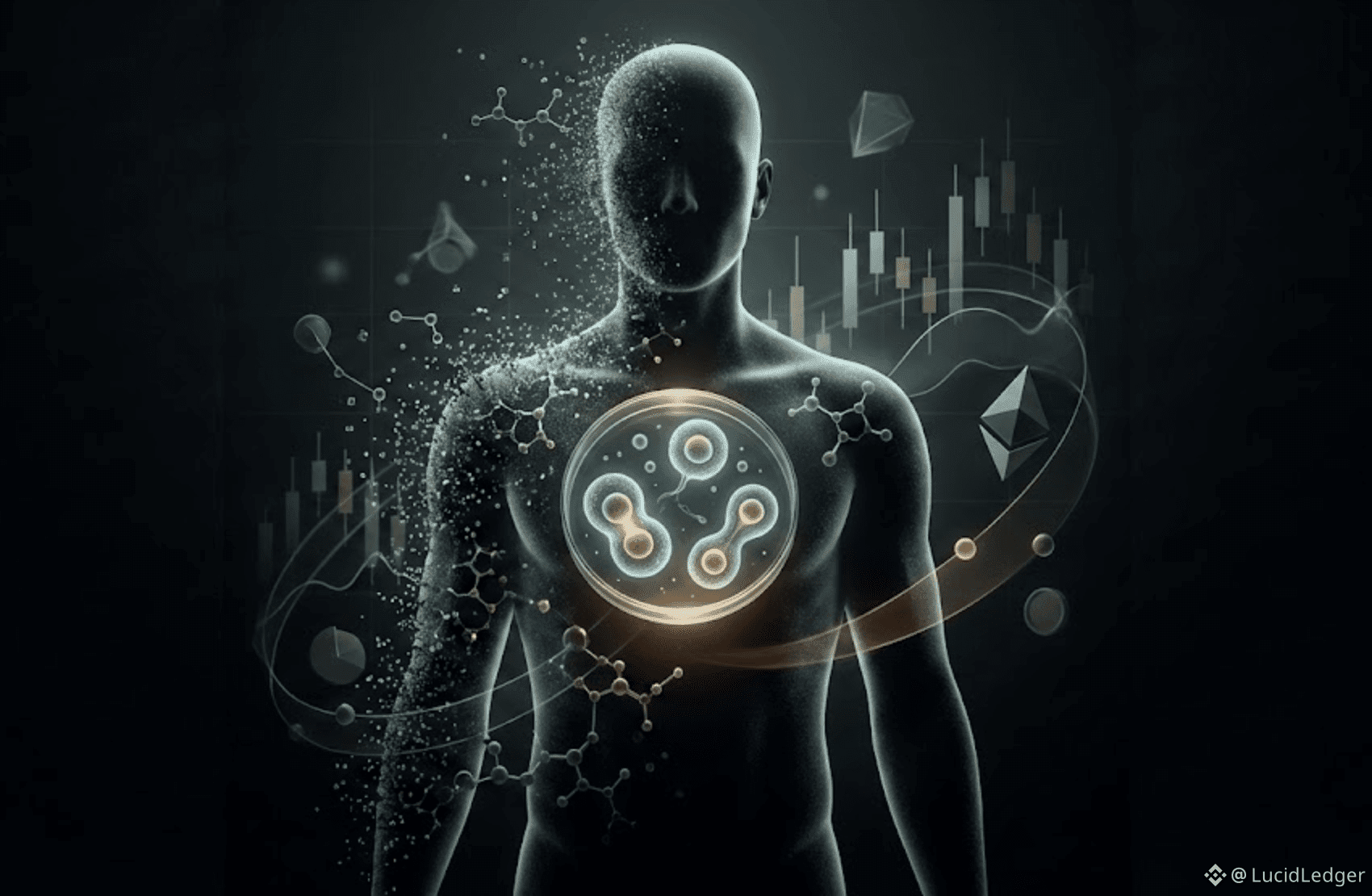
The crypto market moves in rotations. We’ve seen the DeFi summer, the NFT boom, and the explosion of AI tokens. Recently, liquidity has been trapped in the "Memecoin Supercycle" - an endless loop of trading dogs, cats, and frogs with zero utility.
But on the fringes of Solana and Base, a new narrative is quietly building. It takes the viral mechanics of memecoins and attaches them to the most fundamental human need: Survival.
Welcome to DeSci (Decentralized Science). Here is why this sector might be the "smart money" play for 2026.
The Problem: Science has a "Liquidity Crisis"
Traditional scientific research is slow. It relies on government grants, bureaucratic approval, and risk-averse institutions. It is a centralized, bottlenecked system that often ignores high-risk, high-reward ideas like longevity.
Crypto, on the other hand, is fast, liquid, and risk-tolerant. Until now, these two worlds rarely touched. But new platforms (like Pump.Science) are bridging the gap by gamifying biological research.
The Philosophy: Greed as an Evolutionary Engine
Critics might argue that mixing science with "degen" speculation is unethical. They ask: Should we really be gambling on medical research?
But this view misses a fundamental truth about human nature.
If we look closely, life itself is simply the movement of greed through space and time. From a biological perspective, "greed" is just the relentless drive for resources and survival. It is the engine of evolution. We cannot eradicate this drive; it won't disappear just because we ignore it.
So, the question isn't how to suppress greed, but where to channel it.
DeSci doesn't try to change human nature. Instead, it utilizes it. It takes the raw, explosive energy of market speculation, the same energy that pumps a meme coin to billions, and directs it toward solving problems like aging and disease. When you buy a DeSci token, you are participating in a system where financial greed fuels biological progress.
The Reality Check: Winners, Survivors, and The Graveyard
Theory is nice, but what does this actually look like on the blockchain? Let’s look at the scoreboard.
1. The "Blue Chip" Survivor: VitaDAO ($VITA)
If you want to see what stability looks like in DeSci, look at VitaDAO. Founded back in 2021 (ancient history in crypto). Backed by Pfizer Ventures (who led a $4.1M funding round and even vote on DAO proposals), they've deployed millions into 20+ real longevity projects. They build legal frameworks for IP ownership, funding labs like Korolchuk at Newcastle University (which screens compound libraries to discover novel autophagy activators that could restore cellular recycling and fight age-related decline). Results are tokenized as IP-NFTs (e.g., the Korolchuk project has its own governance tokens like VITA-FAST), and they've even spun out companies like Matrix Bio. The $VITA token is backed by a treasury of actual scientific assets and potential licensing revenue, proving DeSci can be sustainable, not just vaporware.
2. The Live Experiment: Project Rifampicin (via Pump.Science)
This is the current "gladiator" in the arena on Pump.Science. RIF represents the antibiotic Rifampicin, traditionally used against infections but now tested for anti-aging potential. It activates cellular defenses against stress and damage, with studies showing up to 60% lifespan extension in C. elegans worms. Traders watch live-streamed experiments on worms (via WormBot) and flies: if the organisms live longer and healthier, the token pumps. It represents the "Gamified Science" thesis perfectly: traders are buying the potential of the data. It hasn't "died" because the experiment is ongoing and the narrative is fresh. It is the perfect example of the "Greed Engine" at work right now.
🚨 URGENT TRADING WARNING:
Binance's system may automatically link references to the "Rifampicin" DeSci project in this text to the unrelated RSK Infrastructure Framework (RIF) token. DO NOT CONFUSE THESE TWO. The DeSci project discussed here is not currently listed on Binance. Purchasing the wrong token due to ticker confusion can lead to irreversible losses. Always verify contract addresses on-chain.
3. The Graveyard: Why Do They Die? (The Binary Risk)
We must be honest: Most science fails. In traditional pharma, when a drug fails a trial, the stock drops. In DeSci, if an experiment fails, the token can go to zero overnight.
However, the biggest killer isn't bad science, it's boredom. Science is slow; crypto is fast. Projects that couldn't keep the community engaged during the 6-12 months of silent laboratory work often see their liquidity dry up. If you enter this sector, understand that you are betting on a timeline that doesn't always match the 24/7 crypto cycle.
Why This Narrative Has Legs (The Bull Case)
For the Binance trader, DeSci offers a unique "Asymmetric Upside":
RWA Evolution: We aren't just tokenizing real estate anymore; we are tokenizing Intellectual Property (IP).
Viral Potential: Longevity and biohacking are massive trends. Combining that with crypto’s "number go up" technology is a recipe for mass adoption.
The "Feel Good" Factor: It validates the trader. You can tell yourself (and others) that you aren't just gambling. You are funding the cure for aging.
Conclusion
We are witnessing the birth of a weird but wonderful hybrid: The Investor-Scientist.
You don't need a PhD to participate. You just need a wallet and an eye for the trend. While the market is currently distracted by the latest animal coin, the smart money is starting to look at the petri dish.
Greed is a powerful force. And for the first time in history, we might just be greedy enough to cure death.


