
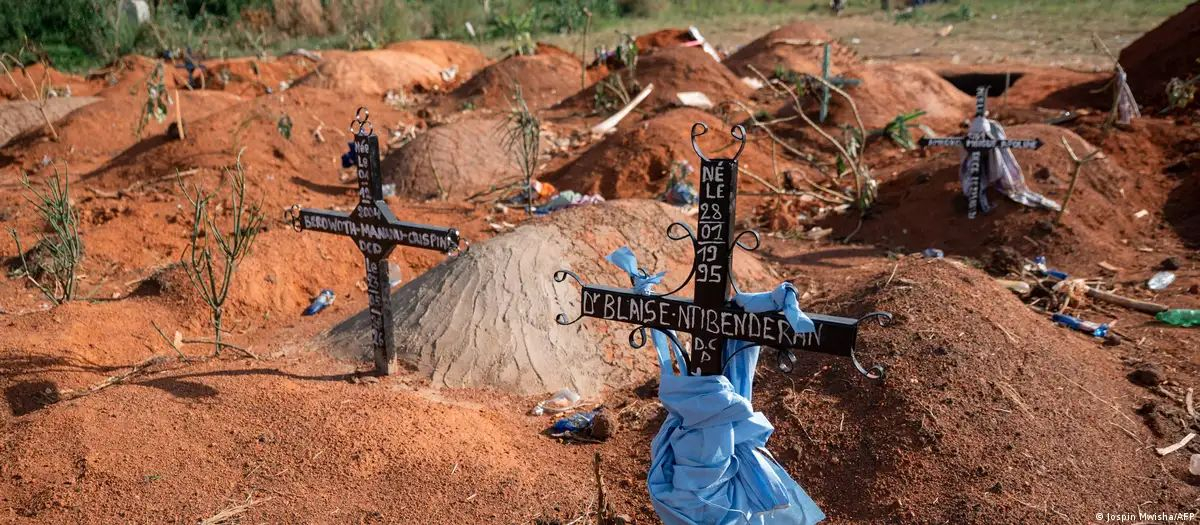
Authorities in the Democratic Republic of the Congo reported that the number of Ebola virus infections in the country has reached 1048. According to these figures, 267 patients, or roughly a quarter of the total infected, have succumbed to the disease, reports Reuters on Tuesday, June 23.
Virtually all probable cases of infection and patient deaths have been recorded in Ituri province, located in the northeast of the country and suffering from armed conflicts. Additionally, the outbreak has affected two other provinces in the DRC: North Kivu and South Kivu, which are currently battling a humanitarian crisis. Against this backdrop, authorities are struggling to implement measures to counter the spread of the virus, such as limiting contact among the infected and tracing infection chains.
At the start of the epidemic, local hospitals quickly became overwhelmed. However, with the help of the World Health Organization (WHO) and several NGOs, the occupancy rate of Ebola treatment centers in the DRC has been reduced to 80%, reports AFP.
Meanwhile, the virus has been detected in neighboring Uganda. Authorities in Kampala, however, declared in early June that the situation is 'under control'.
Rare strain of the Ebola virus
Ebola virus transmission occurs through direct contact with the bodily fluids of infected individuals, with an incubation period that can last up to three weeks. Those infected with the Ebola virus suffer from fever, muscle pain, diarrhea, and internal bleeding, resulting in organ failure.
The current outbreak is caused by a rare Bundibugyo strain, first identified in 2007, for which there is no vaccine or specific treatment. The mortality rate for this strain is around 30-50%.
This outbreak is the 17th in the DRC since the Ebola virus was first detected in 1976. Prior, the Kasai province was affected, with a normalization declared on December 1, 2025. At that time, out of 64 infected, 45 died, and 19 recovered.