
Everyone has heard about the recent popular USDD wallet activity on Binance, right? The gas consumption is less than 1u, the annual interest rate is 14%, redemptions are instant, and you can also share 300,000u. But many people are unclear about how the income is calculated!
Reward 1: If you deposit 10,000u, the daily interest will be 3.85u. If the activity lasts for 30 days, the interest income will be around 100u.
Reward 2: If the total pool deposits 10 million u, then the daily income will be (10,000u/10 million u) X 10,000u = 10u, and the total income for 30 days will be 300u.
Therefore, participating in this USDD activity is quite necessary, as the interest is much higher than that of Alipay and banks, and it is backed by Binance, so there is no need to worry about de-pegging risks. The tutorial is as follows:
1. Find the activity entrance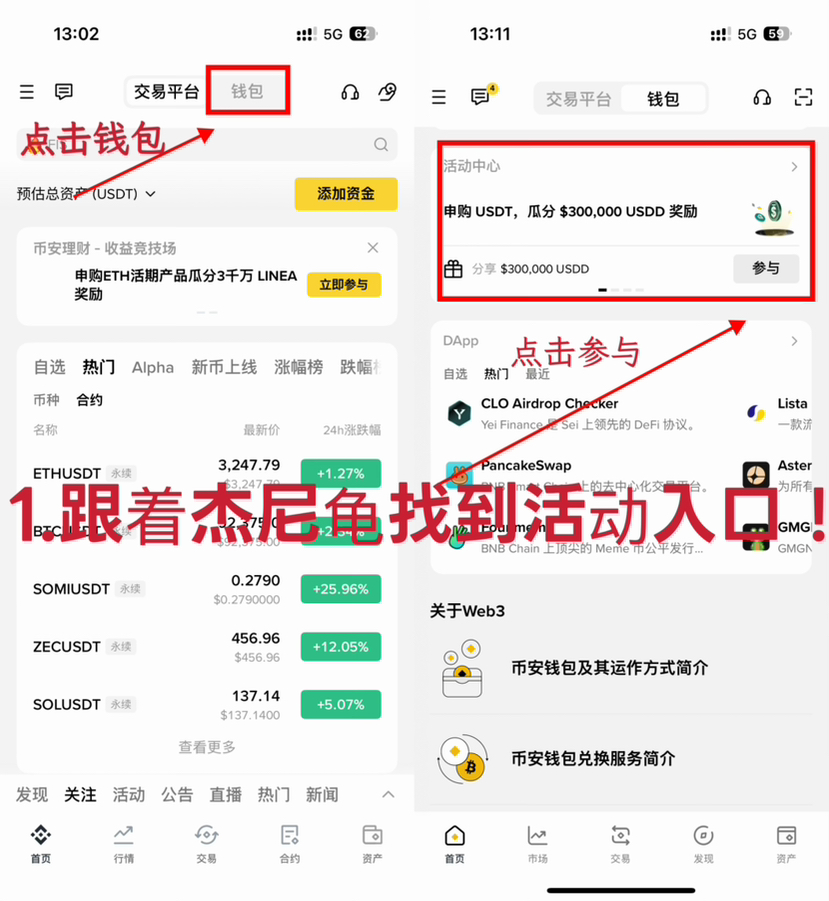
2. Stake USDT to exchange for USDD, larger funds yield higher returns!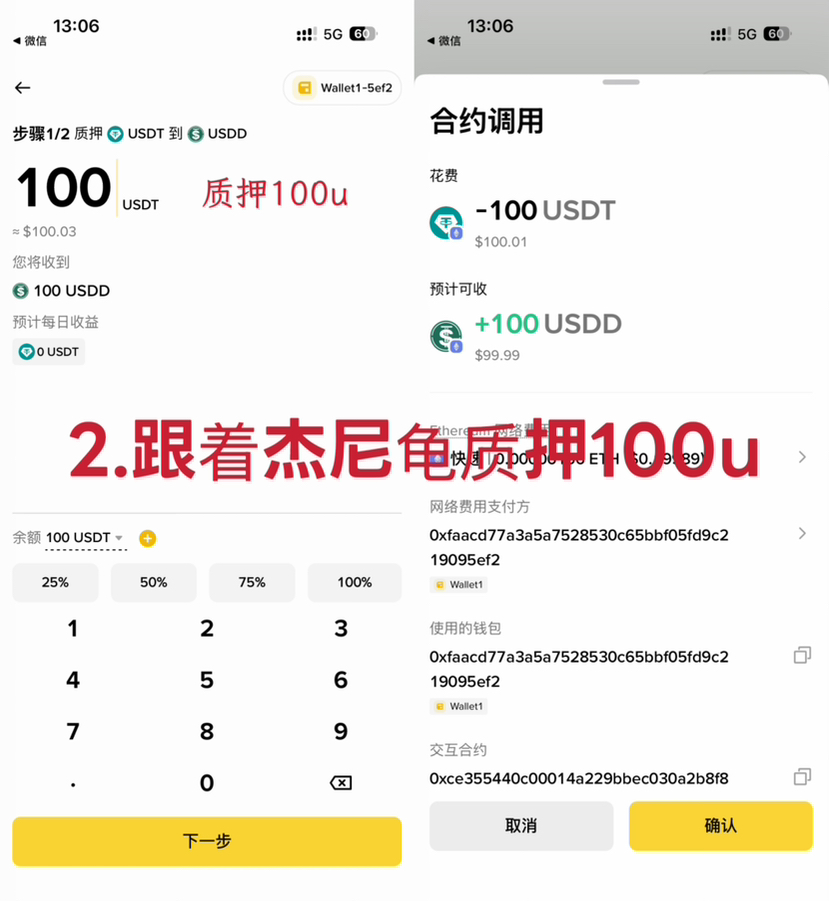
3. Rewards are updated every 24 hours, just wait for the airdrop.
Now let me introduce USDD:
If we only look at the results, USDD2.0 has outperformed most stablecoins.
In terms of safety, USDD adopts over-collateralization, and all collateral assets, treasury, and transaction data are fully public on-chain, allowing for real-time audits, and have passed a total of 5 audits by CertiK and ChainSecurity. This means risks are not 'explained', but are structurally limited.
Stability comes from mechanism design rather than human intervention. PSM provides 1:1 no slippage exchange, forming a stable arbitrage channel. After the launch of 2.0, the USDD price has long operated around 0.999, maintaining its peg even when various stablecoins significantly decoupled.
Returns are not short-term subsidies. Through sUSDD, JustLend, HTX Earn, and multi-chain DeFi collaborations, USDD provides sustainable return paths of about 10%-12% for users with different risk preferences.
More importantly, the model has been upgraded. The era of USDDOLD's algorithm has ended, and USDD2.0 is an unfrozen, unmodifiable, fully decentralized stablecoin. Smart Allocator has generated over $7.2 million in profit for the protocol, and the system has begun self-sustaining.
The conclusion is very clear:
USDD does not pursue the fastest growth, but aims to be a stablecoin that can withstand cycles.#USDD以稳见信 @USDD - Decentralized USD