
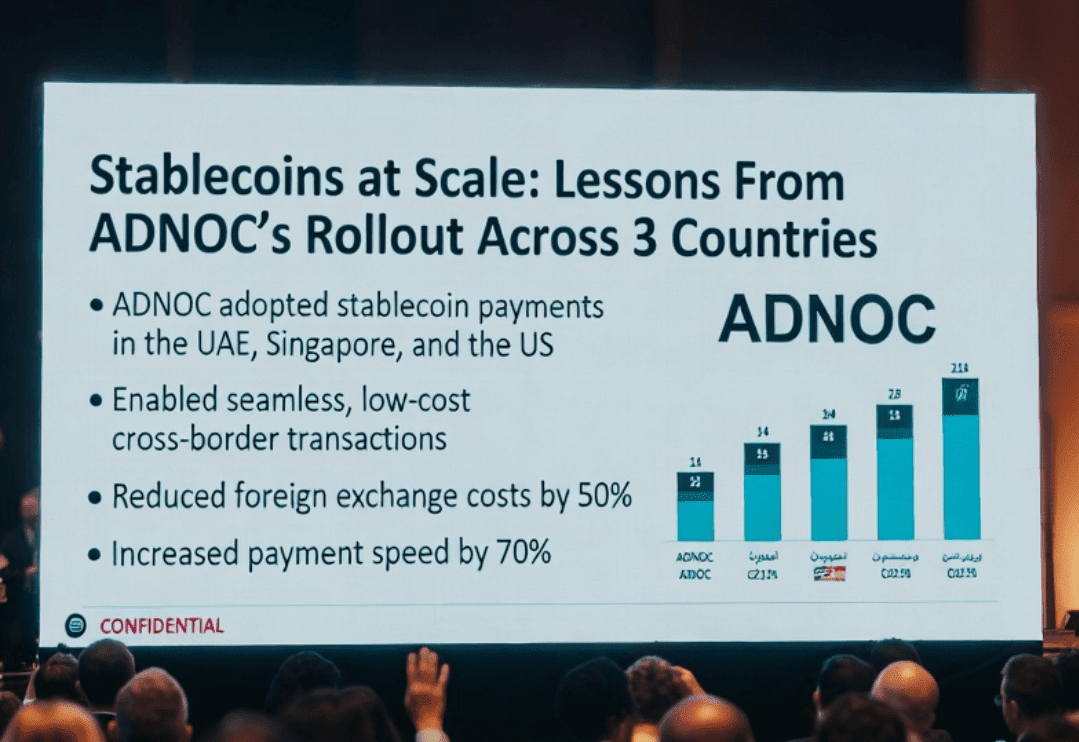
When a huge energy company starts using stablecoins, it’s not just a trendy new technological trick. It means that cryptocurrency is finally becoming mainstream on a large scale. Just look at ADNOC Distribution — the largest fuel supplier in the UAE. They are implementing stablecoin payments at practically thousands of stations across three countries. This is not some small pilot hidden behind the scenes. These are people who are actually paying for gasoline with cryptocurrency — every day, in plain sight.
So what does all this really show us about where stablecoins and crypto payments are headed?
1. Stablecoins are emerging from the crypto niche
By this time, stablecoins had mostly remained on trading desks, in money transfer corridors, and in DeFi circles. ADNOC's move takes them into the real world — at gas stations where everyone goes. This is huge. Think about it: buying fuel is a routine task, margins are small, and payments need to be lightning-fast. If stablecoins can handle this, they are ready for prime time.
Essentially, stablecoins are no longer just for moving cryptocurrency. They are starting to look like real tools for ordinary people.
2. Scale changes everything
Trying stablecoin payments in a few places is one thing. Implementing them at thousands of stations across three countries? Now you’re really putting the system to the test. At this stage, it’s not just about whether the technology works — continuity, instant settlements, compliance, and ensuring customers don’t get stuck at the pump are crucial.
For regulators and industry giants watching this, ADNOC isn’t just showcasing a cool demo. They are proving that the infrastructure for stablecoins can withstand pressure.
When a heavyweight like ADNOC leads, everyone else pays attention. They take on the early challenges and ultimately push the entire sector forward.
3. Stablecoins solve real problems for global business
Everyone who does business abroad knows about the difficulties: old payment systems are slow, expensive, and inconvenient to use. Stablecoins solve this problem. You get almost instant settlement, skip the FX drama, pay lower fees, and send money when you need it.
Especially in places like the UAE — packed with international travelers — this type of flexibility matters. For gas stations operating on thin margins, every bit of efficiency helps.
Stablecoins are taking hold faster where old methods simply do not work.
4. Regulation helps, not hinders
ADNOC couldn't have done this without clear rules and reliable compliance. This is a big change: countries with well-defined stablecoin regulations are actually leading the charge.
Instead of fighting with regulators, stablecoin companies are building directly into the existing financial system. You can see this happening across the Middle East.
The next wave? It will all be about transparency, regulation, and the adjustments that large corporations can actually work with.
5. Other sectors won't wait long
Retail fuel trading is just the beginning. If stablecoins can handle daily, high-volume payments at gas stations, they can do the same for public transport, large retail, utilities, travel — the list goes on.
Now, the ADNOC plan is published. CFOs, regulators, crypto teams — everyone is watching.
Final opinion
"Stablecoins at scale" is no longer just a conversation. ADNOC's rollout proves they are becoming a real financial infrastructure. The real story here isn’t so much about bits and bytes — it’s about trust. When major institutions trust stablecoins enough to use them everywhere, the conversation changes. It's no longer "Will this happen?" Now it's "How quickly can everyone else join in?"#BİNANCE #Write2Earn


