
Has the 4-year cycle of Bitcoin really been broken? Three major indicators reveal shocking truths and answers!
This question, which has troubled countless investors, is stirring up an unprecedented storm in the cryptocurrency market of 2025. When traditional theories face real-world challenges, should we trust historical patterns or embrace market changes?
 1. The End or Evolution of the 4-Year Cycle
The price of Bitcoin has been fluctuating around the $100,000 mark, with only two months left until the theoretical peak of the traditional 4-year cycle. Market sentiment is as volatile as a roller coaster, and investors are beginning to question the once ironclad 4-year cycle theory.
"This is not the end of a cycle, but a sign of market maturity." In-depth analysis of Bitcoin's historical price movements reveals that the patterns of single highs in 2011, double highs in 2013, single highs in 2017, and double highs in 2021 are being broken. The market is shifting from dramatic cyclical fluctuations to a more gradual, long-term bull market.
The shift provides macroeconomic support for this change. The cessation of balance sheet reduction in December is a foregone conclusion, and the probability of a reduction in the x-value in the first quarter of next year is as high as 85%. This environment of loose liquidity is reshaping Bitcoin's valuation system, causing its volatility to gradually converge with that of traditional financial markets.
II. The End of the Four-Year Cycle or Evolution?
"What does an RSI value of 36 mean?" This technical indicator, often overlooked by most investors, is sending a strong buy signal. When we adjust the period parameter to 22 days (corresponding to a monthly chart), the Bitcoin RSI value drops to 36—a number that historically often indicates a bottoming range.
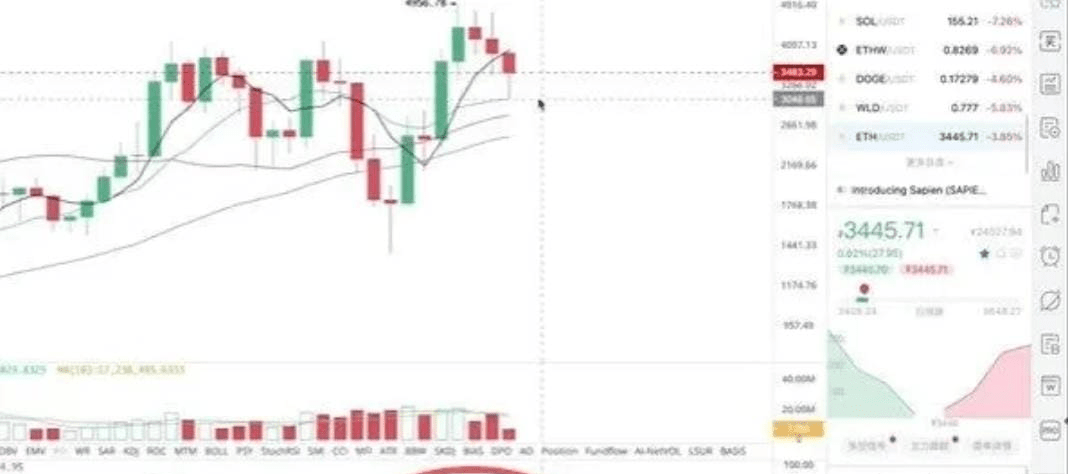 Looking back at Bitcoin's history, the monthly RSI has only fallen below 30 five times, and each time it presented a buying opportunity. November 2011 (RSI 28.3) corresponded to a bottom at $1; December 2014 (RSI 29.1) to a bottom at $152; December 2018 (RSI 25.7) to a bottom at $3200; March 2020 (RSI 29.4) to a bottom at $3800; and November 2022 (RSI 28.9) to a bottom at $15500.
"While the current RSI of 36 points is not yet at an extreme oversold level, it has entered a zone of extremely high cost-effectiveness." Historical data shows that when the RSI is in the 35-33 range, the subsequent increase is often astonishing: in April 2019, the RSI was 32 and then rose by 300% in the following six months; in January 2023, the RSI was 38 and then rose by 160% in the following four months.
III. Dual Verification of HOLDER Ratio and AHR999
The little-known metric, the HOLDER ratio, is revealing changes in the market's deep structure. The long-term holder ratio (the ratio of the realized value of Bitcoin that hasn't been transferred in 1-2 years to that of Bitcoin transferred within a week) is currently only 2,000, far below the historical highs of over 10,000.
"The higher the proportion of new money, the greater the risk; the higher the proportion of old money, the safer." This simple yet profound rule helps us judge market sentiment. At its peak in December 2017, there were 97 new dollars for every $1 of old money in the market; in November 2021, it was 1 to 13. Now, the ratio is 1 to 2, meaning that long-term holders still firmly control the market.
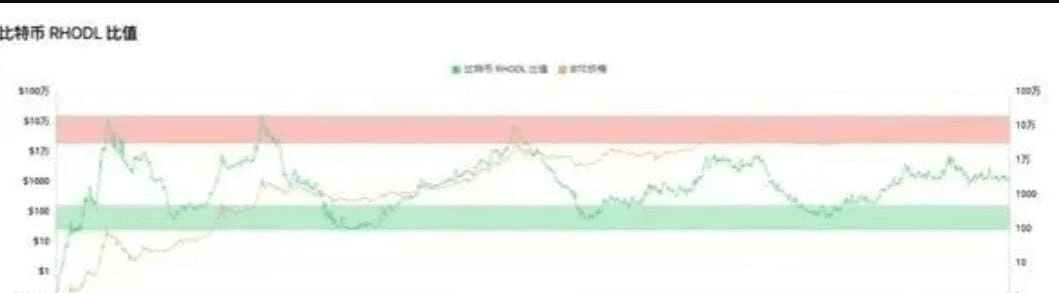 The AHR999 top-selling indicator, as an auxiliary verification tool, is currently still operating in a safe zone.
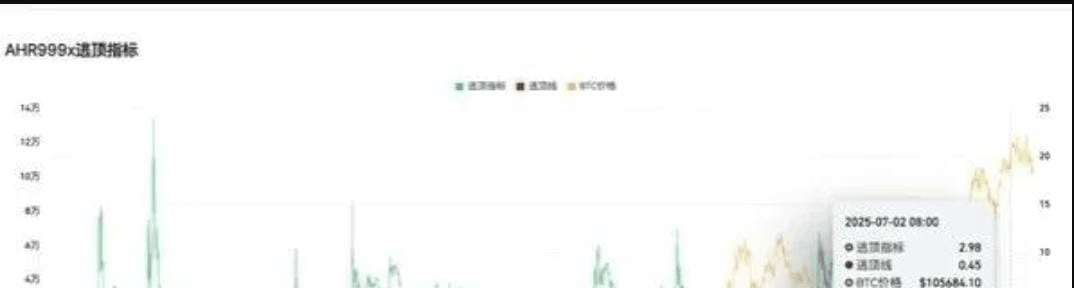
This indicator, which assesses valuation by comparing the deviation of Bitcoin's price from its 200-day moving average, has never had its red "top-selling line" broken since 2023. When the monthly RSI is below 40, the Holder ratio is below 5000, and the AHR999 does not break the top-selling line simultaneously, it often indicates a significant investment opportunity.
IV. Survival Rules in the Long Bull Market
Faced with profound changes in market structure, investors need to adjust their strategies to adapt to the new market environment. "The painful period won't last long"—the continuous inflow of institutional funds is smoothing out Bitcoin's sharp fluctuations, significantly shortening its pullback period.
Ignore short-term fluctuations; there's no need to panic if the monthly correction doesn't last more than 3 months. Build positions in batches; when the monthly RSI falls below 35, you can increase your position to 50%. Closely monitor the Holder ratio; once it breaks through 8000, start gradually taking profits.
"This bull market may end in 2027 or even later," but every pullback along the way is a buying opportunity. When market sentiment reaches a fever pitch, remember to check the Holder ratio—this simple indicator will be your best risk warning system.
The Bitcoin market is undergoing a profound transformation, with the end of an old cycle and the birth of a new order occurring simultaneously. Understanding the logic behind these changes is perhaps more important than predicting specific price figures. In this market fraught with uncertainty, maintaining rationality and patience will be key to success.
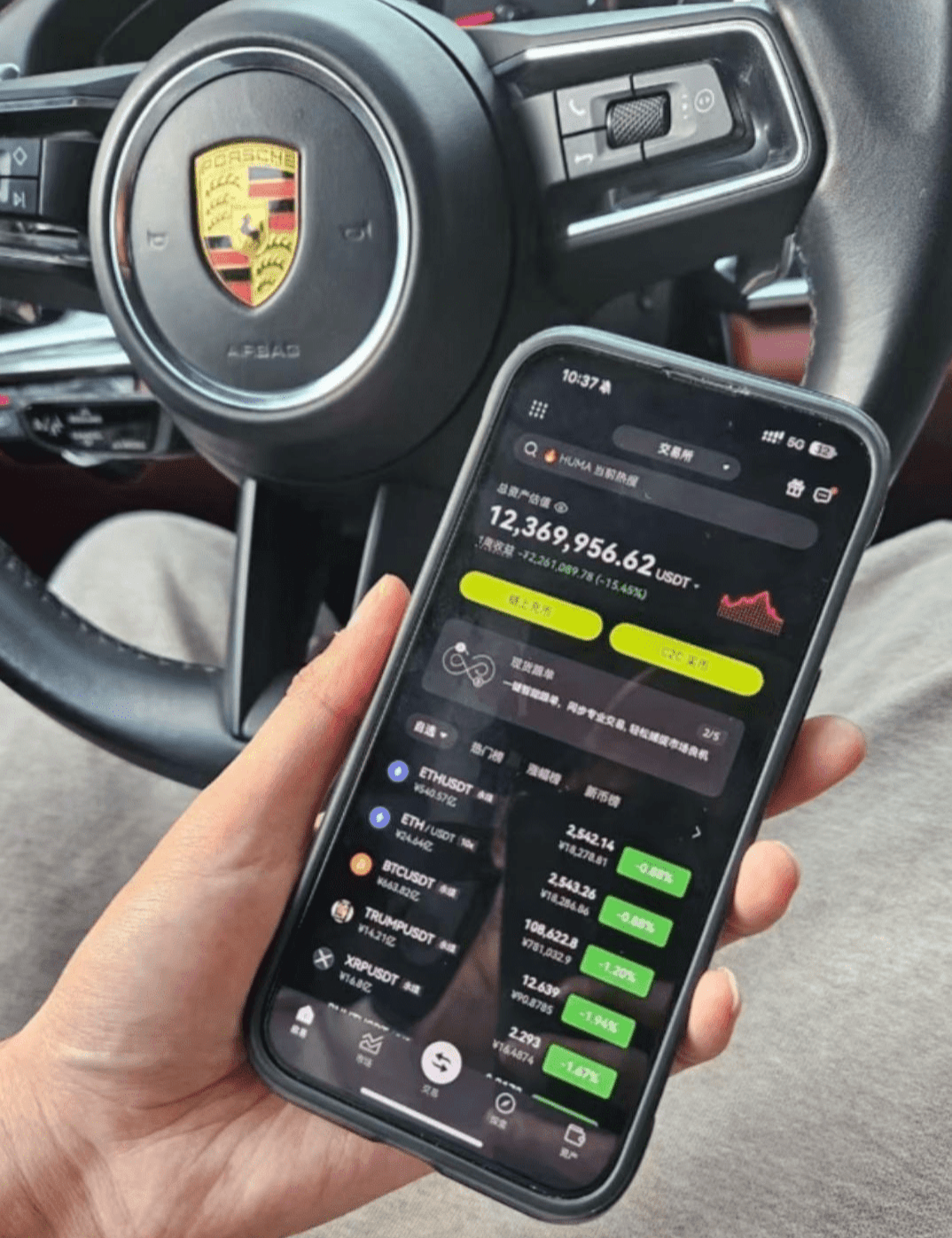
I'm from Shenzhen, 36 years old, and I've seen my share of the ups and downs in this industry. Many people are curious: "Can you really make money in the cryptocurrency world?"
I never beat around the bush—during the period from 2020 to 2022, my account steadily surpassed seven figures, and my life changed: I lived more casually, had more freedom in my time, and my days were easier than many of my peers. But to be honest, this ease wasn't due to sheer luck, but rather a set of "clumsy methods" I've used for many years—which I call the "3-3-4 Stage Investment Method."
It has truly helped me get to where I am today.
I. Entering the Circle: I Was Once a "Hot-Blooded Newbie"
At twenty-three, I plunged into the cryptocurrency world out of curiosity. Like most people, I paid my dues at the beginning: staying up all night watching the market, chasing highs and lows, watching the red and green candlesticks flash, my heart pounding more than a rollercoaster. At my worst, profits were wiped out, and I almost couldn't hold on. But losing so much made me realize: the cryptocurrency world isn't a casino; it's about who can survive. Those who flaunt their "get-rich-quick" stories are either scammers or haven't encountered a black swan event yet.
I gradually came to realize a truth: the market is never short of opportunities, but rather of patience and discipline. Smart people often fail because of greed, while the less intelligent survive by exercising restraint. Therefore, I set ironclad rules for myself: never go all in, never hold losing positions, and never use leverage exceeding 5 times. These rules became the foundation of my "3-3-4" method.
II. The "Three-Three-Four Stage Investment Method": My Core Strategy
The core of this method can be summed up in three words: take it step by step. Split your money and time, try it one step at a time, add more as you go, and never decide the outcome in one go.
Phase 1 (30% of funds): Test the waters with a small position to practice and gain experience.
For example, if I have 100,000 yuan, I only take out 30,000 yuan and choose mainstream coins (like BTC and ETH) or coins with practical application prospects. It's purely spot trading, and I never touch leverage. The goal at this stage is to feel the pulse of the market: when prices rise or fall, do I panic? Can I hold on? Before each operation, I force myself to write down a plan—entry point, stop loss point, and take profit point, all in black and white, to prevent impulsiveness.
Why do this? A beginner's fatal flaw is "going all in at once." Small-scale trial and error means losses aren't crippling, and profits build confidence. The biggest fear in the crypto world is getting carried away at the start and going all-in, only to have your position wiped out when the market reverses.
Phase Two (40% of funds): Use market volatility to add to positions and average down the cost.
Once you've figured out the rhythm in the first phase, then use 40% of your funds. But adding to your position isn't haphazard—buy more when the price drops 10% to gradually lower your average cost; take half your position when the price rises 10% to lock in profits. For example, if you have 30,000 yuan in capital and have earned 33,000 yuan, sell half of it, and the remaining portion can be considered zero-cost play.
Here's the key: only add to your position on pullbacks, and don't chase highs. The market loves to slap those who chase rallies in the face, while pullbacks with reduced volume to support levels often present opportunities. I look at hourly charts and combine this with volume confirmation before taking action.
Phase 3 (30% of funds): Once the trend becomes clear, go all in to seek returns.
Once the first two steps are solid and the trend is clear (for example, the daily chart is above the moving average and trading volume is increasing moderately), then you can push in the last 30% of your funds. At this point, your mindset is completely different—your cost is lowered, your profits are more substantial, you can hold on, and you dare to ask for further gains.
But don't forget to cut your losses at any time. I have strict rules: if a single loss exceeds 3% of your total capital, shut down your computer and take a break; if you make three consecutive mistakes, stop trading for the day. Surviving in the crypto world isn't about doubling your money in one go, but about avoiding big mistakes.
Third, execution is key: once the plan is set, it must be executed like a machine.
Even the best methods are useless if they succumb to emotions. I've seen too many people write beautiful plans, only to completely forget them once the market opens. My simple method is:
Set "working hours" for trading: check the market after 9 pm every night, as the news is chaotic during the day and it's easy to get itchy fingers.
Secure profits first: Once you make money, immediately transfer a portion to your bank account; this is your "lifeline."
Reviewing transaction records: Don't curse when you lose, and don't get cocky when you win. Spend half an hour each night analyzing why you made a profit or loss. Transaction records are the best teacher.
Emotional management is a skill. I'm wary when the market is greedy (everyone in the group is showing off their profits, so I reduce my positions); I remain calm when the market is fearful (my exchange app rating drops to 2 points, so I consider buying the dip). Candlestick charts are drawn by the major players for your benefit, but trading volume doesn't lie—follow the breakout with high volume, and sell on consolidation with low volume.
IV. A Few Honest Words for Beginners
Don't believe in "get rich overnight": the cryptocurrency cycle is four years long, and altcoins must be liquidated at the end of a bull market. When even delivery drivers are asking about 10x coins, it's probably time to run.
Leverage is a knife; don't use it on yourself. I've been wiped out before, and I know the pain. Now, I never use leverage more than 5 times, and I always keep my positions small.
Make small improvements every day: A steady 1% daily profit (e.g., $50 on a $5000 principal) will accumulate into a staggering figure over a year through compound interest. The key is to maintain a daily stop-loss of ≤3% to preserve your principal for future gains.
Life comes first, cryptocurrency trading second: Crypto is just a side hustle, don't let it interfere with your main job. Only use spare money for cryptocurrency trading; better sleep leads to more sound decision-making.
Over the past ten years, my biggest takeaway hasn't been money, but learning to wait. The crypto world is like a slow-cooked soup; you can't rush it. Using a simple, methodical approach, taking it step by step, actually outperforms most "smart" people. If you're a beginner, try this "334" approach—it's basic, but reliable. Remember: in this market, those who survive aren't the most brilliant, but the most disciplined.
Are you still getting liquidated by trading cryptocurrency futures on 15-minute charts? I advise you to first understand these 5 fatal misconceptions about "daily chart trading".
 Frankly, most traders have absolutely no interest in larger timeframes. They're too slow—they prefer to stay on 5-minute and 15-minute charts, often referred to as "retail slaughterhouses."
We've all experienced this: margin calls, the frustration of failure, and the endless confusion about where things went wrong. As you replay those images in your mind, you'll eventually start to wonder: "Which timeframe is best for me?"
This is a question many traders are eager to answer. In social groups, you'll notice that most traders are drawn to, and even enthusiastically promote, various scalping or day trading strategies.
You may have even used this logic: "If everyone else is doing it, then it must be right, right?" Nine times out of ten, traders follow the crowd like this, and end up using deadly high-frequency trading strategies in fast-paced timeframes, only to suffer heavy losses.
When traders come to me asking why they're underperforming, I suggest they switch to a daily timeframe. Almost every time, I'm met with strong resistance—most people are very hesitant to move to a higher timeframe.
The reason most traders are unwilling to change stems from several misconceptions they have about higher timeframes (such as daily charts).
I think it's necessary to clarify these misunderstandings so that everyone can view the market with a more open mind and be more honest about their own trading situation.
Myth #1: Daily charts have "too high transaction costs" and are difficult to trade?
My first piece of advice to struggling traders is to focus their trading decisions on the daily chart level.
But the response I hear most often is:
"My account is so small, how can you expect me to trade daily charts?"
If you think so too, I think you can continue reading.
Believing you "can't afford" daily charts is a very harmful, even self-destructive, misconception. This psychological barrier prevents you from developing a "winner's mindset." Your account size does not determine which timeframe you should trade on.
All these absurd speculations stem from a flawed idea: "The larger the stop-loss, the higher the risk cost." True, based on daily chart trading signals, stop-losses are generally wider, but you also capture a larger range of market movements.
In fact, stop-loss orders are not as large as you might imagine—averaging around 50 points. That's not much, especially since you can often trade that 50-point risk for a 250-point profit.
Those traders who think daily charts are too "expensive" simply don't know how to properly calculate position size.
Position size is calculated using a mathematical formula, allowing you to risk any amount of money with any stop-loss width.
For example, regardless of the width of your stop-loss, you can control the amount of risk. Whether your stop-loss is 10 points or 100 points, you can choose to risk only $100.
If you'd like, you can even calculate the position size needed to risk only $10 with a 2000-pip stop-loss. I did the math in two seconds: $10 risk and a 2000-pip stop-loss on EUR/USD = 0.0005 lots.
They are just numbers; the key is knowing how to use them.
If you're using a micro account, you can calculate position size precisely. For example, with a $5 risk and a 70-pip stop-loss, the position size is approximately 0.007 lots (EUR/USD). Unless you're taking an absurd risk (like a $20,000 loss with a 10-pip stop-loss requiring a 200-lot position), there's no position size that's impossible to calculate.
All of this is just simple math, and this should be the foundation of your money management skills! Once you understand position management, you will never say things like "the cost of trading on the daily chart is too high" again.
Myth #2: Is it true that longer timeframes are less profitable than shorter timeframes?
Most traders, especially beginners, fixate on short-term charts because they enter the market with a completely wrong mindset.
Many people believe that the more time you invest, the more you will get in return—because this is a rule that real life teaches us. In your work, if you are willing to work overtime, and if your boss is a decent person, they will generally reward you for your "extra effort."
But the market doesn't work that way at all; in fact, quite the opposite. Never bring your real-life intuition and logic into the market—it's a very dangerous mixture. Lower timeframes do generate more trading signals, but these signals are of extremely low quality.
Trading on 5-, 15-, or 30-minute charts is essentially just dealing with market noise. Yes, larger timeframes don't generate as many signals as smaller ones. But trading signals based on daily charts:
Higher reliability; stronger probability of success; more representative of market structure.
This is the classic "quality vs. quantity" debate. In the trading market, quality is always more important than quantity. It's better to trade a few high-quality trades than to frequently trade a large number of low-quality signals. Clearly, daily charts provide a clearer "global perspective":
You can more easily identify core price movements and understand market psychology. By switching to a daily chart, you can often instantly grasp the market structure, while you'll be completely confused on shorter timeframes.
Daily chart signals are more valuable than 15-minute signals because:
For the same trading signal, daily charts contain far more data than shorter timeframes; more data means higher signal quality; higher signal quality means greater reliability; daily chart signals also have better continuity, and the risk-reward ratio (R:R) is easier to widen.
Signals based on daily charts typically have stronger follow-through momentum, making it easier to achieve a risk-reward ratio of 1:3 or even higher. However, a 15-minute chart signal can often be easily affected and rendered ineffective by normal intraday fluctuations. In other words, signals on shorter timeframes are easily invalidated by sudden price swings.
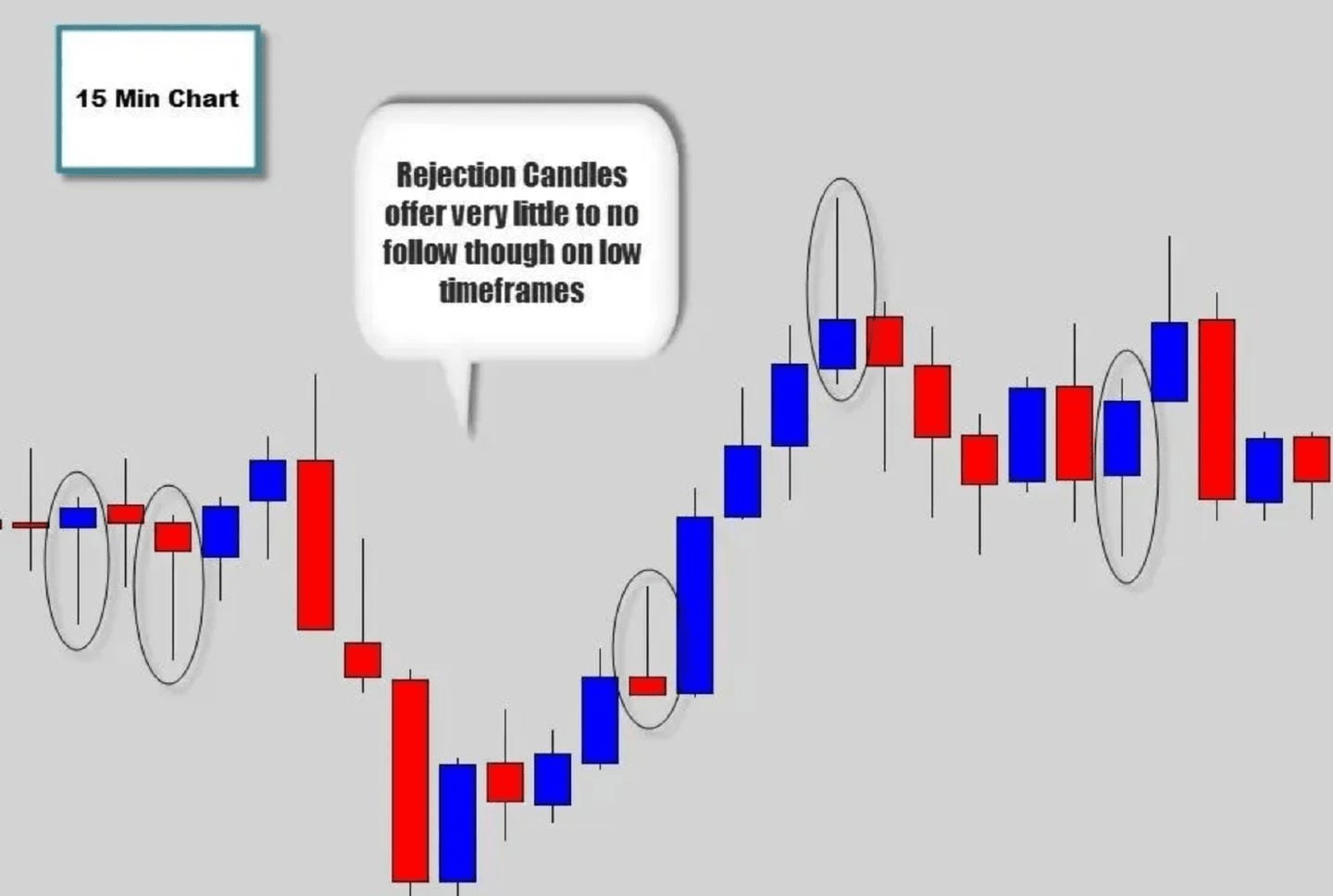 These reversal candlestick patterns formed on 15-minute charts rarely show sustained price action in typical market conditions. Trading with such signals is extremely frustrating and difficult to profit from, often ending in losses.
Now look at the daily chart, the difference is quite obvious...
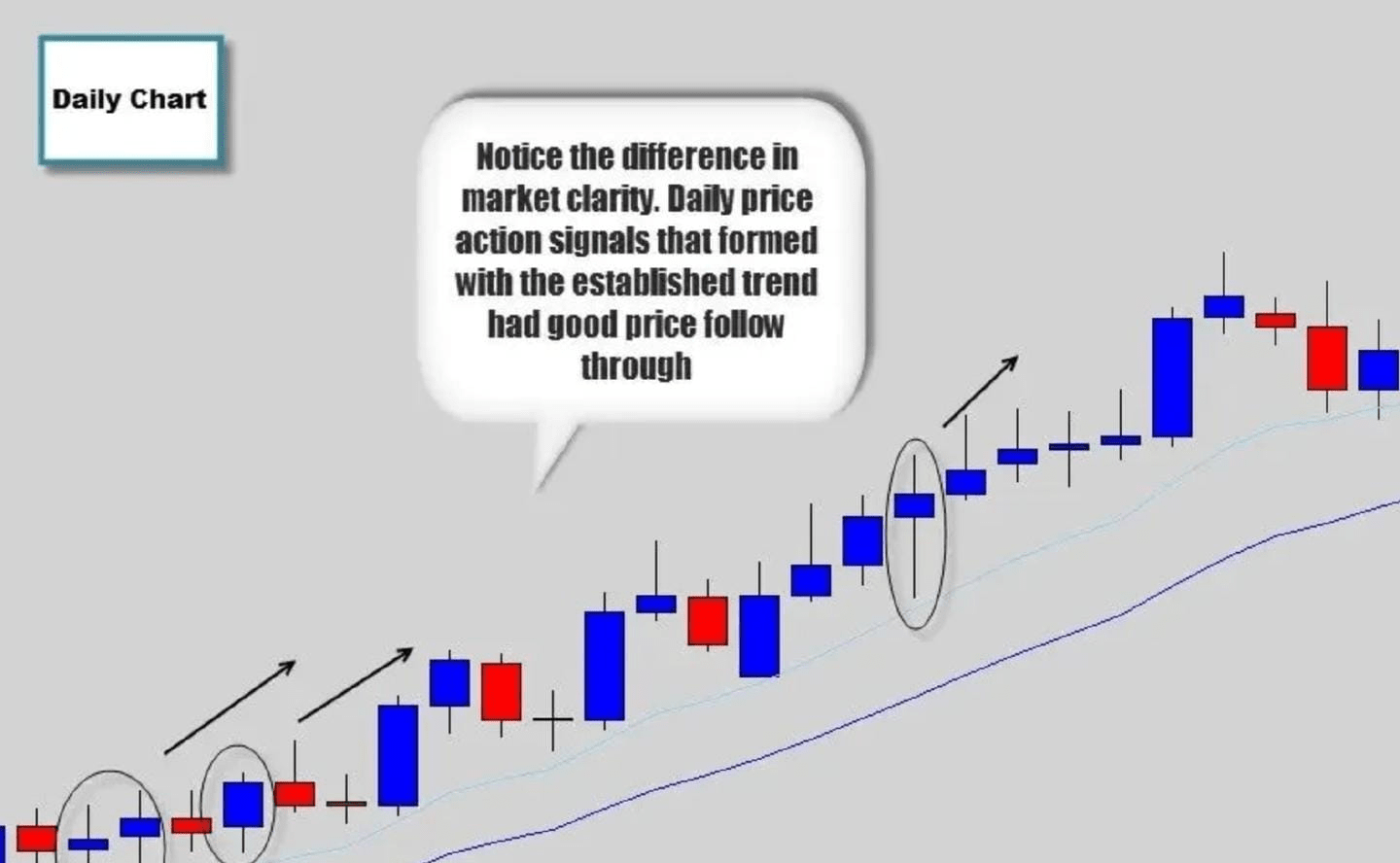 The first and most obvious indicator is the core direction of the market. The daily chart shows the direction very clearly, while the 15-minute chart makes it difficult to determine where the market is headed.
Trading signals that align with the dominant trend on the daily chart tend to have better subsequent price follow-through.
Many traders believe that more frequent low-period candlesticks equal more profits. However, this is a matter of quality versus quantity. A signal on a daily chart contains 96 times the price data of a signal on a 15-minute chart – making daily signals more accurate and reliable.
Myth #3: The longer you hold a position, the higher the risk.
Some traders advocate "quick in, quick out," claiming that this is less risky than holding positions for a long time.
This view is based on flawed logic, and is generally reasoned as follows: "If you enter and exit the market quickly, you will not be stopped out when the market reverses."
However, in reality, no matter what strategy you use, you always risk being stopped out by unexpected market movements. What's even more interesting is that when you trade low-timeframe signals and set your stop-loss orders tighter than a bee's tail, you're more likely to be wiped out by intraday volatility.
Daily charts effectively filter out intraday noise, providing more reliable data for your trading decisions. Most daily trading signals are largely unaffected by short-term fluctuations, which often lead to frequent stop-loss orders for short-term traders.
Enhancing your trading advantage is actually quite simple: increase your time horizon.
Low-period signals can lead to trading strategies that create immense psychological pressure, requiring you to monitor the market for extended periods. Most short-term traders initially enjoy this "excitement" and "thrill," but sooner or later they will experience psychological exhaustion.
Your mental discipline is limited each day. Once it's exhausted, feelings of frustration will accumulate, and previously suppressed emotions will suddenly dominate your every action.
Greed, frustration, anger, and impatience can trigger bad trades, leaving you in a dangerous psychological state from which it is difficult to recover.
Daily charts can immediately help you establish a higher probability of success.
You spend significantly less time in front of charts, thus reducing the risk of trader burnout. Staying calm and maintaining mental and emotional discipline is also much easier.
In short, trading with low-timeframe strategies requires prolonged screen time, which can easily lead to mental exhaustion. Mental exhaustion can cause you to become controlled by your emotions, triggering a series of dangerous reactions that are difficult to recover from. Daily-timeframe strategies, on the other hand, require less time spent in front of the chart, thus preserving mental energy and discipline, and are more conducive to stable long-term trading.
Myth #4: Holding positions overnight is dangerous
This statement is just nonsense from novice day traders. "You must close all positions before the market closes for the day." The cryptocurrency market fluctuates 24 hours a day.
Indeed, if your position is newly established, holding it over the weekend may be somewhat risky, as there could be unexpected weekend gaps (especially when affected by major global events) – but this is a completely different topic and rarely becomes a problem.
In a continuous market, there is no advantage to closing positions at the close of the day. One person's "closing time" is another person's market opening time.
In fact, closing positions prematurely may cause you to miss opportunities. Trading signals sometimes need one or two days to materialize into a true "breakout" trend.
Consider the following example: a bearish reversal candlestick pattern captured on a daily chart.
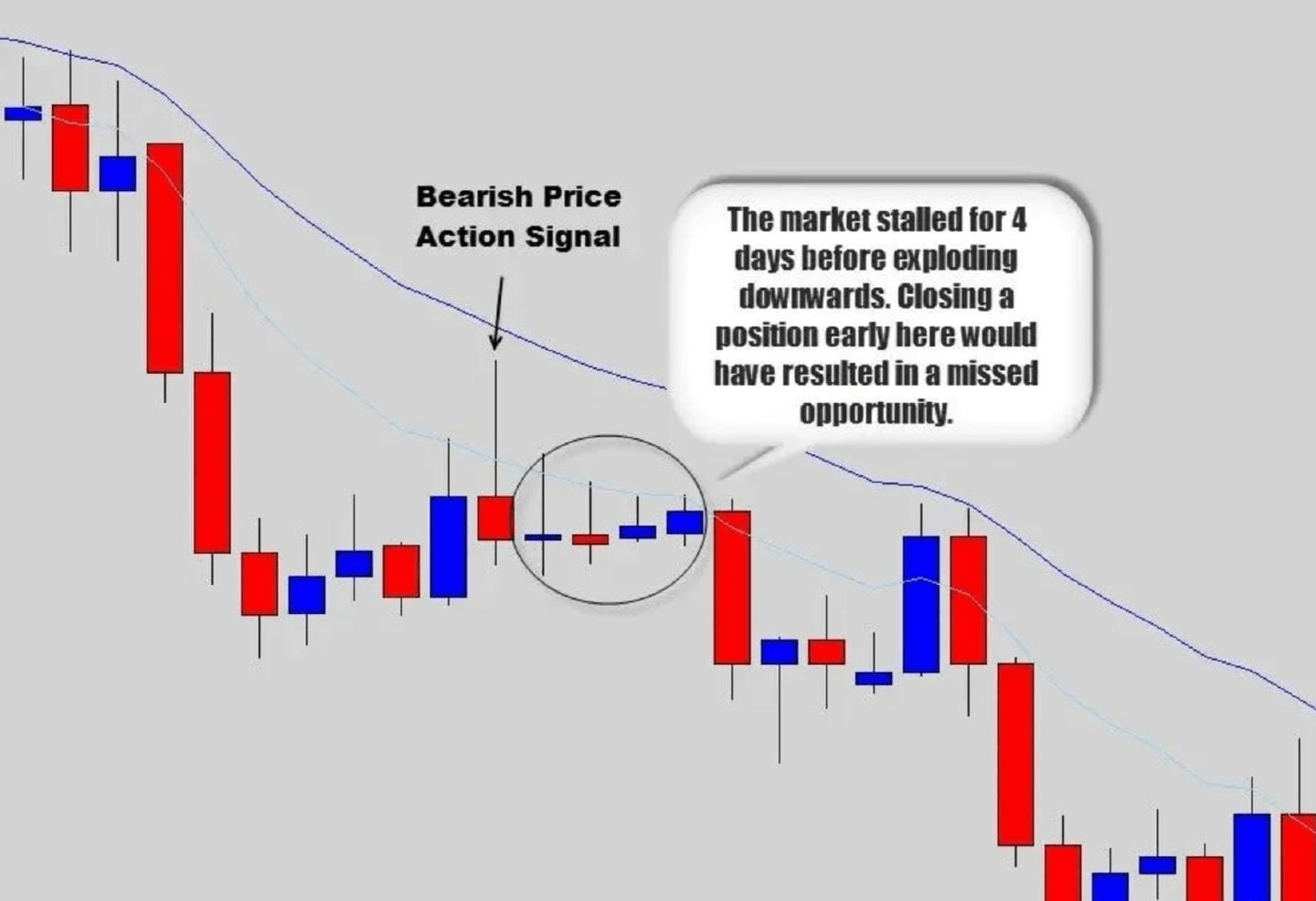 This is a good example of how we need to be patient and let the market run its own pace. If you close your positions before the end of the day, you will almost certainly miss opportunities and regret missing out on profits.
I know many people hope that as soon as they enter a trade, the price will hit their target like a cannonball. This happens occasionally, but you can't expect it to happen often.
In reality, some trades may experience one or two short-term losses before turning profitable, and this fluctuation can last for several days.
You need to give trading opportunities and time for the market to take effect. Don't close your positions prematurely just because the day is over; otherwise, you'll rarely be able to capitalize on good market movements.
Myth #5: Price movements on daily charts are difficult to predict.
This statement stems from the long-standing debate between technical analysis and fundamental analysis.
Some traders believe that technical analysis is only applicable to low-period charts, and that trading on daily charts requires solid fundamental analysis skills, or even a PhD in economics.
In fact, you don't need to be an economist or a high-end financial analyst to track long-term price movements. Believe it or not, all the data you need is already reflected in the traces that prices leave on the chart—the candlestick chart itself.
Technical analysis works exceptionally well on daily charts, better than most lower timeframe charts. Therefore, I call the daily chart a "golden timeframe"—not too fast, not too slow.
Another key reason why technical analysis works well on daily charts is that they provide more data. Noise and price fluctuations on lower timeframe charts can interfere with technical analysis, preventing you from "reading the charts" and generating numerous false signals.
Thanks to the clear view provided by the daily chart, quality trading opportunities are very easy to identify. The real challenge is that you need to shift your focus from high-intensity short-term trading to low-intensity trading.
On the daily chart, you can capture significant profit opportunities, which can transform a short-term trader who trades frequently during the day into a more stable swing trader.
See the example below:
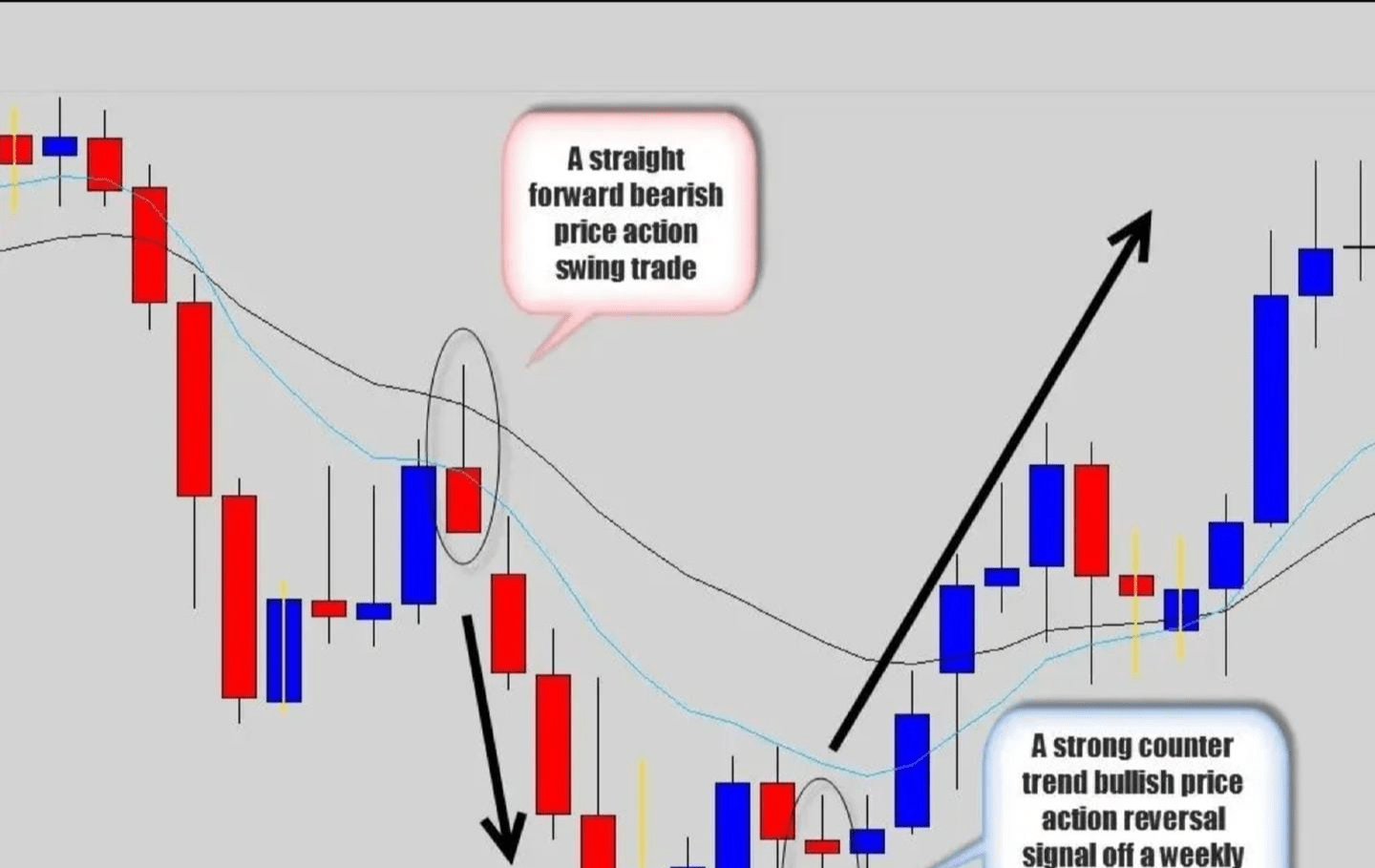 The price action signals shown in the chart above are a good example of using simple technical trading signals to predict future price movements. My traders and I both use these price action signals. The simplicity of these signals is one of the main advantages of price action trading. Now, it's time to stop chasing "ghost" signals on 15-minute charts and start trading the right way.
in conclusion
Simply switching to a daily chart allows you to make necessary adjustments, paving the way for successful trading. Daily charts take up less time while providing a clearer overall market view, enabling you to make more objective judgments about market trends.
Reducing the time spent monitoring the market also lowers the risk of psychological or emotional imbalance, while giving you the opportunity to capture higher-return trading signals.
 Don't panic during crypto market volatility! 5 signs that the bull market is still on its way.
With the market fluctuating wildly lately, many novice investors are experiencing rollercoaster-like emotions, anxiously asking every day, "Is the bull market over?"
As a seasoned trader who has weathered two complete bull and bear market cycles, I want to say: pullbacks and fluctuations are the norm in a bull market. Decisions made in a panic are often the beginning of losses. Currently, there are five clear signals that convince me the market is far from over.
Signal 1: The liquidity gate is about to be reopened.
The Federal Reserve is highly likely to formally announce the end of its balance sheet reduction this week. This means that the previously withdrawn market liquidity will flow back in. Liquidity is the lifeblood of risky assets; as liquidity rises, so too does the cryptocurrency market's rebound, and its foundation remains solid.
Signal 2: Regulatory downsides have largely been exhausted.
The regulatory storms that previously garnered significant attention, such as the CZ incident, have gradually subsided, eliminating the biggest uncertainty. The current regulatory environment is becoming clearer, and risks are manageable, allowing substantial off-market funds to enter the market in batches. The market no longer needs to worry about the "next policy black swan event."
Signal 3: Interest rate cut expectations are about to materialize.
The market widely expects the Federal Reserve to release a clear signal of interest rate cuts at its policy meeting on October 30. Once a rate-cutting cycle begins, global liquidity will shift to a looser stance, and funds will naturally seek higher-yielding assets, with the cryptocurrency market being one of the core beneficiaries.
Signal Four: Funds are shifting towards "risk-taking" strategies.
A key sign is that gold, a traditional safe-haven asset, has shown signs of fatigue. This indicates a subtle shift in market risk appetite; investors are no longer solely seeking stability but are beginning to look for markets with greater growth potential. This "risk-taking sentiment" is the core fuel driving the continued bull market.
Signal Five: Smart money has already quietly made its moves.
Closer observation reveals a significant recent increase in closing call options for core crypto assets like CRCL and COIN. This is typically a signal that institutional funds are quietly accumulating positions. They often have a longer-term perspective than retail investors, and their actions are an important indicator for judging future market trends.
Sincere advice for beginners:
Focus on the mainstream: Don't be misled by the myths surrounding altcoins; holding onto BTC and ETH is the safest strategy for ordinary people.
Control your position size: No matter how confident you are, don't invest your living expenses. Proper position management and setting stop-loss orders are essential to surviving the next wave of growth.
Be patient: A bull market never goes straight to the top; every fluctuation along the way filters out those who are not firm in their convictions.
Finally, I want to say that most people get caught in a cycle of losses not because they don't work hard enough, but because they lack direction and a systematic approach. The market is always there; opportunities only favor the prepared and disciplined.
If you are still struggling in this cycle of margin calls, please force yourself to do these three things first:
1. Reduce transaction frequency:
2: Strictly implement stop-loss orders.
3: Don't let any small loss get out of control
If you're still feeling lost in the market and unsure of your next move, I'm here to share more specific strategies and mindset management methods. Opportunities are right in front of you; if you take the initiative, we can have a story together.
I'm Little Egg Tart, a professional analyst and instructor, a mentor and friend on your investment journey! As an analyst, the most basic requirement is to help everyone make money. I'll help you resolve confusion, get out of trouble, and let my results speak for themselves. When you're lost and don't know what to do, follow Little Egg Tart. Little Egg Tart will guide you. #美联储FOMC会议 $ETH


