

@Lorenzo Protocol isn’t getting flashy hype, but it keeps appearing in DAO governance discussions. Those deeply involved see it as a useful tool, not just an idea, and that’s why it matters.”. In a space that often moves faster than its own decision-making structures, anything that claims to improve how DAOs govern themselves deserves careful scrutiny, not blind excitement.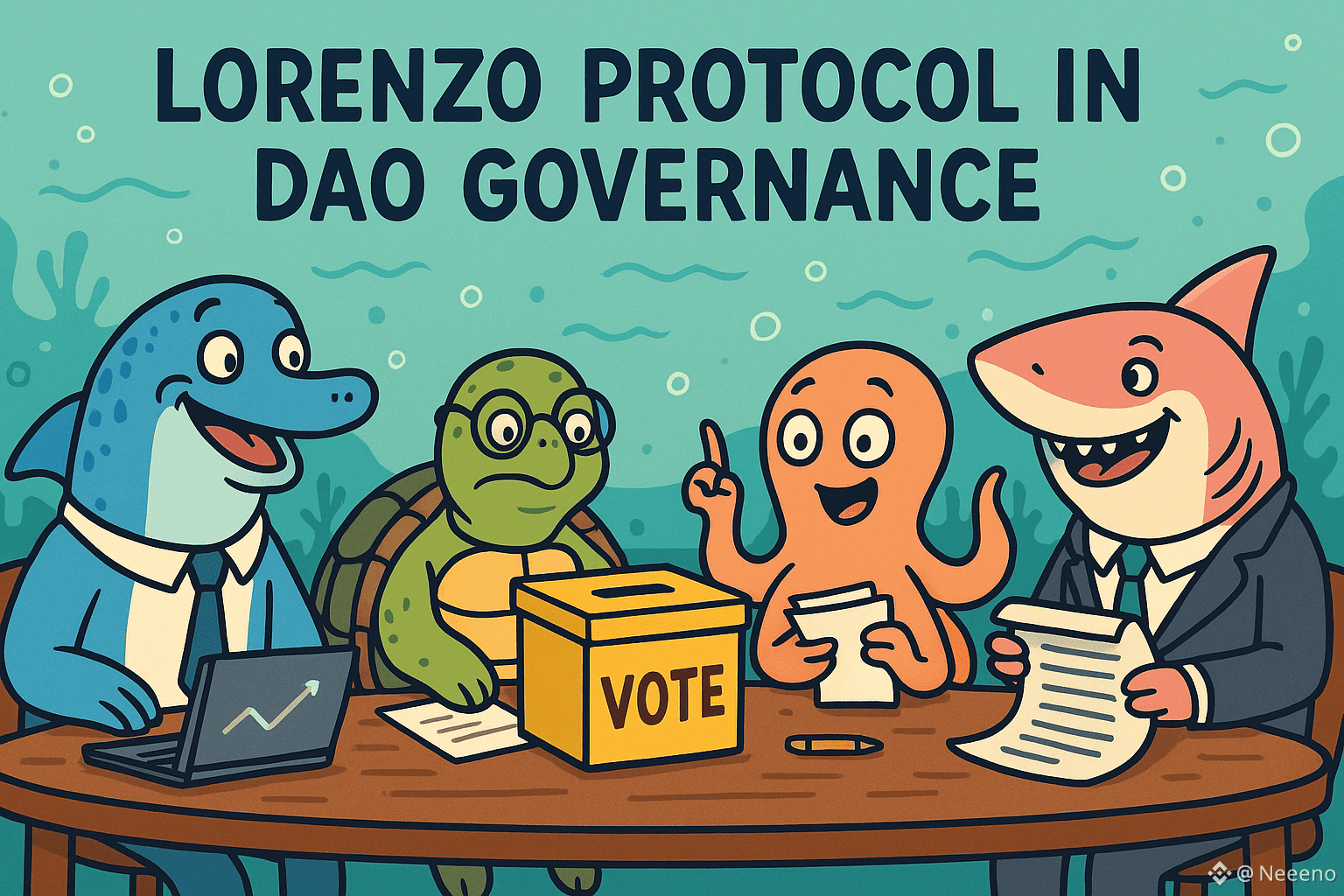
DAO governance has always sounded cleaner on paper than it feels in practice. The idea that token holders collectively steer an organization is appealing, almost idealistic. But anyone who has participated in votes knows the reality can be messy. Voter apathy, rushed proposals, unclear incentives, and governance capture are not abstract problems. They happen weekly. Lorenzo Protocol enters this picture not by promising to fix governance forever, but by focusing on how decisions are formed, weighted, and executed over time, which is where most DAOs quietly struggle.
What makes the timing interesting is that DAOs themselves are maturing. A few years ago, governance was mostly symbolic. Votes happened, but the stakes were low.“DAOs now control huge treasuries—often hundreds of millions. The choices they make affect pay, legal responsibility, and their future.”
. That shift has forced many communities to admit that their governance tools feel improvised. Lorenzo Protocol seems to respond to this moment by treating governance less like a vote button and more like an ongoing process that needs structure and memory.
From what I’ve observed, one of Lorenzo’s most discussed contributions is how it encourages longer-term accountability without stripping away decentralization. Too often, governance resets every proposal cycle, as if nothing happened before. Past behavior rarely matters. Lorenzo’s design nudges DAOs to consider historical participation, consistency, and intent. That doesn’t mean locking people into rigid roles, but it does mean acknowledging that governance is shaped by patterns, not isolated clicks. This feels closer to how real organizations function, even outside crypto.
There’s also something refreshing about how Lorenzo Protocol doesn’t assume that more participation automatically means better outcomes. In many DAOs, high turnout can still produce shallow decisions if voters lack context or incentive to engage deeply. Lorenzo’s approach seems to reward thoughtful involvement rather than pure volume. That resonates with my own experience in governance calls where a handful of committed contributors often carry the weight of discussion while thousands abstain or vote reflexively.
Another reason the protocol is gaining attention now is regulatory pressure, even if people don’t always say it out loud. DAOs are being asked, implicitly and explicitly, to demonstrate that they are not chaotic collectives with no responsibility. Governance frameworks that show intention, traceability, and procedural fairness matter more than they used to. Lorenzo doesn’t solve regulation, but it does help DAOs present governance as something deliberate rather than accidental, which could become increasingly important.
Real progress is already visible in how some DAOs are experimenting with Lorenzo alongside existing systems rather than replacing them overnight. That gradual integration matters. Governance changes are cultural shifts, not software updates. The fact that Lorenzo can coexist with familiar voting mechanisms lowers resistance. It allows communities to test whether better structure actually improves outcomes, instead of forcing an all-or-nothing leap that many DAOs simply won’t take.
There’s also a human side to this that often gets ignored. Governance fatigue is real. People burn out reading proposals that feel repetitive or disconnected from long-term goals. Tools that help surface relevance and continuity can make participation feel meaningful again. When contributors feel that their past effort matters, they’re more likely to return. Lorenzo seems aware of this emotional layer, even if it’s not framed that way in technical descriptions.
Of course, no protocol is neutral. Any system that shapes governance also shapes power. It’s fair to ask who benefits most from Lorenzo’s structure and who might feel excluded. People who join early usually have more power, and complexity can give an advantage to experts. These aren’t reasons to reject the protocol, just reasons to question it carefully.”. Healthy governance depends on continuous questioning, not blind trust in tooling.
What ultimately makes Lorenzo Protocol interesting is that it treats DAO governance as something worth slowing down for.Got it.“When everyone prioritizes speed, this feels different. It argues that smart decisions need context, experience, and care—not just quick action.”Whether Lorenzo becomes a standard or remains a niche experiment, it reflects a broader shift. DAOs are no longer pretending governance is easy. They’re finally admitting it’s hard, and that honesty might be the most important upgrade of all.
@Lorenzo Protocol #lorenzoprotocol $BANK

