
The ancestors nailed the time down: on October 21, 2025, APRO announced on GlobeNewswire that it had completed its latest round of strategic financing, led by YZi Labs through its EASY Residency incubation program, with participation from Gate Labs, WAGMI Venture, TPC Ventures, and others; the announcement did not disclose the specific financing amount, but made it very clear what it aims to do—push itself into the battlegrounds of prediction markets, AI, and RWA, which are higher value data fields, rather than just staying in the comfort zone of price feeding.
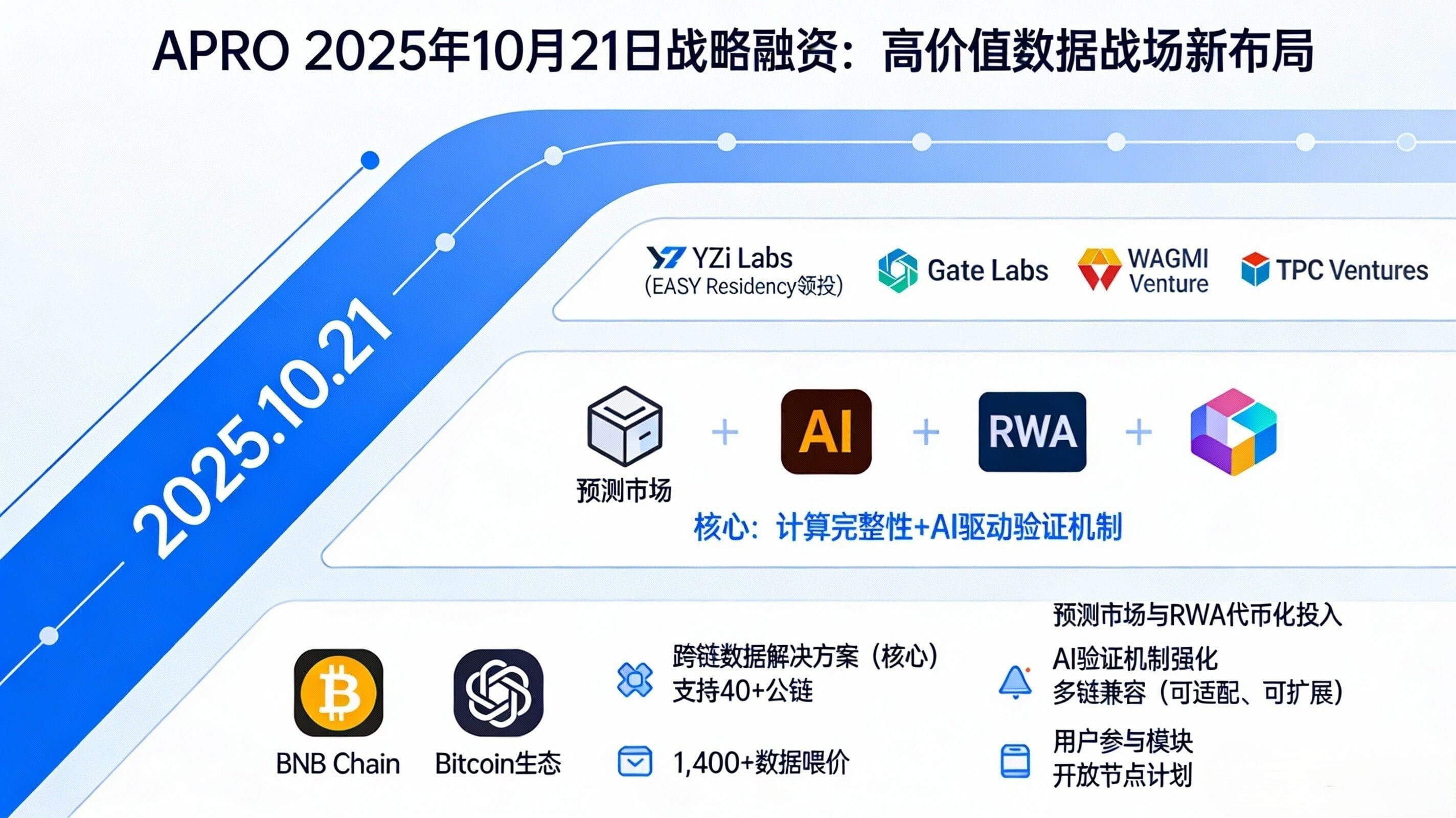
Why do I say this is 'computable trust'? Because what institutions truly fear is not your new concept, but whether your credibility can be quantified, audited, and written into risk control clauses. You see in this financing announcement, the statement from YZi Labs is very straightforward: the industry needs to upgrade from 'simple data feeding' to the next generation oracle layer that can safely move complex, high-fidelity data onto the chain, with the core being stronger computational integrity and AI-driven verification mechanisms, allowing high-value assets to be trusted, transparent, and traceable on the chain. In layman's terms, it means: don’t tell me 'we are reliable,' you need to tell me 'how you prove you are reliable,' and this proof must be consumable by programs.
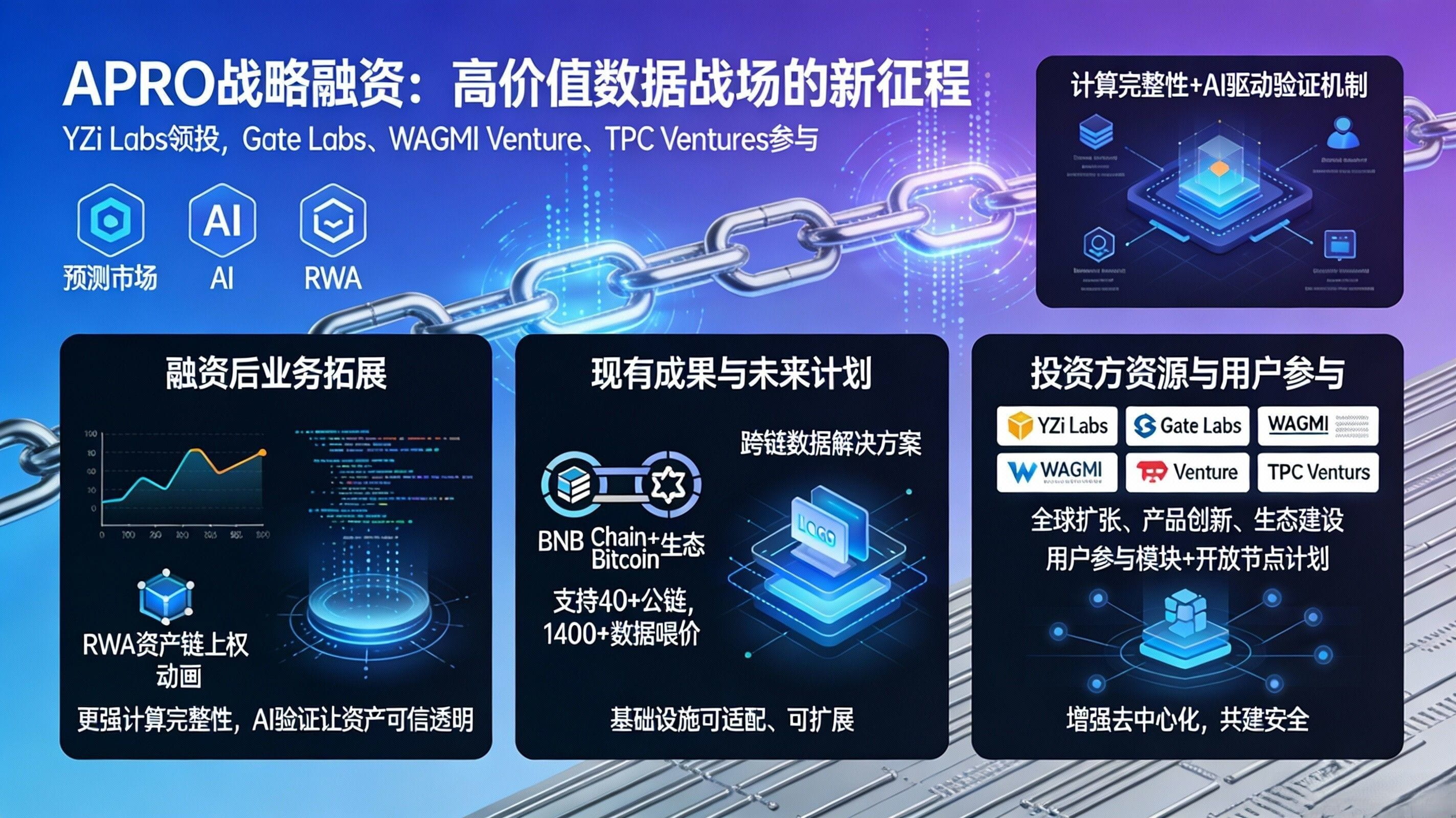
This also explains why APRO's track selection naturally leans towards RWA and prediction markets. Price feeds are certainly important, but it's more like 'utilities'; the market will ultimately roll it into a general service. What really forms a commercial moat is often those data scenarios where 'one mistake can lead to big problems.' RWA requires ongoing proof and auditable disclosure beyond price, while prediction markets need semantic determinations of event-type information, evidence chains, and dispute resolution paths—none of which can be resolved simply by 'getting more quotes from exchanges'; rather, they require a combination of off-chain processing and on-chain verification. APRO also clearly stated in the announcement that it will deepen its investment in prediction markets and RWA tokenization, and continue to strengthen AI-enhanced verification mechanisms and multi-chain compatibility to make the infrastructure more 'adaptable and scalable.'
Thus, the rule changes emerged: the funding provided is not an 'accelerator for a certain functionality,' but more like 'a ticket to the next generation of data infrastructure.' As institutions begin to enter the field, the competition dimension for oracle services will gradually shift from 'who is faster, who covers more price pairs' to 'who can provide auditable SLAs, who can lock risk events into verifiable processes, and who can maintain consistent standards in a multi-chain environment.' This is also why APRO emphasizes in the same announcement that it has already established influence in the BNB Chain and Bitcoin ecosystems, supporting over 40 public chains and 1,400 data feeds, placing 'cross-chain data solutions' at a core position—this is not boasting, but responding to the question institutions love to ask: have you actually run, borne, and been called upon in the mainnet?
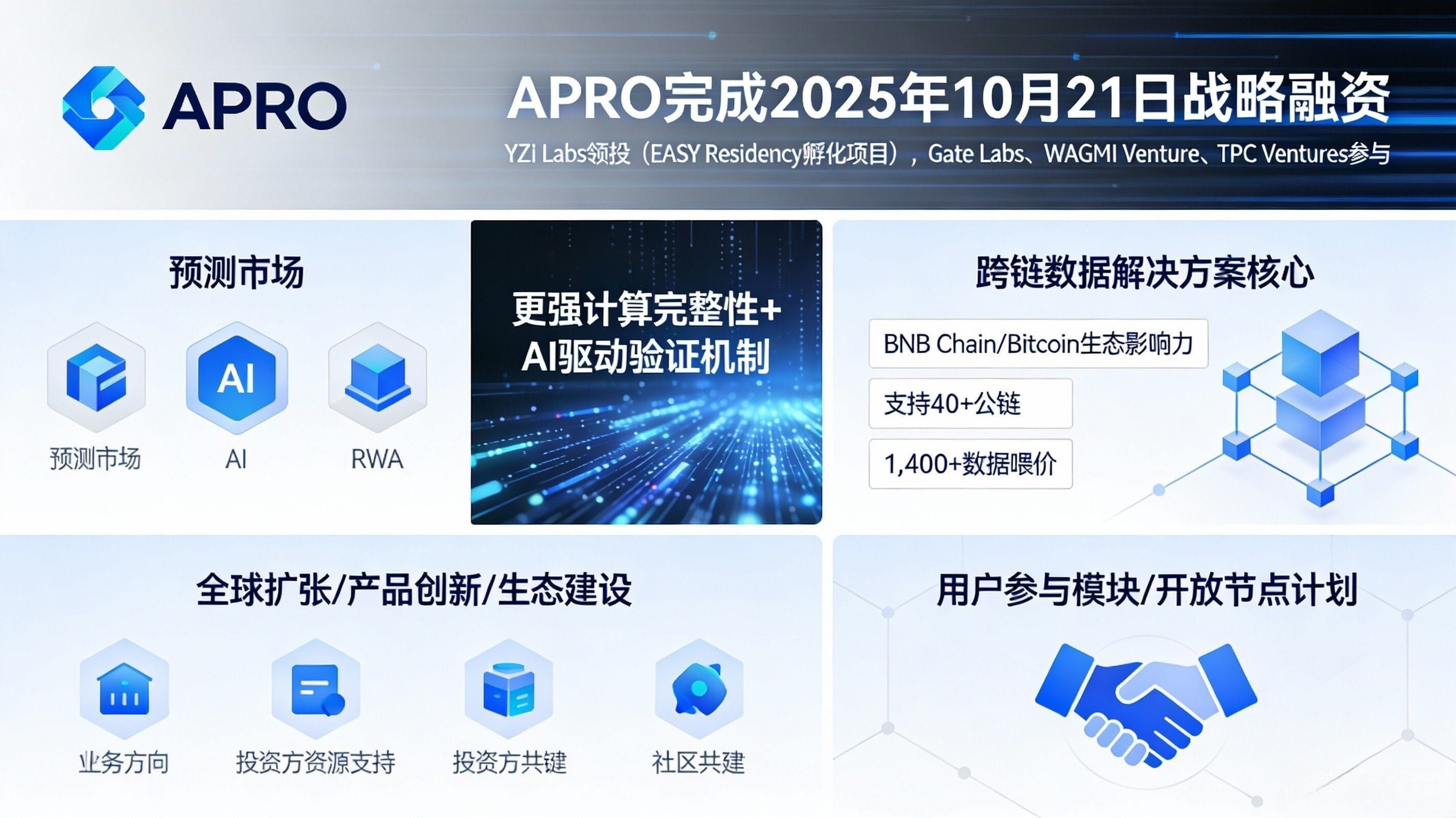
For ordinary users, the most direct impact of this financing is not 'another round of stories,' but rather that ecological expansion and product delivery may accelerate. The announcement mentioned that investors not only provide funds but will also offer resources to promote global expansion, product innovation, and ecological construction; at the same time, APRO stated it would launch more user participation modules and explore an open node plan to enhance decentralization and co-build security. You can understand it as pulling two lines simultaneously: one line deepens commercialization scenarios (prediction markets, RWA), while the other line increases network participation, ultimately letting 'trust' rely not just on team endorsement but on mechanisms and participants collectively endorsing.
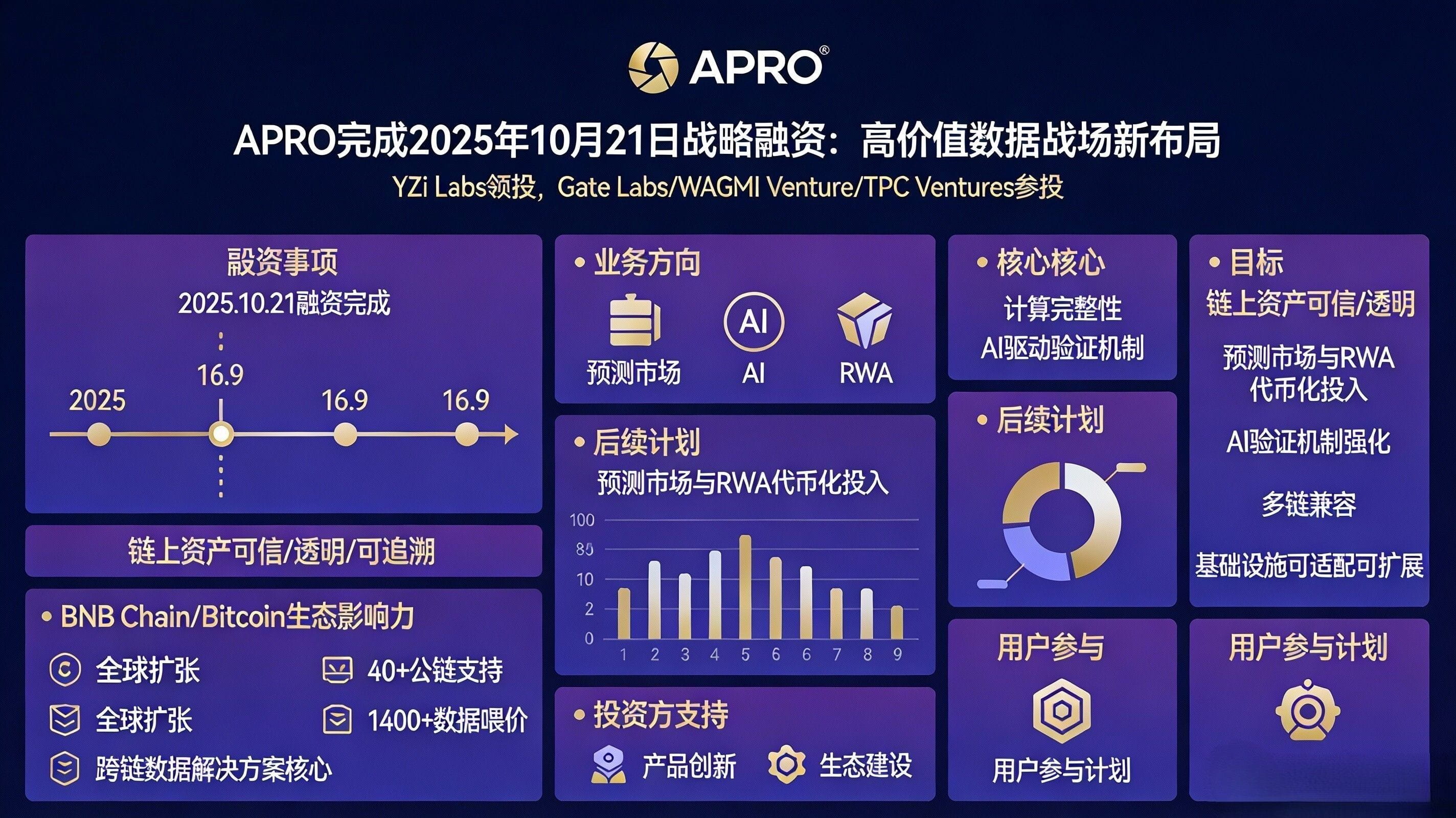
But Azu also needs to remind: fundraising itself does not equal realization; the real point of interest is the 'rhythm after financing.' I suggest you use a very strict observation metric: starting from October 21, 2025, count 90 days forward, around January 19, 2026, to check if three things have happened. The first thing is whether there are tangible new deliveries on the product side, such as whether the user participation module and open node plan mentioned in the announcement have more specific rules and timelines; the second thing is whether there has been a 'mainnet business' level of landing on the cooperation side, rather than just poster-style co-branding; the third thing is whether there are more transparent auditable traces on the data side, such as clearer service entry points, traceable usage and expense rhythms, and the expression of evidence chains that can be verified in prediction market/RWA scenarios. If you keep an eye on this 90-day marker, you can transform 'the calculable trust that institutions care about' from a slogan into a scorecard.
@APRO Oracle $AT #APRO


