

On a bustling street near Hoan Kiem Lake in Hanoi, Vietnam, I had a conversation with a man who had been engaged in the black and gray market business in Cambodia for eight years.
Article author and source: MarsBit
"After staying in Cambodia for a while, you don't actually need anyone to teach you; you'll naturally adapt to the whole system: banks use ABA, social networking relies on Telegram, and as for gray market activities and cryptocurrency payments, they can't do without Huiwang."
He witnessed Sihanoukville's most frenzied era firsthand, and was once deeply mired in gambling, even being locked up in a "small dark room." He watched as cryptocurrency gradually became the "blood" of a global fraud system, ultimately becoming a link in this chain.
In early December of this year, a severe run on the Huawang financial system, Cambodia's largest black and gray market financial system, occurred. Amidst the spreading panic, he, as the "connector" between funds and channels, seized an opportunity in the chaos and quickly profited. In this almost borderless and unrestrained area, human greed and fear were amplified.
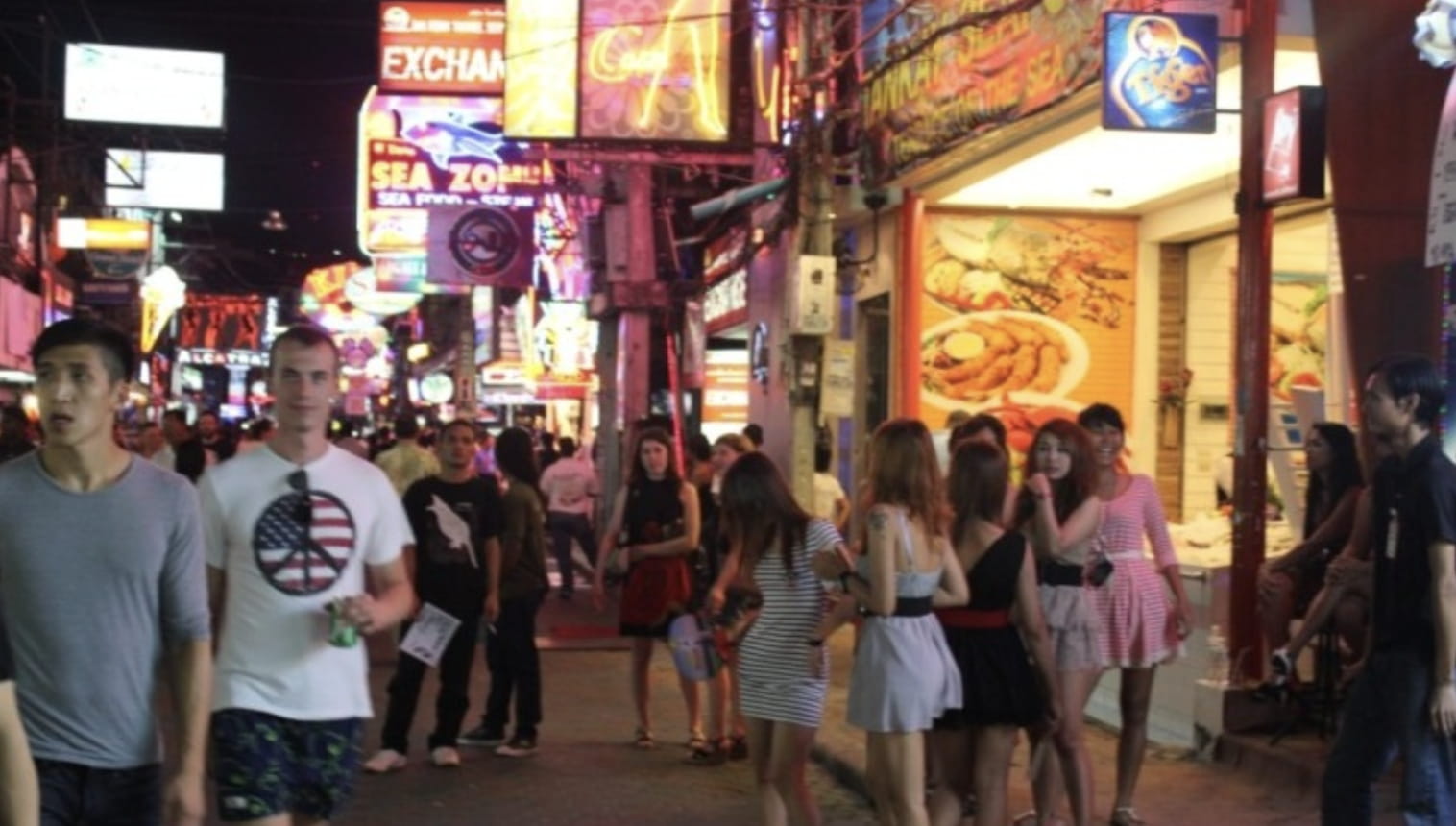
The contrast between Ho Chi Minh City at night and the bustling yet orderly Hanoi during the day left a deep impression on this Cambodian shady trader who was on a short trip to Vietnam. He repeatedly mentioned to the author that he felt a long-lost sense of "comfort" in Vietnam—he rarely saw anyone with a menacing look on the streets, and most people appeared friendly and peaceful.
This feeling contrasts sharply with the place where he has lived and worked for a long time.
"I live and work in Sihanoukville, Cambodia, a place where almost every kind of drug exists."
The following is a transcript of my interview with this Cambodian professional. The article will be told from his first-person perspective.
monologue
I spent eight years in Cambodia.
I was born in Northwest China, a member of the post-90s generation. Now, I've married and had children here, slowly settling down in one of the world's most chaotic countries.
From the initial dream of striking it rich abroad to the abyss of gambling, from the chaotic social order to the financial ecosystem dominated by the black and gray industries, I have witnessed almost the entirety of Cambodia's development trajectory over the past eight years.
In the outside world, especially in domestic public opinion, "Cambodia" has long been simplified to a synonym for "café" (a derogatory term for Cambodia). For those in the cryptocurrency circle, it is the lawless land where USDT is most active. Today, I want to strip away the veneer of those news reports and, as a firsthand witness, tell the real story of Cambodia, and how we built an underground financial order using cryptocurrency in this "chaotic paradise".
A gray world dominated by Chinese, fueled by the "U" and controlled by Hui Wang is growing wildly in this country in the lower Mekong River region.
The Gambler's Abyss: From "Higher Up" to "Dark Room"
My initial reason for coming to Cambodia was very simple—to pan for gold.
Back then in China, I felt there were few opportunities, intense competition, and it was hard to make money. A quick online search revealed countless recruitment ads for "online gambling" in Cambodia. Those were early years; the industry was still booming, and I thought that even if it was gambling, as long as I could earn US dollars, it would be fine. So, I flew to Phnom Penh alone.
But the first and biggest lesson I learned wasn't being scammed, but rather succumbing to my own human nature. I became addicted to gambling.
Many people come to Cambodia to work in gambling dens, only to become gamblers themselves. Casinos are everywhere, especially in Sihanoukville, where the atmosphere is so intense it can be overwhelming. Many people working in Cambodia gamble whenever they have free time.
I remember that "high" feeling very clearly. I only had $150 to begin with, and after winning a little, I felt like the money came too easily, and I went crazy wanting to win more. Losing? Losing was even worse; all I could think about was getting my money back. Even if the money wasn't actually mine, but a friend's or borrowed.
The craziest time I ever went was when I lost everything and then exchanged $800. I lost every single hand, a losing streak of over ten. I refused to give up, so I exchanged another $3000 and went all in. My heart was pounding. And so it went, again and again, until finally, I was completely wiped out.
In Cambodia, if you lose money gambling and can't pay it back, there's only one consequence: being locked up in a dark room.
I was locked up there. I saw with my own eyes that everyone else who went in was immediately beaten, with no dignity whatsoever. Although I wasn't beaten, I was terrified. They threw my phone at me and told me to call my parents to ask for money to bail me out. In the end, my dad transferred the money to me, saving my life.
That experience was a watershed moment in my life. It was like a bucket of ice water, waking me from my get-rich-quick fantasy. From then on, I set rules for myself: gambling is okay, even now I occasionally take three or four thousand US dollars to play around, but I will never get carried away again, and I will never gamble big.
In this circle, if you get "hooked" just once, your life is over. That was the first lesson Cambodia taught me.
A "Chinatown" built on Telegram and USDT
In Cambodia, you'll find a strange phenomenon: although it's the land of the Khmer people (the main ethnic group in Cambodia, making up over 90% of the population), the lifeline of the economy, especially high-end consumption and the underground economy, is entirely in the hands of the Chinese.
Without the Chinese, Cambodia's economy might be crippled by half. Here, the Chinese are the de facto "upper class," while locals are often at the bottom of the industrial chain, working as drivers, nannies, or low-skilled laborers.
This group of Chinese, who wield wealth and violence, have constructed a survival system completely independent of local laws. This system has three pillars:
1. ABA Bank: This is the best local bank, and people used to use it for transfers. However, because it is a legitimate bank, anti-money laundering investigations are becoming increasingly strict, and people involved in illicit activities are now less willing to make large transactions.
Second, Telegram: This is the "WeChat" of the underworld. All communication, transactions, buying and selling, and even gun purchases take place here. You can see people doing drugs and getting high on the street on Telegram, or you can directly contact a seller to buy an AK47.
Third, Huione and cryptocurrency are the "central bank" of the underworld.
For those in the cryptocurrency world, you're used to using Binance, OKX, or on-chain wallets. But in Cambodia, Huawang is the true king.
Why? Because most of the businesses here are shady.
What do you think we're doing? To put it bluntly, it's mainly fraud. It used to target China, but now the crackdown is so intense, and anti-fraud propaganda is everywhere, so the scammers have long since shifted their targets. The current "pig butchering scam" is global, targeting Americans, Indians, Vietnamese, Thais, and even wealthy Europeans like those in Germany and France.
If the fraud succeeds, the final destination of the funds will always be USDT. And Huiwang is the "central bank" in this system, responsible for clearing, exchanging, and circulating the funds.
Huiwang: Cambodia's "Underground Federal Reserve"
In Cambodia, when engaging in illicit activities, no one will ask you to transfer money directly to a bank card. The US dollar is the common currency here, and Huiwang acts as the "valve" between the US dollar and USDT.
In the crypto community, USDT is understood as on-chain digital code. However, in Cambodia, USDT, through Huawang, becomes cash that can be withdrawn at any time.
Many people don't understand why we don't use Binance, which is both safe and compliant. The answer is simple: because we operate in the gray market. Binance has KYC (Know Your Customer) verification, which is tracked by global anti-money laundering organizations, and local bank transfers leave a trace. Huiwang, on the other hand, is like a huge, semi-underground money exchange system.
While Huiwang has an app, its core advantage lies in its vast offline network of physical stores. Transfers within its ecosystem are instantaneous. People then exchange the fraudulently obtained money for USD, then for USD cash, or use USD directly for purchases. In Southeast Asia, most KTVs, gambling venues, and similar establishments accept USD payments.
There are no transaction fees for transferring USD within the Huiwang system. A withdrawal fee is only charged when you need to convert USD into USD cash. Even so, its efficiency is far superior to cross-border remittances through regular banks.
Huiwang is like an offline OTC (over-the-counter) network spread throughout Cambodia. It has storefronts like legitimate companies. You go in with USDT and come out with a thick wad of US dollars; or you go in with stolen money (cash) and exchange it for clean USDT to deposit into your phone.
People trust it because it seems "untraceable." It has physical assets and a large amount of offline assets, which means it represents a kind of gray-market credit in Cambodia.
However, this so-called "credibility" has recently collapsed. This is an inside story that is little known to the outside world, and it is also the biggest shock to Cambodia's black and gray market recently.
Huiwang experienced a bank run.
At the beginning of this month, panic suddenly spread. With international and regulatory sanctions, Huiwang closed a large number of offline stores, and withdrawals stopped arriving. Can you imagine? A platform that handles the flow of funds for the entire underground industry suddenly tells you "there's no money left."
At that moment, the market was in a state of extreme panic. Holding a string of numbers (USD balance) in their Huawang account, they couldn't exchange it for a single banknote. The black market exchange rate collapsed instantly.
Normally, 1 USD in Huiwang is equal to 1 USD in cash. However, during the worst bank runs, if you had 1000 USD in Huiwang, you could only exchange it for 500 USD in cash. That's a 50% discount! It's practically a loss.
But as I said, chaos creates opportunity. In this circle, some cry while others laugh.
The current situation in Cambodia is this: everyone is talking about U dollars, but nobody has any US dollars in cash. This extreme dollar shortage has created a huge arbitrage opportunity.
We're making money from this right now. I'm an intermediary, a funder with resources. If there's a panicked client in the market who's eager to sell their $90,000 in Huawang because they're afraid Huawang will go bankrupt and their money will be worthless.
At this point, I (or my funding party) enter the market. We acquire his Huiwang shares at an extremely low price, or exchange cash for his U. In a $90,000 transaction, I can easily earn a $3,000 profit from this in-and-out exchange.
This is Cambodia. One second it's a financial crisis, the next it's a vulture's feast.
While Huione was collapsing, a new platform, H-PAY, was quietly operating, also under the Huione system. When the Huione name was subject to international sanctions, a new brand was adopted in an attempt to take over this huge underground payment market.
This is the resilience of the black and gray market. When one falls, another always takes its place. The need for cash flow never dies; the only difference may be who takes over. And often, those who take over are even the same group of people.
Living in the "Jungle": A Trade for Life and Death
If you stay in this circle for a long time, you'll find that human life is worthless. Elsewhere, you pay tuition, but here, you might lose your life.
I have a friend who disappeared for a year. Nobody knew where he went; we couldn't reach him by phone, and he didn't reply to WeChat messages. A year later, he suddenly contacted me, his voice trembling.
He was sold into the park.
During that year, he was imprisoned in the wilderness, surrounded by high walls and electric fences. His daily task was to use a script to deceive people. If he couldn't get any money? Then he would be beaten. Beaten to death. He said that at that time he really felt that he was going to lose his life there. If he died, he could just be buried somewhere and that person would never exist again.
Finally, he contacted me, and I got his family together to raise $15,000 to bail him out. This was lucky; many people don't even have the chance to ask for help.
Therefore, in Cambodia, trust is the most luxurious thing.
Joe Zhou asked me how I contacted the investors and how I ensured the safety of both parties. My answer was: I don't do any private or secretive transactions. My clients are people I know, but I might not know the investors. In a country where you can buy guns everywhere and easily sell drugs to industrial parks, you can't be too careful.
When we conduct transactions, we always choose offline, public places—lobbys, busy cafes, or even locations with security guards. We sit there, count the money face-to-face, and go through each transaction one by one.
"Want something to drink?" No, I never drink anything offered by strangers, and I don't recommend drinking food or water offered by strangers in Cambodia. Here, you could get a drugged drink and wake up typing away in the park.
This isn't a movie; it's just my everyday life.
Epilogue: Why don't I leave?
You asked me, since it's so dangerous, why don't you go back to China?
To be honest, I can't go back, and I don't really want to. It's hard to make this kind of quick money in China. Besides, once you get used to the thrill of high risk and high reward, it's hard to go back to a nine-to-five life. Moreover, my job, my family, and my lifestyle are all tied to Cambodia.
Cambodia is like a giant black hole. It is backward, chaotic, and rife with vices, yet it is also full of primal vitality.
Compare this to its neighbors: Vietnam (Hanoi, Ho Chi Minh City) is now prosperous, much like China in its early days. Although there are illicit activities, it's relatively orderly; at least you don't have to worry about being kidnapped on the street. Laos is busy building hydroelectric power stations, acting as China's "storage battery." China controls the valves of all this, cracking down on money laundering and controlling financial risks. The financial systems of Japan and South Korea have both collapsed, but China, due to its strict regulations, has not yet.
Cambodia, however, is the most vulnerable link, and also the most reckless.
Here, cryptocurrency is not the "future of Web3" or the "ideal of decentralization." It is simply a tool—a channel for fraudsters to sell stolen goods, chips for gamblers, and the lifeblood for those of us who walk in the shadows.
Huge sums of USDT transfers flowed from all over the world along the Mekong River, through underground pipelines like Huiwang, and finally turned into a sigh in a Phnom Penh casino or a scream in some industrial park.
This is Cambodia as I see it.