
In the deep sea of cryptocurrency, which is full of extreme volatility and uncertainty, 'stability' is not only a desire but also the most expensive financial infrastructure. After going through the baptism of the last cycle, the market's scrutiny of 'decentralized stablecoins' has become unprecedentedly strict. The once purely algorithm-dependent model has given way to more robust demands. In this context, it is necessary for us to refocus our attention on @USDD - Decentralized USD - a disruptor that is attempting to redefine the standards of the track with extremely stringent mechanisms and transparency.
When we talk about USDD, we are no longer discussing the early algorithmic stablecoin model. The current USDD's core narrative is firmly anchored in four words: Stability brings trust.#USDD以稳见信
1. Hardcore Confidence: Reject 'air', embrace multiple over-collateralizations
The biggest enemy of stablecoins is the run triggered by a collapse of trust. USDD has learned from the industry's historical lessons and chosen the most difficult but robust path to build a foundation of trust, which is: Over-Collateralization.
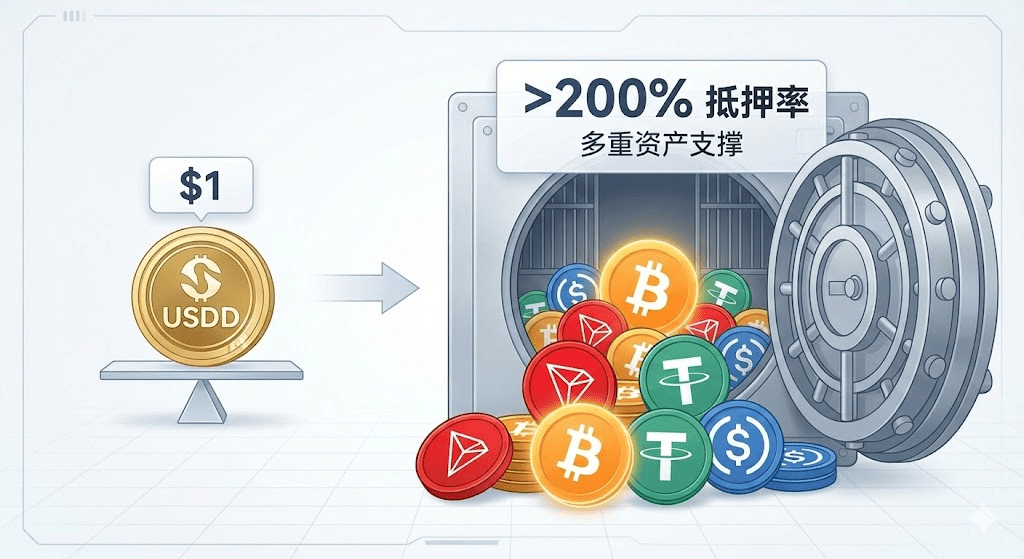
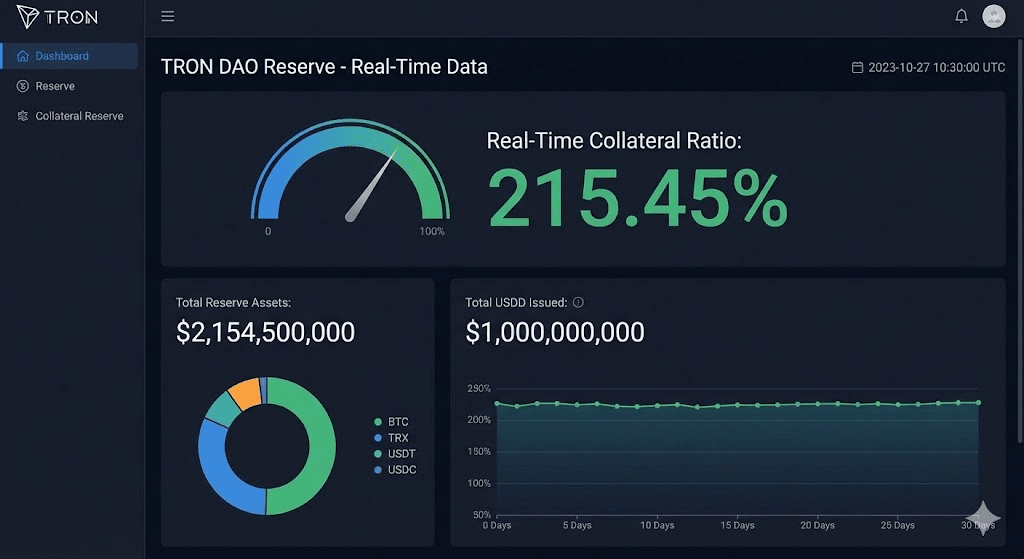
Unlike the 1:1 fiat mapping of centralized stablecoins, USDD has established a large and diverse decentralized asset reserve. According to the real-time public data from the TRON DAO Reserve (TDR), USDD's collateralization ratio has long maintained a high level above 200%.
What does this mean? It means that for every circulating 1 USDD in the market, there is more than 2 dollars of hard currency supporting it. This reserve is not a single asset but a diversified combination that includes BTC (digital gold), TRX (native asset of the public chain), and highly liquid mainstream stablecoins (like USDT, USDC). This kind of 'two-for-one' or even higher redundancy design builds an indestructible safety line from a mathematical and economic perspective, giving it enough capability to absorb the shocks brought by extreme black swan events in the market.
2. Extreme Transparency: On-chain data is the best trust declaration
In the Web3 world of 'Don't Trust, Verify', true trust can only come from transparency.
Another core advantage of USDD is its complete on-chain transparency. It does not have the black-box operations of centralized institutions or complex behind-the-scenes lending. All collateral assets are held in publicly transparent on-chain addresses, and any user globally can conduct real-time checks 24/7 through blockchain explorers. This practice of fully showcasing its assets to the public is, in itself, a powerful confidence.
3. Mechanism Innovation: PSM and TDR's Dual Insurance
With a sufficient arsenal, an efficient adjustment mechanism is also needed. The stability of USDD is also attributed to its clever peg stability module (PSM).
PSM is like a 'central bank-level rigid redemption window'. It allows users to conduct 1:1 zero-slippage exchanges between USDD and other mainstream top-tier stablecoins (like USDT). When the market experiences negative premiums, arbitrageurs can quickly buy USDD through PSM and exchange it for USDT to profit, and vice versa. This mechanism utilizes the market's spontaneous arbitrage behavior to keep the price of USDD firmly around 1 dollar.
The TRON DAO Reserve (TDR) plays the role of the 'lender of last resort'. It not only manages hundreds of billions of dollars in reserve assets but will also use reserves to conduct open market operations when necessary to maintain exchange rate stability. PSM is responsible for daily minor fluctuations, while TDR is responsible for responding to extreme market conditions, together forming a dual insurance.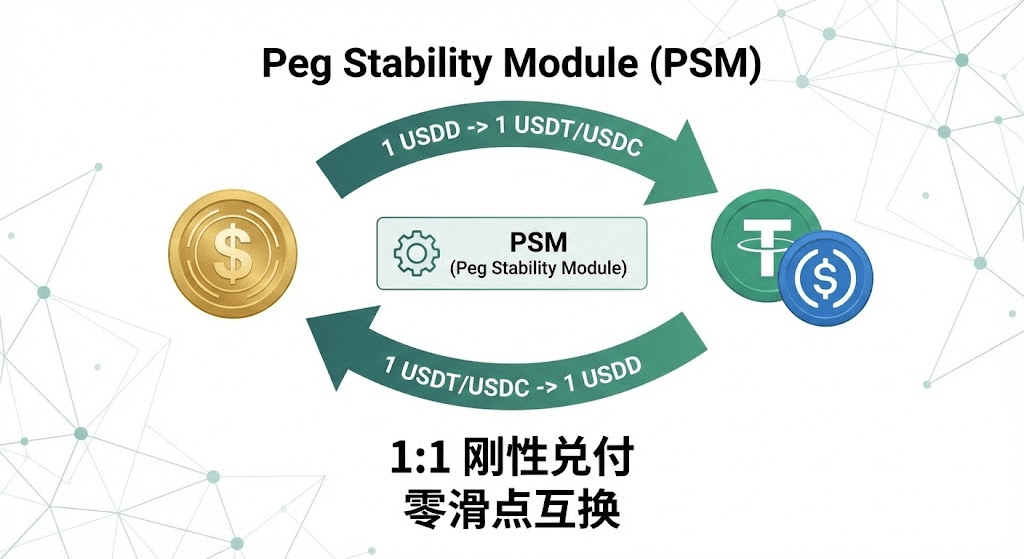
Conclusion
In the future DeFi world, a stablecoin that is both decentralized and has a high margin of safety will be essential as blood. USDD is gradually proving its capability as a cornerstone of Web3 finance by evolving from a purely algorithmic model to an over-collateralization model. In a world full of uncertainties, choosing assets with the most transparent mechanisms and sufficient collateral may be our optimal solution to navigate through cycles.
(Risk warning: This article is for information sharing and mechanism analysis only and does not constitute any investment advice. The crypto market is highly risky, please do your own research DYOR.)

