

$BTC I’ve spent days mapping where the global financial system is heading.
2026 will be rough.
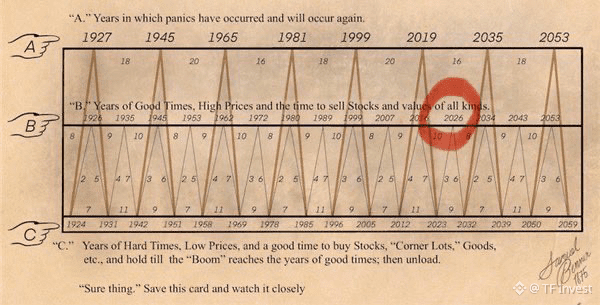
This won’t look like a normal recession or a bank run.
It starts in sovereign bond markets, especially U.S. Treasuries.
Bond volatility is waking up.
The MOVE index is rising — and that never happens without a reason.
Bonds don’t move on narratives.
They move when funding conditions tighten.
Three fault lines are aligning:
1) The U.S. Treasury
In 2026, the U.S. must refinance massive debt while running huge deficits.
Interest costs are surging, foreign demand is fading, dealers are constrained, and long-end auctions are already showing stress.
Weak demand, bigger tails — the data is clear.
This is how funding shocks begin: quietly, through failed auctions.
2) Japan
The largest foreign holder of U.S. Treasuries and the core of global carry trades.
If USD/JPY forces the BOJ to react, carry trades unwind fast.
Japanese institutions sell foreign bonds — pushing U.S. yields higher at the worst time.
Japan doesn’t start the shock, it amplifies it.
3) China
A massive local-government debt problem sits in the background.
If stress turns visible, the yuan weakens, capital seeks safety, commodities react, and the dollar strengthens — again pushing U.S. yields higher.
China is another amplifier.
The trigger doesn’t need to be dramatic.
One badly received 10Y or 30Y Treasury auction is enough.
We’ve seen this before — the UK gilt crisis in 2022.
The difference now is scale. This time it’s global.
If the shock hits:
Yields spike → dollar strengthens → liquidity dries up → risk assets sell off → volatility spreads.
This isn’t a solvency crisis.
It’s a plumbing problem — and plumbing breaks fast.
Then comes the response:
Central banks inject liquidity.
Swap lines open. Balance sheets expand.
The system stabilizes — but at the cost of more inflation.
That’s phase two:
Real yields fall.
Gold breaks higher.
Silver follows.
Bitcoin recovers.
Commodities move.
The dollar eventually rolls over.
That’s why 2026 matters.
Not because everything collapses forever —
but because multiple stress cycles peak at the same time.
And the early warning is already here.
Bond volatility never rises early by accident.
I called the market top in October.
I’ll do it again — that’s my job.
Many people will wish they followed me sooner.
