
Beyond a Guild, Toward a Digital Nation
What does it really take to build the largest metaverse guild in the world—scale, timing, or belief? Dazai sees Yield Guild Games not as a temporary trend born from play-to-earn hype, but as an early blueprint for how digital labor, ownership, and community coordination will function in virtual economies. YGG entered the market when NFTs and gaming were still misunderstood, and instead of chasing short-term rewards, it focused on structure: assets, players, data, and governance. That foundation is what still keeps the YGG story alive today.
Building the Metaverse Workforce
From the start, YGG’s vision was centered on people, not just tokens. The guild model turned players into contributors and NFTs into productive assets. Dazai notices that YGG quietly shifted from being “a guild that plays games” into “an organization that onboards humans into virtual economies.” This long-term approach explains why YGG expanded into multiple regions, launched subDAOs, and localized operations across Southeast Asia, Latin America, and beyond. The goal was never one game—it was resilience across many digital worlds.
YGG’s recent focus on sustainability over speculation shows maturity. As play-to-earn cooled, YGG leaned into play-and-own models, skill-based progression, and long-term engagement rather than raw emissions. That pivot matters for the future of the token itself.
The YGG Token as Digital Infrastructure
The YGG token was designed as more than a reward mechanism. It represents governance, access, and coordination across a growing network of games and contributors. Dazai observes that recent YGG updates have emphasized DAO participation, ecosystem tooling, and clearer roles for token holders. Instead of forcing artificial demand, the project has been aligning token utility with actual activity inside its ecosystem.
YGG’s tokenomics evolution reflects lessons learned across the broader crypto market. As liquidity cycles tightened, the guild reduced noise and focused on operational efficiency. This has positioned YGG as one of the few early Web3 gaming projects still actively building while others faded out
Adapting Through Market Cycle
The crypto market does not reward rigidity. YGG survived multiple downturns by adapting its strategy without abandoning its core thesis. Dazai sees this as one of YGG’s most underestimated strengths. While hype-driven projects chased narratives, YGG invested in partnerships, infrastructure, and talent pipelines. The guild explored new game genres, supported competitive gaming, and integrated analytics to better understand player behavior.
Recent developments around Web3 gaming infrastructure, Layer-2 adoption, and improved onboarding tools directly benefit YGG’s model. The guild does not need every game to succeed—only enough viable virtual economies to keep the network alive and evolving.
Toward the World’s Largest Metaverse Guild
YGG’s long-term vision is scale with meaning. Not just millions of players, but millions of contributors who understand ownership, governance, and digital value. Dazai believes YGG is positioning itself as a meta-layer above individual games—a coordination hub where capital, labor, and creativity intersect. That is what separates a temporary guild from a lasting institution.
The metaverse will not belong to a single company or chain. It will belong to networks that can organize humans at scale. YGG’s journey so far suggests it understands this better than most.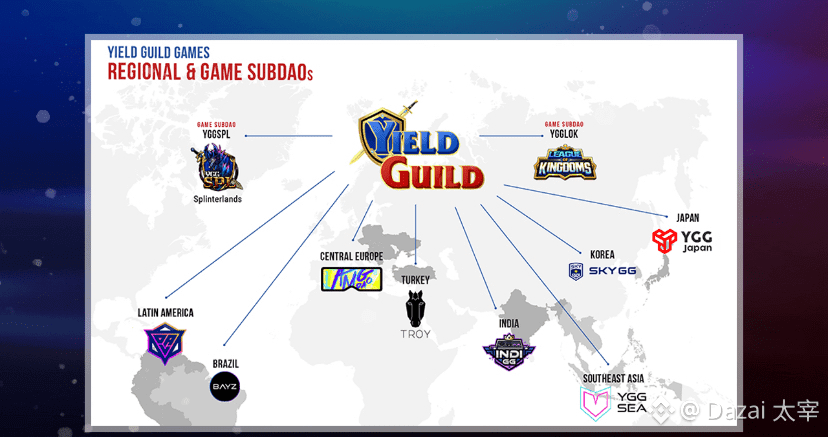
Final Thoughts: A Quiet Builder in a Loud Market
In a space driven by short attention spans, YGG has chosen patience. The token continues to represent participation in something larger than price action: a living experiment in decentralized work and play. Dazai sees YGG not as a finished product, but as an evolving system—one that grows alongside the metaverse itself. If virtual worlds become a permanent layer of human interaction, guilds like YGG may end up being the institutions that quietly shaped it all.
@Yield Guild Games #YGGPlay $YGG

