

Author: Zhang Feng
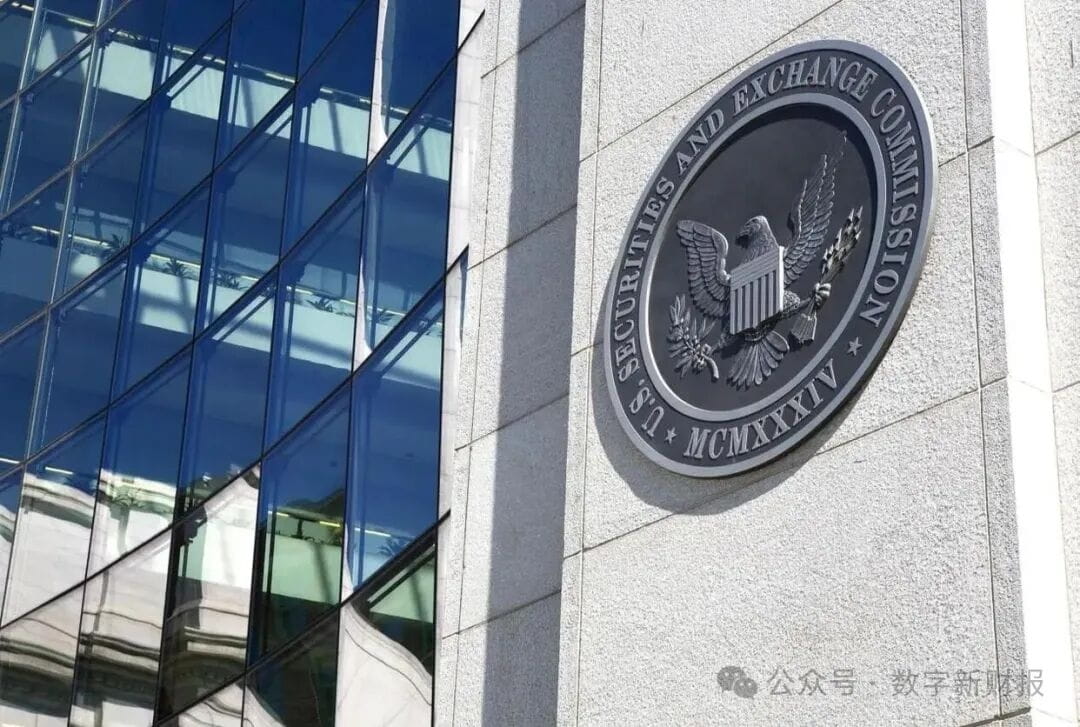
Paul S. Atkins, the chairman of the U.S. Securities and Exchange Commission (SEC), delivered a speech at the cryptocurrency working group roundtable meeting held on December 15, 2025, elaborating profoundly on the issues of financial privacy and regulatory balance in the blockchain era. He clearly pointed out that if the regulatory direction is misguided, cryptocurrencies could become 'the most powerful financial surveillance structure in history,' potentially pushing the entire industry into the abyss of a 'financial panopticon.' In today's world, where digitalization and blockchain technology are deeply integrated, implementing effective financial regulation without infringing on personal privacy has become a common challenge faced by global regulatory agencies.
1. Why is this issue crucial? - Erroneous regulation could lead to a 'financial panopticon'
Atkins bluntly pointed out in his speech that cryptocurrencies and blockchain technology possess unprecedented transaction transparency and traceability. Every on-chain transaction is recorded on a public ledger, and on-chain analytics companies have been able to efficiently assist law enforcement in linking on-chain activities to real identities. This technological characteristic is like a double-edged sword: on one hand, it helps combat illegal financial activities; on the other hand, it can also be abused as a comprehensive surveillance tool.
If regulatory agencies adopt an extreme, all-encompassing regulatory approach—such as treating every wallet as a broker, every piece of code as an exchange, and requiring mandatory reporting of every transaction—then the entire cryptocurrency ecosystem will be forced into a 'panoptic' state. In this state, every transfer made by users, every adjustment of holdings, and even every interaction with smart contracts will be fully exposed, personal financial privacy will vanish, and the vitality of innovation will be stifled.
As Atkins warned: 'Public blockchains are more transparent than any traditional financial system ever before... If the regulatory direction is wrong, cryptocurrencies could become the most powerful financial surveillance structure in history.' This is not only about technological ethics but also touches on the core contradictions of the modern financial system: how to draw the line between ensuring security and defending freedom?
2. Basic principles for solving this problem: Balancing national security and citizen privacy
Atkins emphasized that the essence of this issue is 'uniquely American'—whether individuals can participate in modern financial activities without sacrificing privacy. This reflects the long-standing value trade-offs in American society between national security and personal freedom.
On one hand, the government has the obligation to curb illegal financial activities through tools such as the Bank Secrecy Act, protecting citizens and the state from security threats; on the other hand, 'citizens should be able to freely manage personal affairs without government surveillance' is one of America's core values. The emergence of cryptocurrencies provides an opportunity to rethink this balance within the technological context of the 21st century.
Therefore, the basic principle of regulation should be: to effectively prevent risks and maintain national security while fully respecting and protecting citizens' financial privacy rights. Any policy that emphasizes surveillance or completely laissez-faire will harm the long-term healthy development of the financial system.
3. Existing tools of the committee and their usage boundaries: Self-restraint in regulation as seen from the CAT system
The SEC has established a series of data collection and monitoring tools over the past years, such as the Consolidated Audit Trail (CAT), swap data repositories, and PF forms. These tools have played a certain role in improving market transparency and combating fraud, but they also expose the risk of regulatory overreach.
Atkins pointed out, using the CAT system as an example, that the system was initially intended to help the SEC better understand market trading conditions but gradually evolved into a 'powerful monitoring system' that brought the SEC 'one step closer to large-scale surveillance.' More notably, the government has not even fully utilized all the submitted information, yet it has imposed unnecessary costs and privacy risks on investors.
To this end, the SEC has proactively taken measures to reduce some of the most sensitive data elements in the CAT and re-evaluate its scope and costs. This practice reflects the self-restraint and rationality that regulatory agencies should possess—not blindly pursuing data maximization but prudently assessing the necessity and reasonableness of each type of information.
4. Regulatory challenges in the digital age: The easier it is to obtain information, the more humility is required
In the 'simulation era,' financial regulation was limited by paper records, physical distance, and manual processes, which inherently provided some protection for personal privacy. However, in the digital age, especially after the widespread adoption of blockchain technology, the cost and threshold for information acquisition have significantly decreased, allowing regulatory agencies to grasp user trading behaviors almost in real-time and in a panoramic manner.
If this technological convenience is abused, it can easily slide into excessive surveillance. Atkins cites economist Hayek's viewpoint in 'Fatal Conceit' to criticize the bureaucratic mindset that believes 'as long as enough information is collected and enough experts are gathered, a perfect solution can be found.' In fact, information does not equate to wisdom, and data accumulation does not equate to effective regulation.
Therefore, in the digital age, regulatory agencies should maintain 'humility and principles,' avoiding excessive surveillance due to technological convenience. The discussion around cryptocurrencies and privacy-enhancing technologies (such as zero-knowledge proofs) is particularly important in this context.
5. Avoiding excessive regulation: Not turning every link into a monitoring node
Atkins clearly opposes including every component of the cryptocurrency ecosystem within the regulatory scope. He pointed out that if the government 'treats every wallet as a broker, every software as an exchange, every transaction as a reportable event, and every protocol as a monitoring node,' then the entire system will turn into a 'financial panopticon.'
Fortunately, blockchain technology itself also provides tools for protecting privacy, such as zero-knowledge proofs, selective disclosure, and compliance-proof wallets. These technologies allow users to prove compliance with regulatory requirements without having to expose all financial details. For example, regulated platforms can prove that their users have passed anti-money laundering screenings without permanently retaining complete records of every transaction.
This provides the possibility for 'less disclosure, more compliance' and opens up new paths for regulatory innovation: not by increasing data reporting to strengthen monitoring, but by leveraging technological means to achieve compliance verification while protecting privacy.
6. Ensuring normal business operations: Allowing some information to remain undisclosed to maintain market health
The normal operation of financial markets relies on a certain degree of privacy and confidentiality. Atkins pointed out that many institutions rely on the ability to establish positions, test strategies, and provide liquidity, and if these activities were fully disclosed in real-time, it would lead to phenomena such as front-running, imitation behavior, and 'herd selling.'
For example, if market makers and underwriters were required to disclose every inventory adjustment or capital flow in real-time, their business attractiveness would greatly diminish, and market liquidity could also be adversely affected. Therefore, a moderate level of information opacity is a necessary condition for the healthy operation of the market, and regulation should allow for reasonable business privacy.
This point is equally applicable in the cryptocurrency market. If every on-chain transaction and every smart contract call were fully exposed, it would not only suppress institutional participation but could also encourage market manipulation. Therefore, the regulatory framework should find a balance between transparency and confidentiality.
7. Building a target framework: Technological advancement should not come at the cost of personal freedom
Atkins pointed out at the end of his speech that the ultimate goal should be to build a regulatory framework that promotes technological innovation and financial development without sacrificing personal freedom. This framework should possess the following characteristics:
Principle-oriented: Balance national security and personal privacy as the basic principle;
Technological neutrality: Make good use of privacy-enhancing technologies to achieve 'compliance without surveillance';
Layered regulation: Distinguish between different entities and behavioral risks to avoid a one-size-fits-all approach;
Dynamic adjustment: Continuously optimize regulatory tools in line with technological advancements and market changes.
He emphasized that this matter 'has far-reaching significance and lasting impact,' requiring cooperation from regulatory agencies, the industry, and the public in discussions and designs. Only through collaboration can we find a 'feasible path that balances security and innovation without sacrificing personal privacy.'
8. Insights for China's regulation: Rethinking goals, principles, tools, and frameworks
The discussion of the SEC in the United States has important implications for our regulatory practices in digital currency and blockchain:
Regulatory goals should clearly balance. In promoting the development of blockchain technology and regulating cryptocurrency transactions, we should also establish regulatory goals that emphasize both security and freedom. It is necessary to prevent financial risks, combat illegal activities, protect users' legitimate rights and interests, and encourage technological innovation.
Regulatory principles should emphasize restraint. When utilizing tools such as big data and blockchain analysis, regulatory agencies should maintain rationality in tool use and restraint of power, avoiding excessive surveillance due to technological convenience. Reflections from the SEC on the CAT system could serve as a reference for establishing a necessity review mechanism for data collection.
Regulatory tools should be adaptable to technology. Our country can actively explore the application of privacy protection technologies like zero-knowledge proofs, homomorphic encryption, and multi-party computation in compliance, promoting a regulatory model of 'data minimization and trusted verification.' For example, in anti-money laundering monitoring, it could achieve 'proving compliance without disclosing transaction details.'
Regulatory frameworks should encourage innovation. When formulating relevant regulations, space should be allowed for technological iteration and business practices to avoid stifling innovation due to overly detailed and rigid rules. Consider sandbox regulations and pilot classifications to explore the balance between regulation and privacy in a controlled environment.
Industry self-regulation should play a role. Encourage industry organizations to establish privacy protection and compliance standards, promoting enterprises to consciously adopt privacy-enhancing technologies, forming a three-tier governance system of government regulation, industry self-regulation, and enterprise self-discipline.
Paul S. Atkins's speech profoundly reveals the core contradictions and possible paths of financial regulation in the cryptocurrency era. In today's world with unprecedented technological capabilities, regulators need to maintain clarity and restraint to avoid falling into the trap of 'panoptic surveillance.' Making good use of existing tools, ensuring normal business operations, and maintaining power restraint may be the key to achieving a balance between cryptocurrency regulation and privacy protection. This is not only a challenge for the United States but also a common question for every country exploring the future of digital finance.
