
The article discusses whether the traditional four-year Bitcoin cycle, associated with halving events, is changing or breaking in the current cycle after the April 2024 halving. Historically, Bitcoin follows a cyclical pattern that relies on halving mining rewards approximately every four years, increasing scarcity and leading to strong price surges followed by sharp corrections. However, the current cycle shows a clear deviation from this pattern, raising questions about whether the market is entering a new, more stable phase.
#### Historical Patterns of Previous Cycles
Previous Bitcoin cycles have been closely linked to halving events:
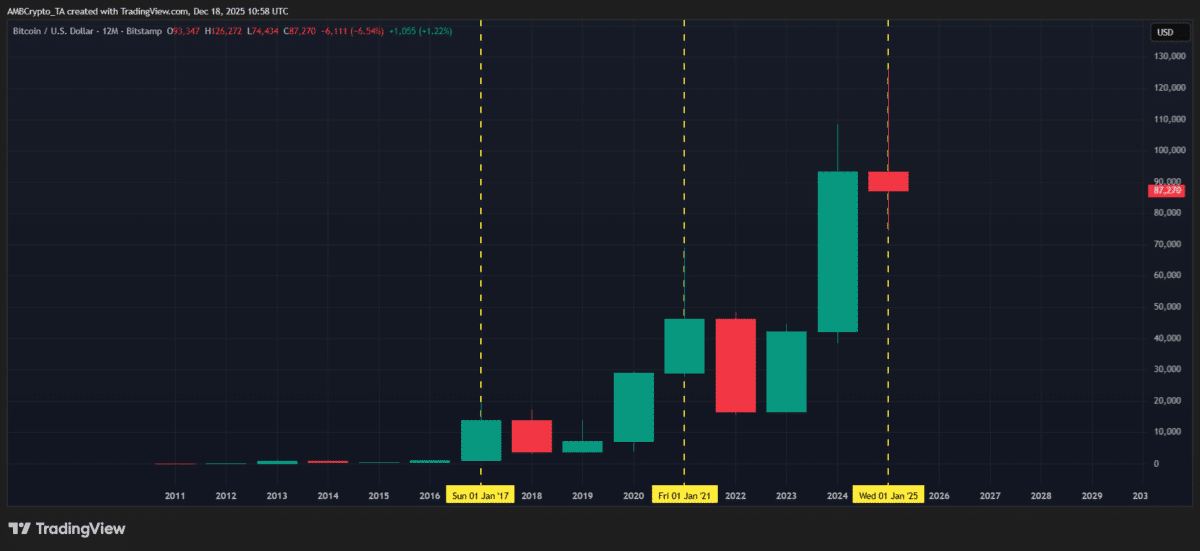
- Halving 2016 → led to a 125% increase in 2017, followed by a 73% decrease in 2018.
- Halving 2020 → led to a 300% increase and 60% gains in 2021, followed by a correction of 64% in 2022 to reach cycle lows, before a 153% increase in 2023.
These cycles were characterized by a "boom and bust" dynamic driven by excessive hype, with sharp rises and deep corrections.
#### Deviations in the Current Cycle (Post-Halving 2024)
The last halving event occurred in April 2024, reducing the block reward to 3.125 Bitcoin. After about 18 months from the halving (until the end of 2025 approximately), Bitcoin is set to close its first post-halving year with an estimated decrease of about 7%, which is unprecedented compared to previous cycles that saw strong gains in the first year (like 60% after the 2020 halving).
This cycle did not experience the usual sharp rise, but rather a "completely different" behavior, with the absence of explosive rises or traditional deep corrections.
#### New Factors Supporting Stability
Data indicates that new fundamental factors contribute to breaking the traditional cycle or transforming it into a more stable pattern:
- Impact of ETFs → The launch of spot Bitcoin ETFs in 2024 provides ongoing support, reducing reliance on speculative enthusiasm.
- Market Maturity → Bitcoin is transitioning from severe volatility to greater stability, supported by institutional flows.
- Decreasing reserves on exchanges → Exchanges recorded a net accumulation of 140,000 Bitcoin in the fourth quarter of 2024 alone, according to CryptoQuant data, indicating a withdrawal of coins to cold storage and reducing selling pressure.
- Positive Feedback Loop → A combination of four factors limits sharp volatility and maintains moderate fear of missing out (FOMO).
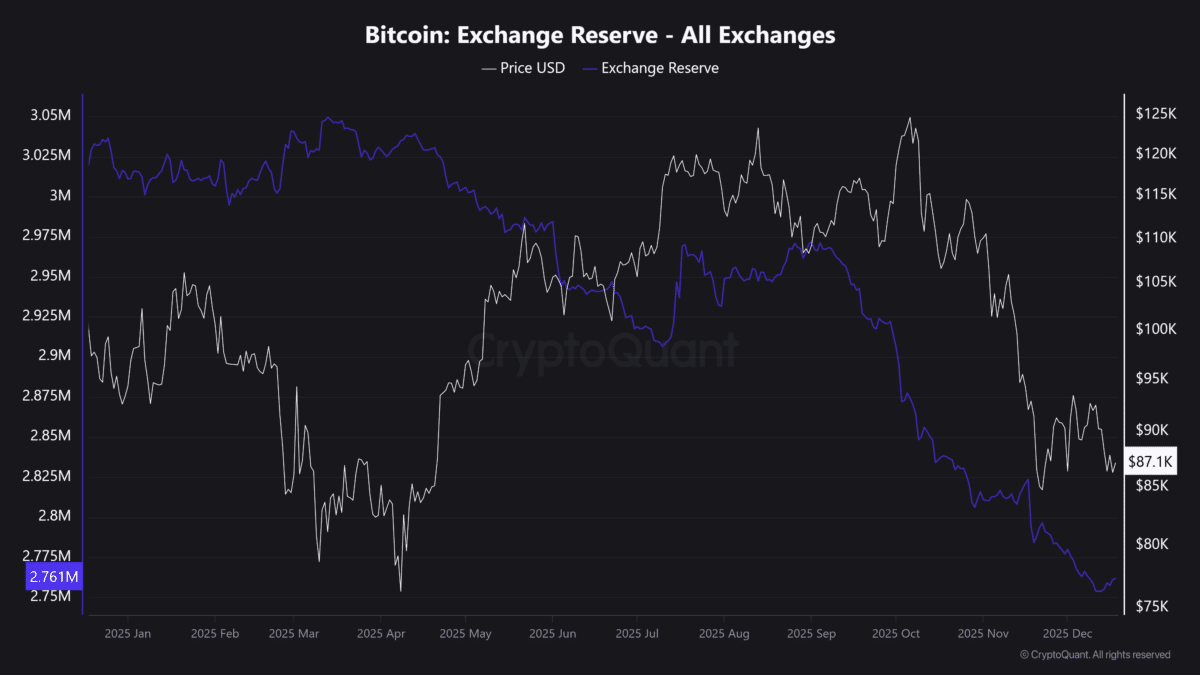
These factors turn corrections into part of an extended bull market, rather than entering deep bear markets like 73% in 2018 or 64% in 2022.
#### Expert Opinions and CryptoQuant Data
The article relies on insights from CryptoQuant, which indicates that Bitcoin is entering a "supercycle," where the traditional four-year cycle is losing its effectiveness due to stronger fundamentals. This development is seen as positive for bullish speculators, as it reduces the risk of sharp crashes and paves the way for more sustainable ongoing increases.
#### Summary and Outlook
Data post-halving 2024 shows clear signs of changing or breaking the traditional four-year cycle, with Bitcoin moving towards a more mature and stable pattern supported by institutions and ETFs. This could mean the end of the boom and dramatic bust era, and the beginning of a long-term "supercycle" beneficial for long-term holders.
(Currently, on December 19, 2025, Bitcoin is trading around 85,000 to 87,000 dollars, down over 30% from its historic peak of 126,000 dollars in October 2025, aligning with the moderate correction described in the article).
