
Stablecoins are often thought of as tools for human users, but the next phase of adoption may come from a different source: AI agents. Platforms like @KITE AI are building the first stablecoin chain designed specifically for agents transacting autonomously at scale, opening a new chapter for digital currency adoption.
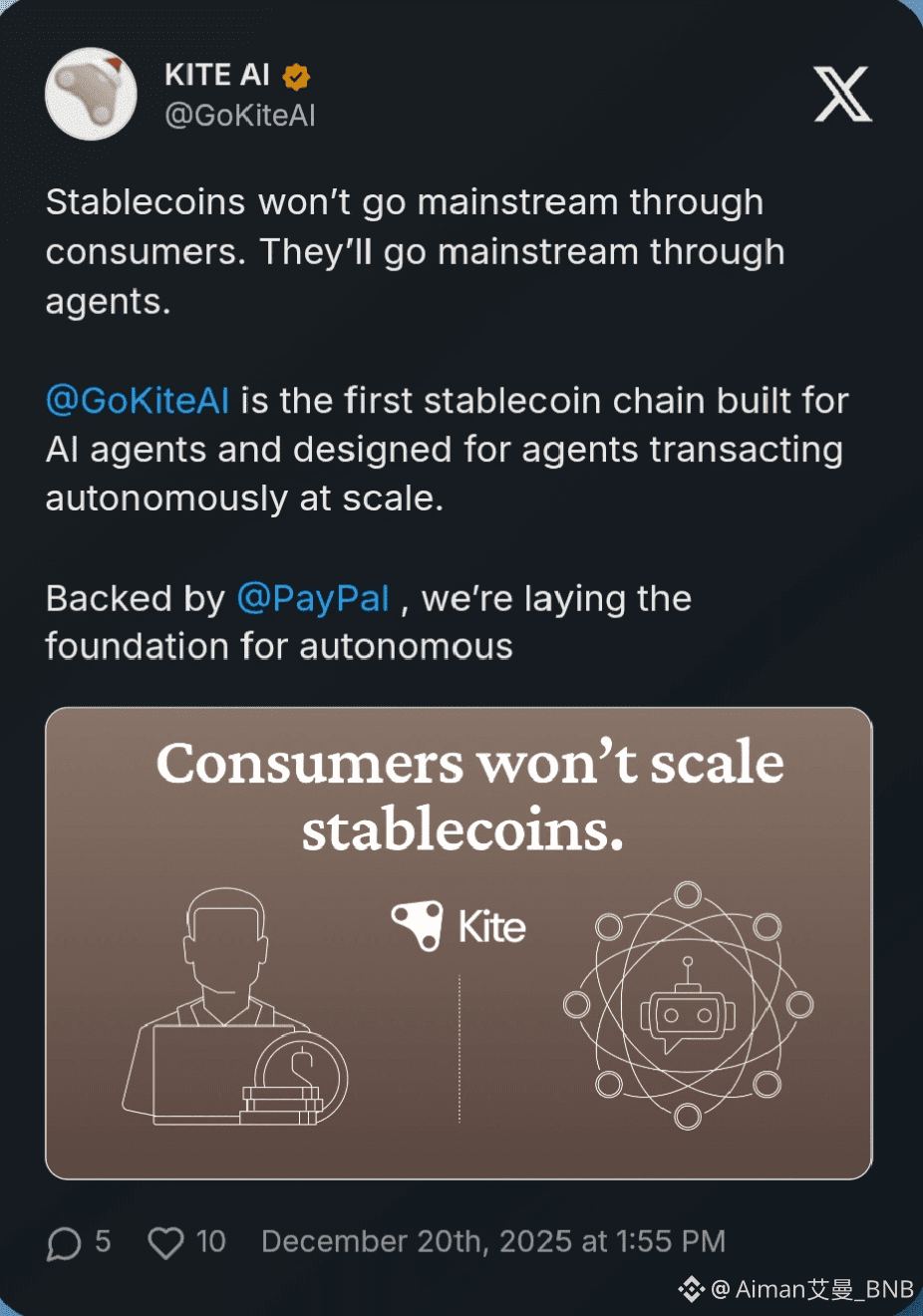
Unlike consumer-focused stablecoins, GoKiteAI enables AI agents to operate independently, performing transactions, coordinating activities, and participating in the digital economy without direct human oversight. This infrastructure is built to support the growing AI ecosystem, where machines are increasingly capable of making economic decisions on their own.
👉Backing and Vision:
GoKiteAI is backed by PayPal, highlighting the project’s credibility and commitment to bridging stablecoins with real-world use. By focusing on agent-level adoption, the platform sets the foundation for autonomous economic activity at internet scale, rather than relying solely on consumer wallets.
👉Why This Matters:
The AI economy demands reliable and efficient financial infrastructure. By giving AI agents the tools to transact seamlessly, GoKiteAI enables stablecoins to be used in ways traditional consumer-focused adoption cannot achieve. This approach lays the groundwork for a future where autonomous agents drive the use of digital currencies, creating a new type of economic activity online.
👉The Future of Stablecoins in the AI Era:
The infrastructure that agents need is being built today. GoKiteAI’s stablecoin chain is specifically designed to support large-scale autonomous transactions, which could accelerate adoption across AI-powered platforms and services. This development highlights a critical insight: stablecoins may go mainstream not through people, but through the agents operating within digital ecosystems.
By focusing on the unique needs of AI agents, GoKiteAI is positioning itself at the forefront of a new wave of blockchain adoption—one that emphasizes functionality, scalability, and integration with autonomous systems. The project signals a shift in how stablecoins may be used in the future, moving beyond human wallets to the infrastructure that powers the AI economy.


