

@KITE AI Not long ago, “AI economy” felt like a loose phrase—useful shorthand for productivity gains, not a description of how money actually moves. In late 2025, the phrase is starting to tighten into something more literal: software agents that can decide, act, and pay without a human clicking “confirm” each time for many teams. That last piece, payment, is what turns agents from helpful assistants into economic participants, and it’s why infrastructure projects like Kite keep surfacing in debates about what comes after chat.
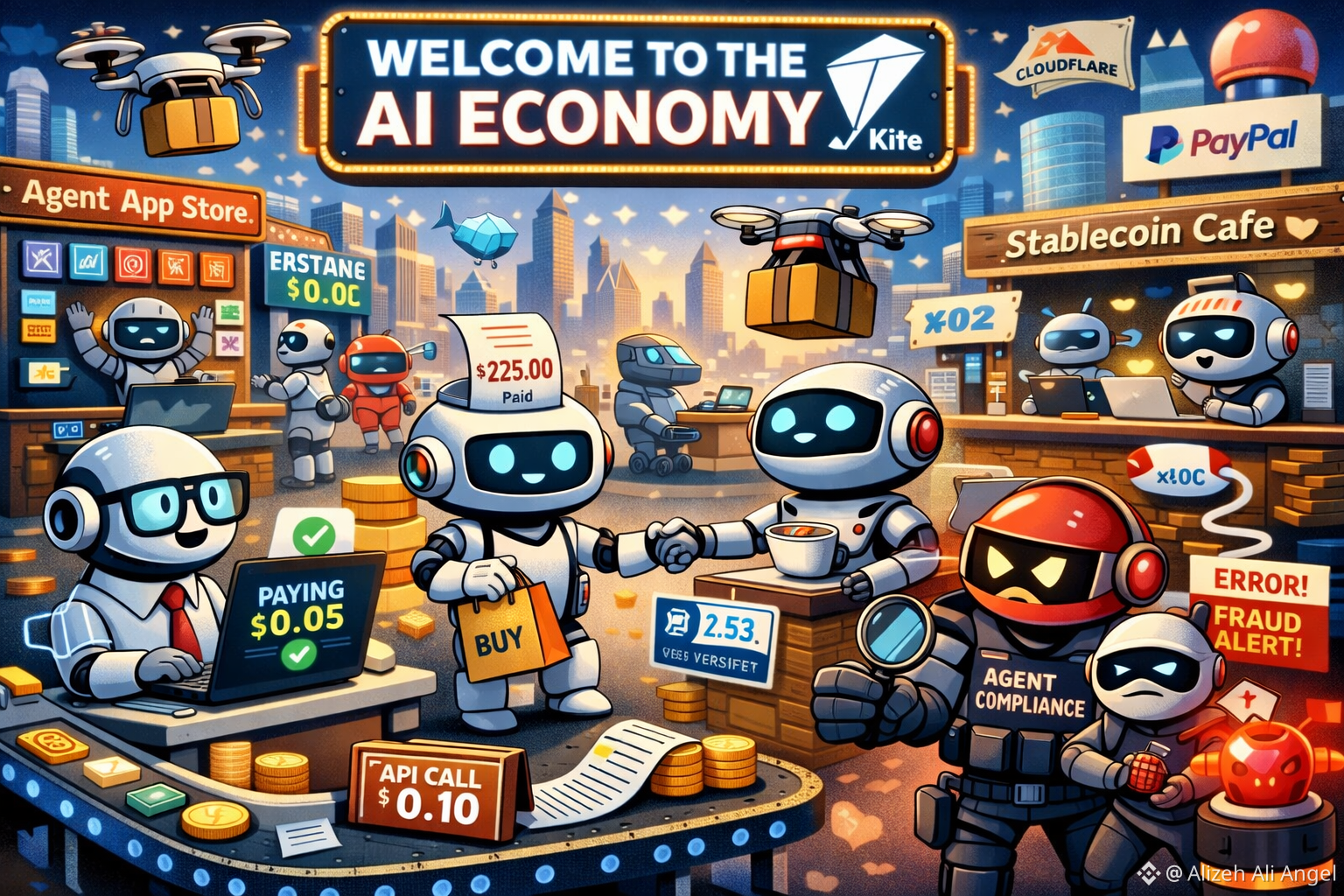
Kite’s framing is stubbornly practical. It describes itself as a trust and payment layer for autonomous agents: verifiable identity, programmable permissions, and native stablecoin settlement with an audit trail. That emphasis has pulled in mainstream fintech capital. PayPal Ventures and General Catalyst led Kite’s $18 million Series A announced on September 2, 2025, bringing total funding to $33 million.
Why now? Pricing on the internet has been drifting toward small, frequent charges—API calls, per-minute compute, per-task workflows—while the tools used to access those services are increasingly automated. If an agent is doing research, generating a report, checking vendors, and scheduling follow-ups, it may hit dozens of paid endpoints in a single session. Humans don’t want to approve that many micro-decisions, and businesses don’t want to stitch together billing, refunds, and logging for every new agent workflow just to keep spending safe and accountable.
Standards are evolving to match that pressure. Coinbase’s x402 protocol revives HTTP 402 (“Payment Required”) as a way for services to request stablecoin payment over the web, built so clients—including machines—can pay programmatically without accounts or subscriptions. If x402 is one possible language for “pay-per-use on the open internet,” Kite is trying to provide a settlement and identity environment where those payments can be controlled and attributed.
The most concrete progress is that this isn’t only theoretical. PayPal’s announcement says Kite recently launched “Kite AIR” (Agent Identity Resolution), with an “Agent Passport” meant to serve as a verifiable identity plus operational guardrails, and an “Agent App Store” where agents can discover and pay for services such as APIs, data, and commerce tools. It also claims open integrations with platforms like Shopify and PayPal, and an opt-in model where merchants can become discoverable to AI shopping agents, with purchases settled on-chain using stablecoins and programmable permissions.
Here’s the part I find both interesting and slightly uneasy: money is a social technology, not just a technical one. When a human pays, we implicitly attach intent and responsibility, and we have familiar ways to contest mistakes. When an agent pays, those norms have to be rebuilt through permissions, logs, and enforcement. Writing about agentic payments keeps circling the same point: users won’t delegate real authority without recourse, and merchants won’t accept agent-initiated payments unless identity and authorization can be checked in a way they understand.
If the safeguards work, the “AI-powered economy” will probably arrive as a patchwork of small, reliable loops rather than a single dramatic leap. A shopping agent could pay a few cents for a shipping quote, then a few more for a fraud check, then settle a purchase in a stablecoin the merchant already supports. A procurement agent inside a company could buy narrow slices of industry data and pay only when it pulls a report, leaving behind a trail that compliance teams can inspect. A team could run internal agents with strict budgets and time-limited permissions, letting them do busywork while still keeping a human on the hook for exceptions.
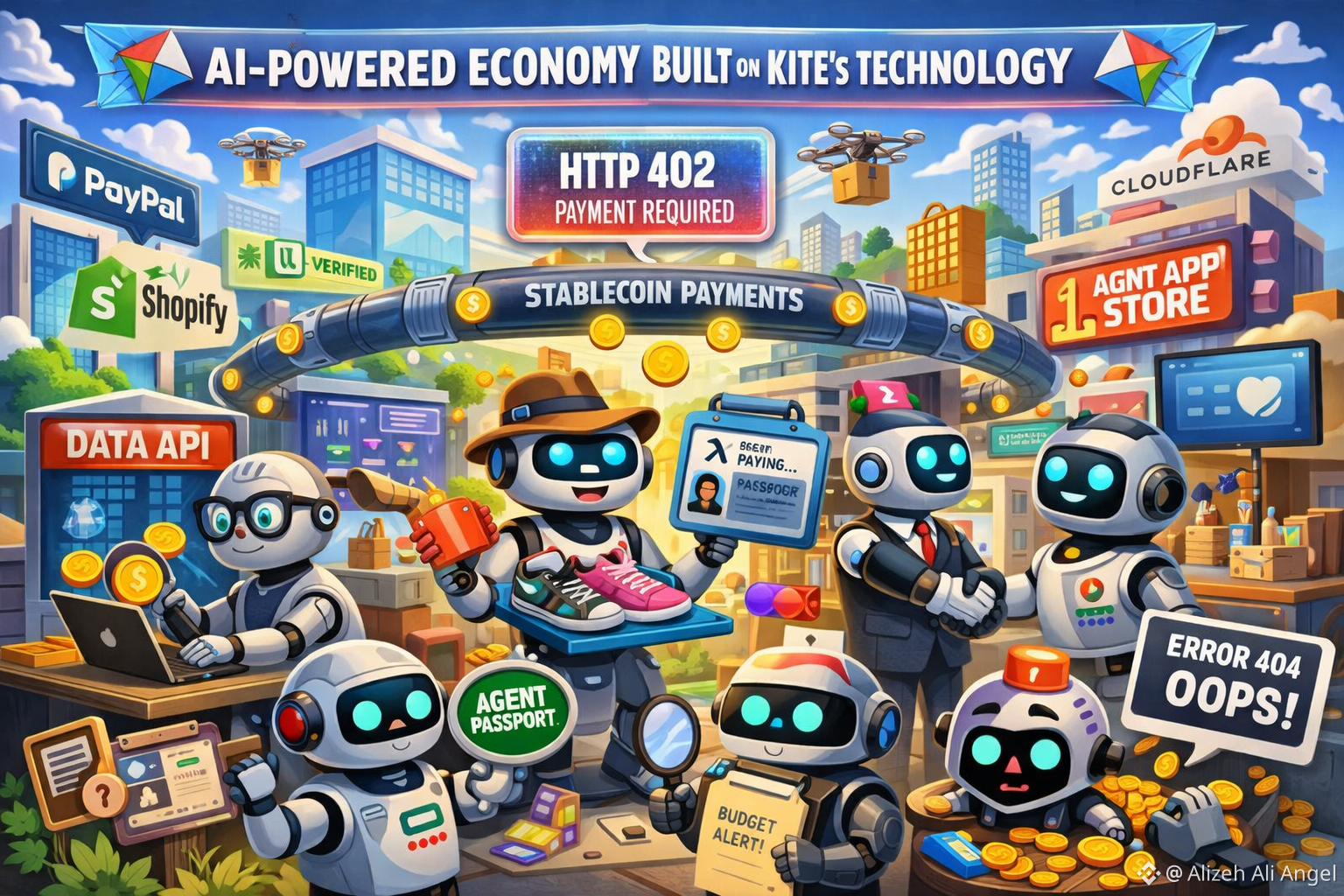
There are also signs that big internet plumbing players are preparing for this shift. In September 2025, coverage linked Cloudflare’s stablecoin plans to the rise of agentic e-commerce and highlighted Cloudflare’s work around x402 alongside Coinbase. When companies that sit in the path of enormous volumes of web traffic start making room for programmatic payments, it usually reflects demand they can already see forming.
Progress, though, should be measured by friction, not slogans. The hard parts aren’t only throughput or fees. They’re the messy edge cases: an agent that pays for the wrong thing because a webpage changed, a compromised toolchain that drains a wallet, a governance process that can’t unwind mistakes cleanly, or a flood of low-quality agents spamming marketplaces. Kite’s integrated approach—identity, policy enforcement, and settlement in one stack—sounds like an attempt to make those failures rarer and easier to debug.
I don’t think the open question is whether agent-driven commerce will exist; it already does, in small and often invisible ways. The open question is whether it will be legible and governable. If Kite and similar efforts succeed, the “AI-powered economy” may arrive not with fanfare, but with the quiet normality of software finally being able to pay for the work it does.

