Over the past few days, even while dealing with a high fever (38.9°C at its peak), one issue has remained firmly on my mind: address poisoning scams. This was my first illness since leaving prison, and yet the persistence of this problem made it impossible to ignore.
As an industry, we should be capable of eliminating these attacks entirely and, more importantly, protecting our users from harm.
The solution is not complex.
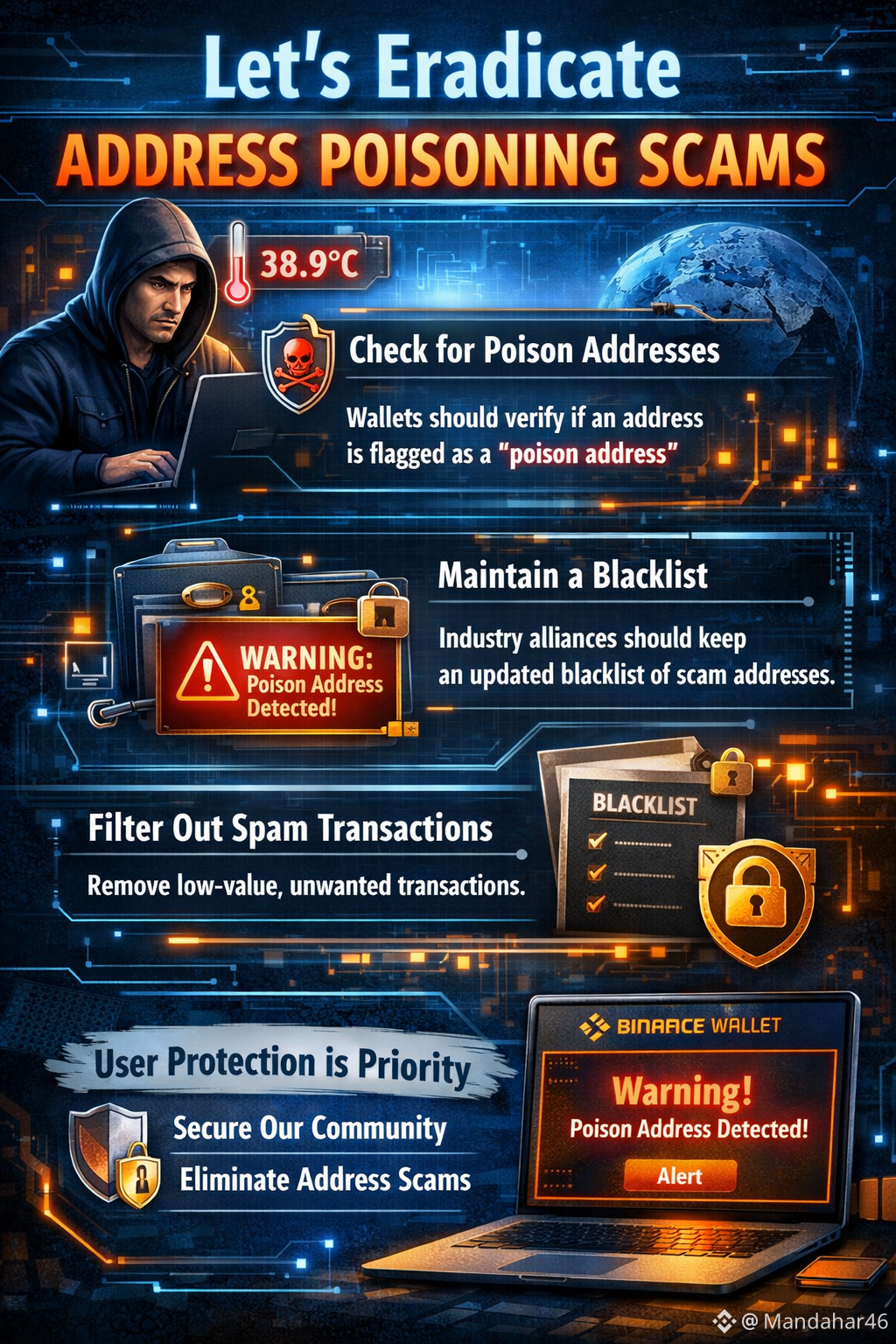
First, all wallets should automatically verify whether a destination address is flagged as a “poison address” before allowing a transaction to proceed. This is a straightforward blockchain query and should be treated as a basic security requirement.
Second, industry security alliances should maintain and continuously update a real-time blacklist of known poison addresses. Wallets could then consult this shared resource before executing any transaction, significantly reducing the risk to users.
Some platforms are already moving in the right direction. For example, Binance Wallet currently warns users when they attempt to send funds to a known poison address, effectively preventing accidental losses.
Finally, wallets should avoid displaying spam transactions altogether. If a transaction involves a negligible value and serves no legitimate purpose, it should simply be filtered out of the user interface.
User protection must be a priority. With coordinated effort and basic preventive measures, address poisoning scams can be eradicated.