
The market candlesticks fluctuate, just like the ups and downs of life. The frenzy of a bull market is a feast, while the solitude of a bear market is a lonely journey. Those floating profits and losses that keep you tossing and turning will eventually become experiences that illuminate the road ahead. Those who grit their teeth and persist through the long wait will eventually hear echoes in some cycle!
Old Wang's intraday short strategy has been perfectly validated by the market! Including the box range provided in the early morning, the market has perfectly validated it! The intraday BTC market rose to around 88000 after the early morning, then faced pressure and fell back to the early morning high of 88349. In the evening, it found support at 86500, showing a slight rebound. After the opening of the evening US stocks, it continued to decline, reaching the intraday low of 86355 before rebounding. Currently, it is hovering around 87300. ETH's trend moves in sync with BTC's trend, with an intraday high of 2987 in the early morning and an evening low of 2886.
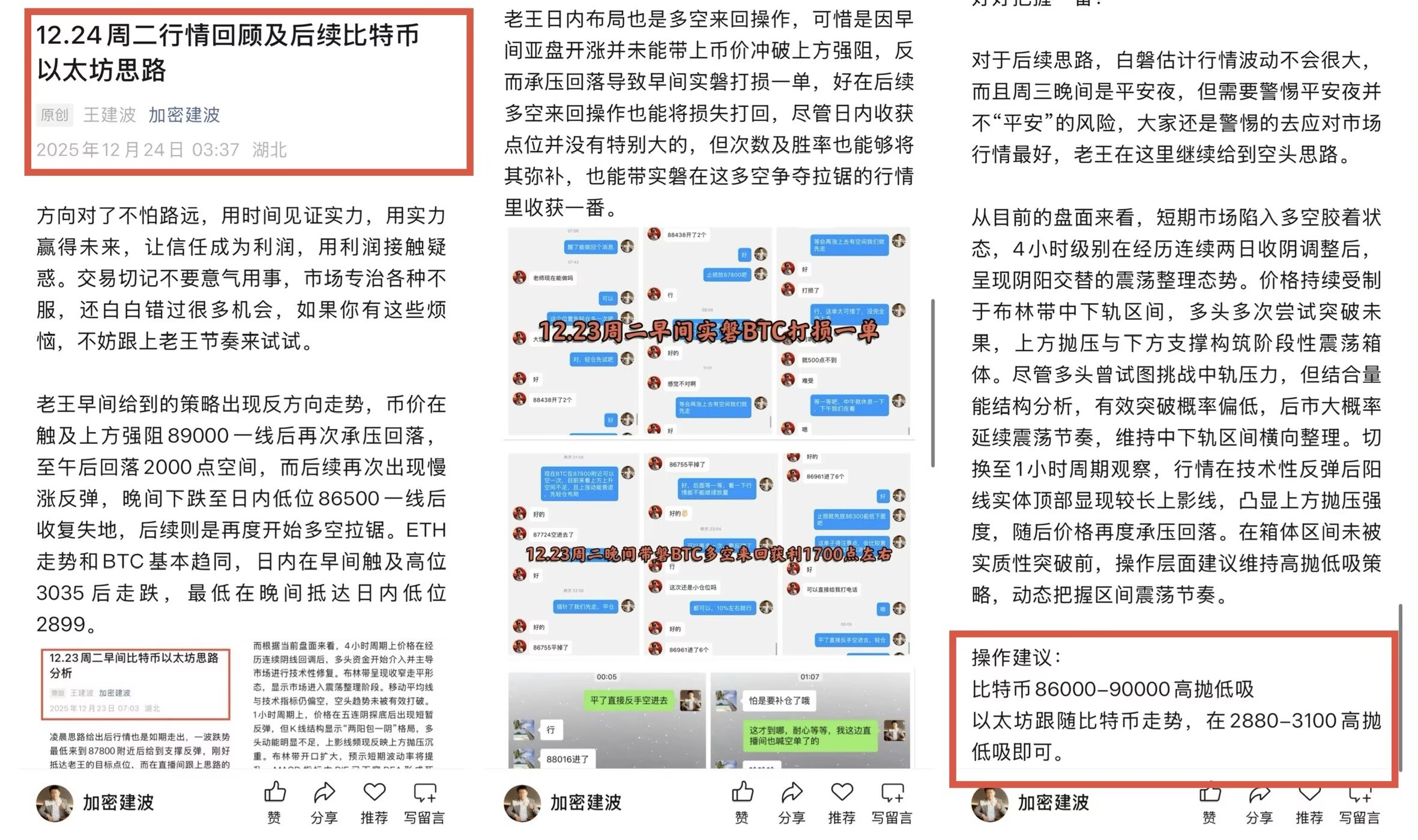
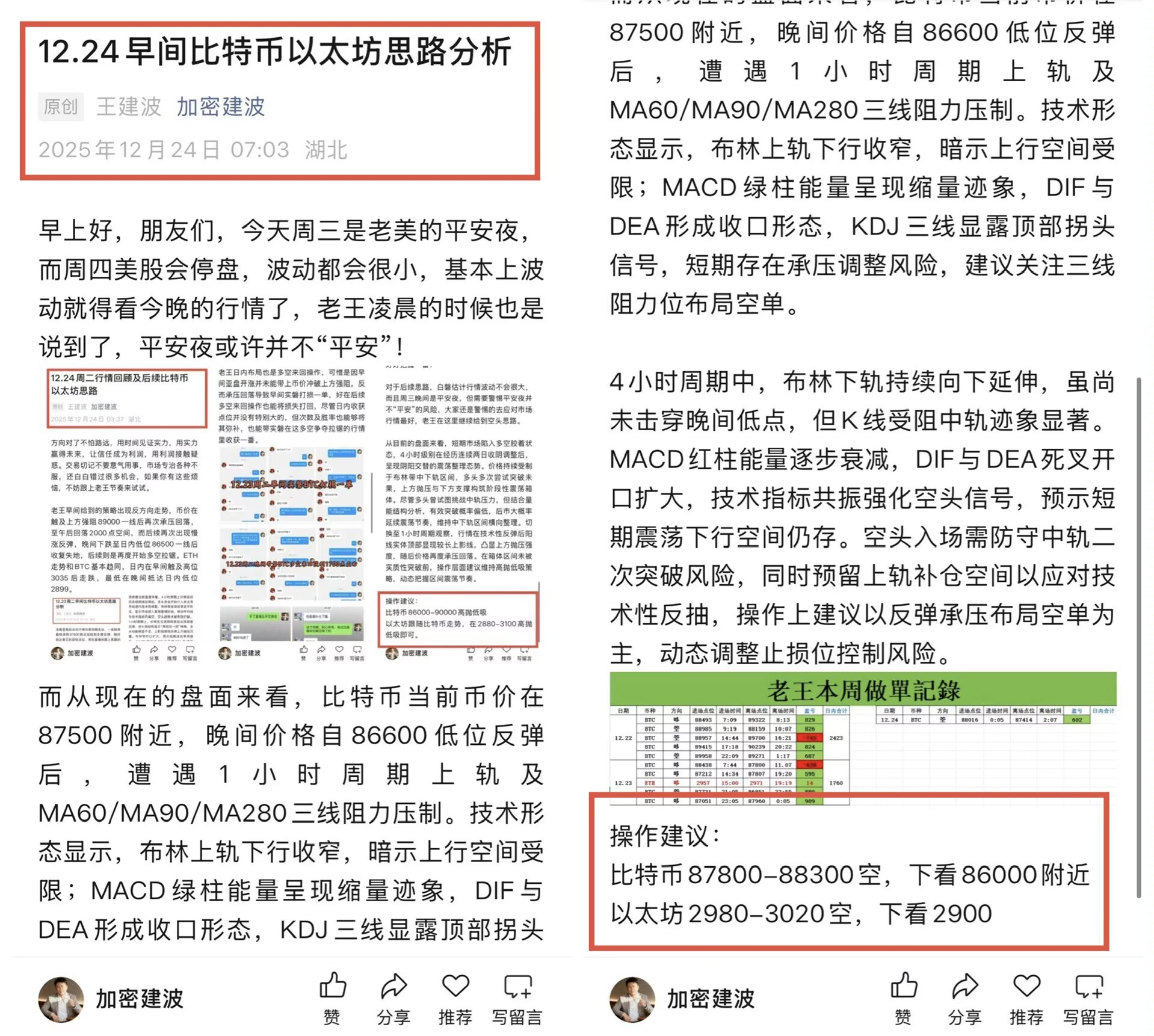
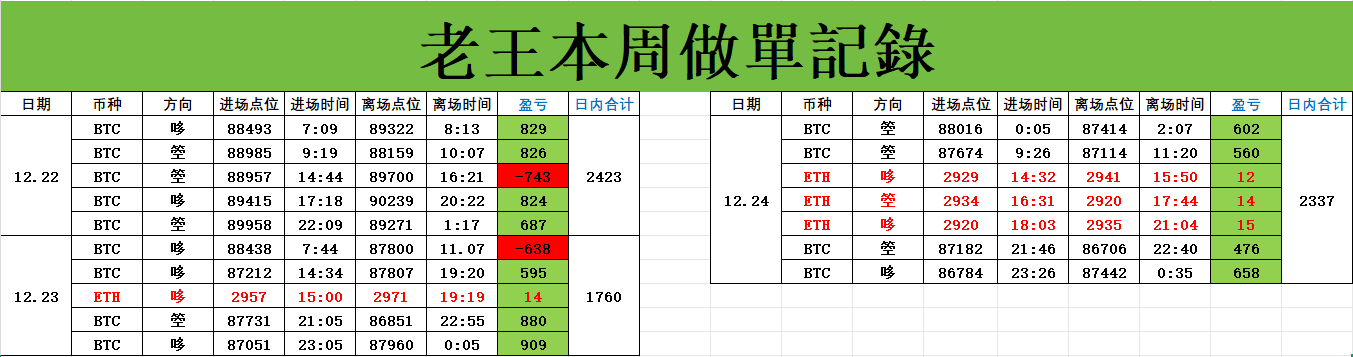
Due to the slow movement of the intraday market, Lao Wang has made more intraday positions, totaling 4 BTC and 3 ETH, achieving a total of 2337 points. There hasn't been much significant profit, so I'll share the last intraday trade with you.
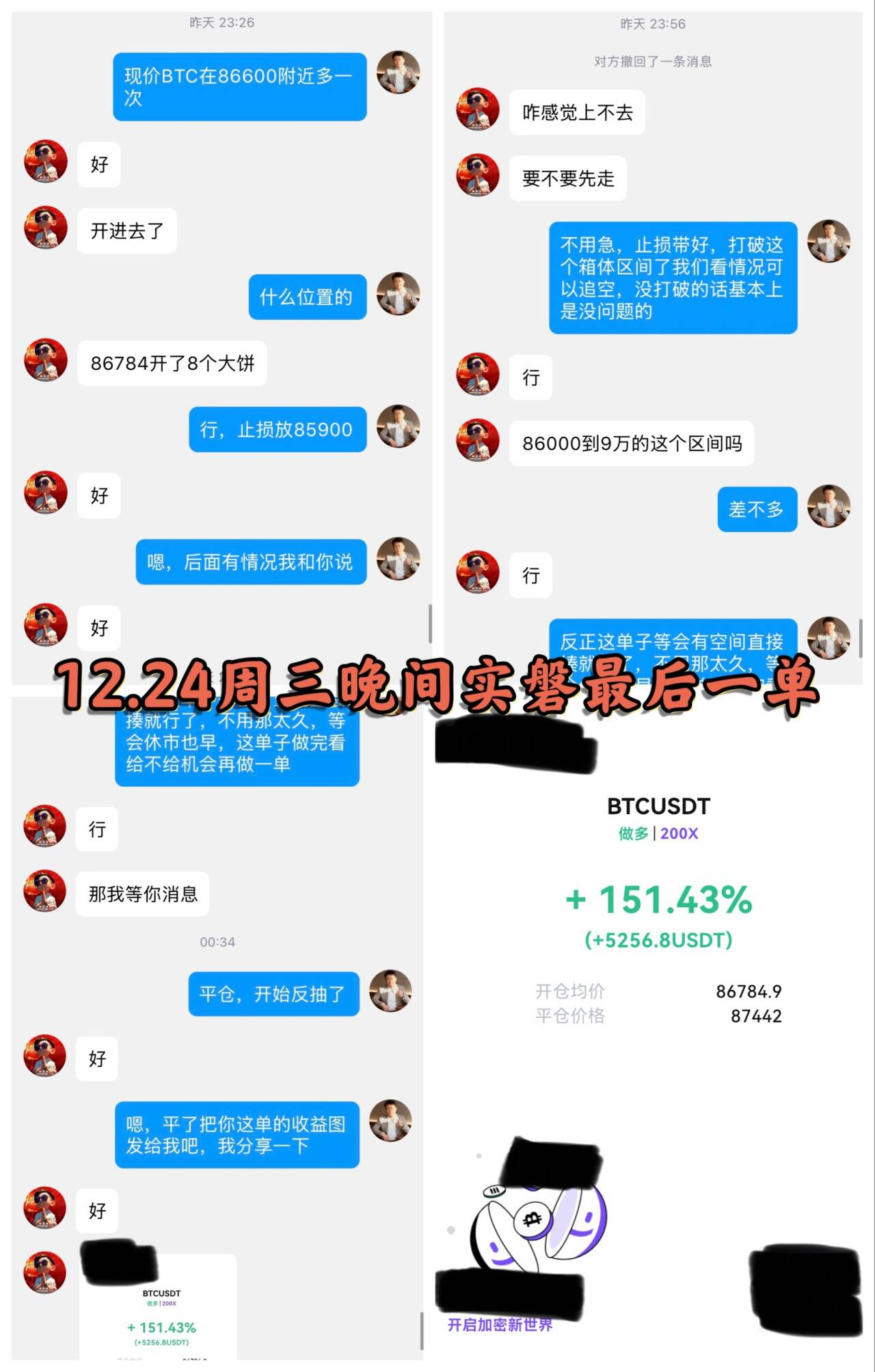
Currently, the global capital market presents a complex game pattern, requiring systematic judgment from the macro background and capital flow. Previously, the Bank of Japan initiated a rate hike cycle, but the market response significantly diverged from historical norms—previous two rate hikes triggered severe volatility, while this round's impact has nearly vanished. Even though the market has digested the bearish expectations in advance, the subdued reaction still exceeds reasonable bounds. Coupled with the basic fundamentals of the U.S. economy, its performance also exhibits 'abnormal' characteristics: it has not significantly weakened as expected and lacks substantial volatility momentum, creating a 'paradox' in market logic.
Delving into its underlying logic, the yen, as a core global carry currency, has its financing system deeply bound to dollar assets. A large amount of low-interest yen loans has flowed into U.S. stocks, U.S. bonds, and the crypto market through carry trades, resulting in systemic capital sedimentation. Although capital repatriation is not an instantaneous behavior, the long-term trend has been established—this round of rate hikes may trigger a systemic capital repatriation of about $5 trillion, profoundly impacting Japan's local economic recovery and global capital market liquidity. It is especially worth noting that such capital withdrawal from the U.S. market may exacerbate its economic stress tests. The fundamentals of the U.S. economy continue to show weakness: the debt issue remains unresolved, economic data barely maintains expectations, but month-on-month momentum continues to decay, making the growth weak and difficult to reverse, presenting typical characteristics of 'stagflation's late stage.'
Combined with recent significant news in the crypto market, the U.S. SEC has accelerated the approval process for spot Bitcoin ETFs, alongside a structural increase in global institutional investors' demand for digital asset allocation, creating a short-term contradictory game. The liquidity contraction triggered by the repatriation of capital to Japan is hedging against the rising demand for crypto asset allocation, leading the market to a tug-of-war between 'liquidity tightening expectations' and 'institutional entry expectations.' The technicals further validate the macro logic: mainstream crypto asset prices have significantly entered a weak zone, resonating with the backdrop of global economic pressure. However, it is important to note that the market performance has stage characteristics—the current downward space is relatively limited, and the upcoming U.S. stock market holiday will cause liquidity contraction, increasing the probability of a short-term technical rebound.
Overall, the long-term bearish pattern is solidified by multiple macro factors, such as the return of Japanese capital, the exhaustion of economic momentum in the U.S., and regulatory dynamics in the crypto market, all pointing towards market pressure. Although there may be a short-term rebound window, the trend of decline is difficult to reverse. Operations still need to focus on the defense and attack of key support levels and the verification of capital flow data, being alert to the risks of secondary volatility caused by liquidity contraction. The crypto asset allocation strategy should focus on risk hedging, adjusting position structure in conjunction with ETF approval progress and institutional holding dynamics to cope with the complex and changing global financial environment.
I won't analyze the short-term technicals for you. The market volatility on Thursday, Christmas, won't be large, so everyone can take a break and consider short-term high selling and low buying.
Operational suggestions:
$BTC Bitcoin 86300-86800 long, target 89000
$ETH Ethereum 2880-2910 long, target 3030
If the previously mentioned range has not been effectively broken, everyone can still conduct high selling and low buying within this range #加密市场观察

