
Market pullbacks don’t destroy crypto.
They expose it.
When prices fall, noise disappears.
What remains is utility — or the lack of it.
That’s why the recent comment from Binance’s CEO matters more than it sounds.
He didn’t talk about price targets.
He didn’t hype narratives.
He pointed at use.
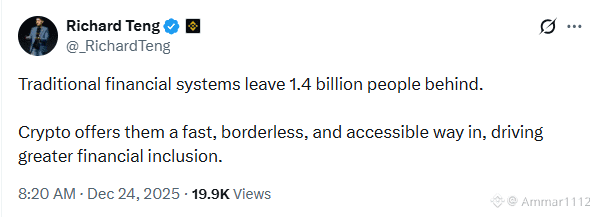
In periods of market stress, speculation freezes.
But people still need to move value.
Still need liquidity.
Still need systems that work without asking permission or waiting for sentiment to recover.
This is where crypto stops being an “asset” and becomes infrastructure.
What often gets ignored is behavior.
During pullbacks, users don’t chase upside.
They optimize for speed, cost, reliability.
They want systems that don’t break when confidence drops.
That’s the quiet filter markets apply.
Most projects are built for expansion phases.
Few are built for contraction.
And stress is where design flaws surface — not in bull runs.
I’ve noticed something personal here.
The moments when crypto feels boring are usually the moments when it’s actually working.
No drama.
No promises.
Just execution.
This isn’t about replacing traditional systems overnight.
It’s about what keeps running when incentives vanish.
Maybe the real test for crypto isn’t adoption during hype.
Maybe it’s relevance when nobody is cheering.
And that question doesn’t have a clean answer yet.
