

Welcome to the OpenSea newsletter—let's recap the most important NFT and web3 news from this week.
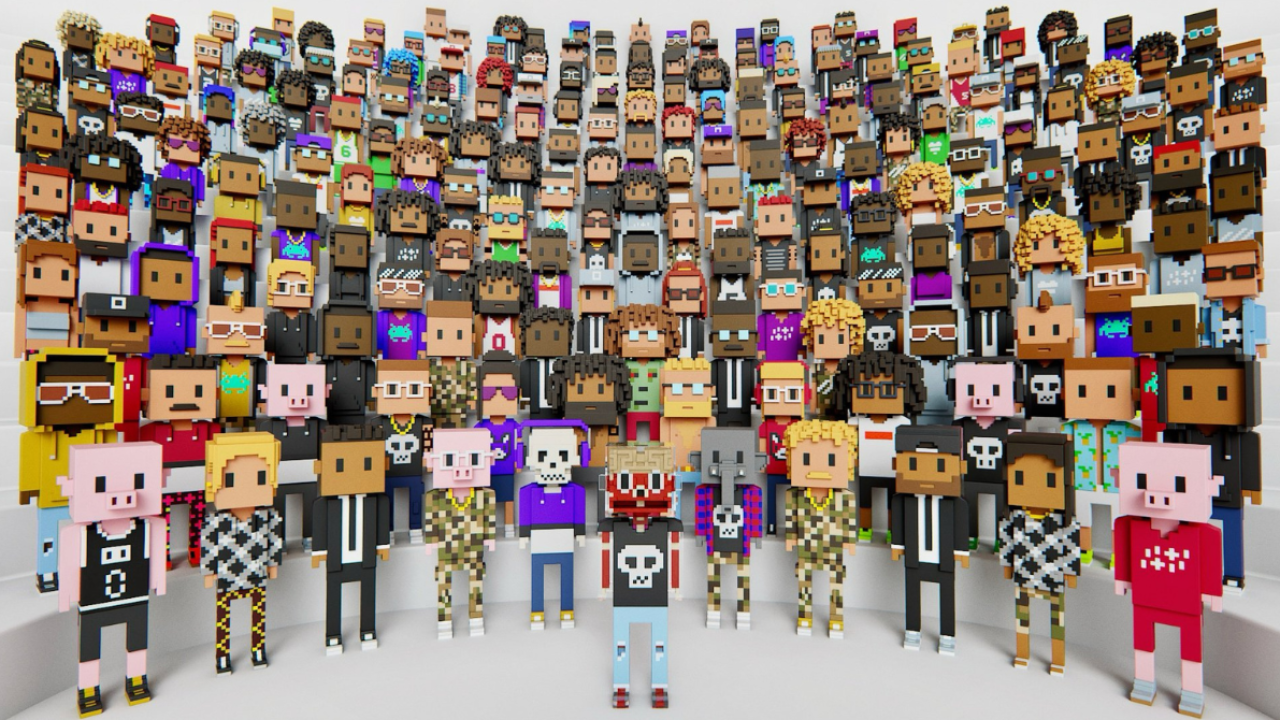
Adam Weitsman acquired 227 Meebits through a single brokerage transaction
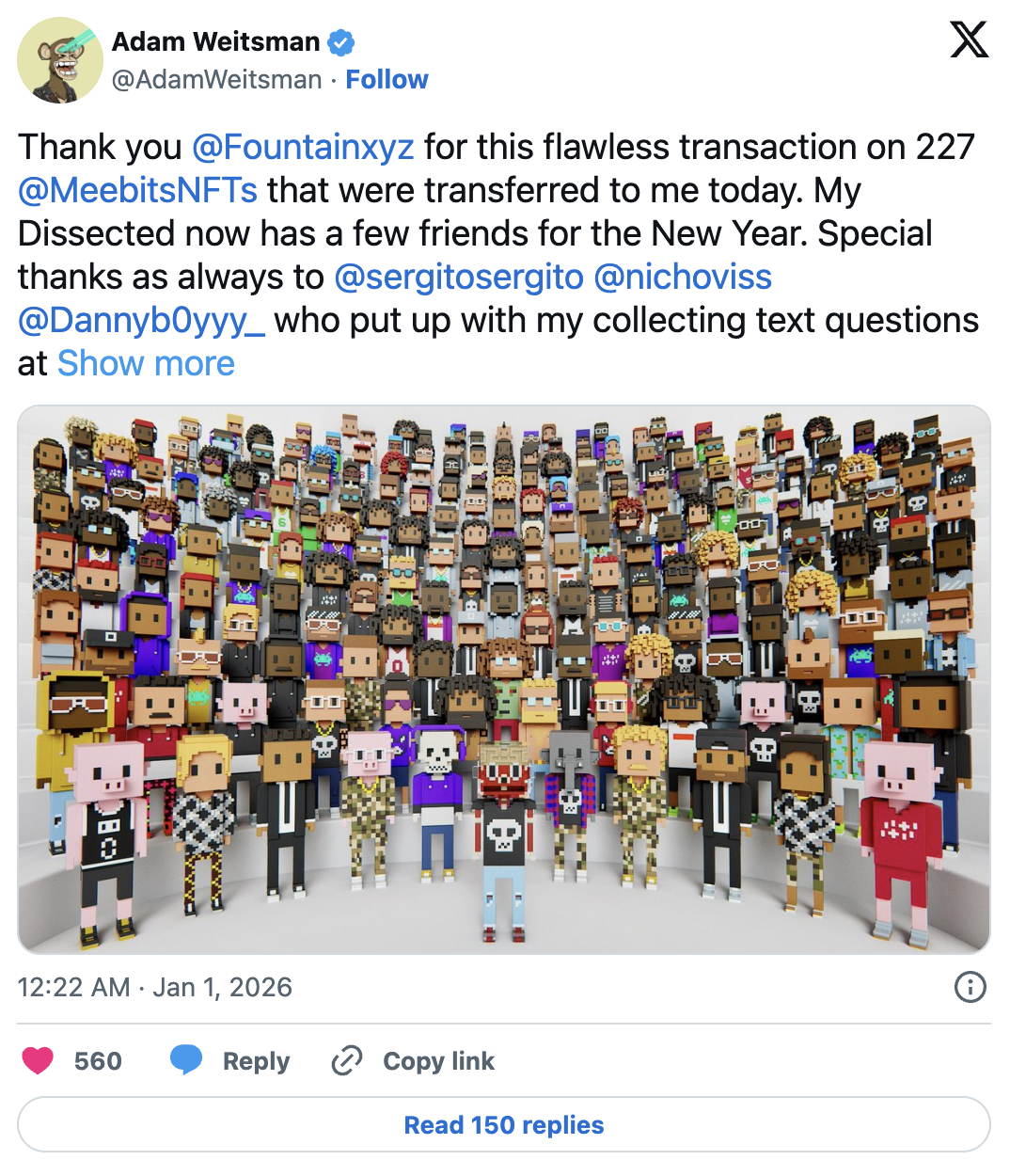
According to an article published on the X platform on December 31, New York entrepreneur and NFT collector Adam Weitsman completed a transaction through the NFT brokerage platform Fountain, acquiring 227 Meebits NFTs in one go.
Weitsman thanked NFT brokerage firm Fountain for assisting with the ownership transfer, a company that helps buyers and sellers complete large or complex transactions. He also expressed gratitude to several NFT collectors and brokers who answered his questions throughout the process, stating that the transfer was completed earlier this Wednesday.
Yuga Labs will fully integrate Otherside's technology in-house
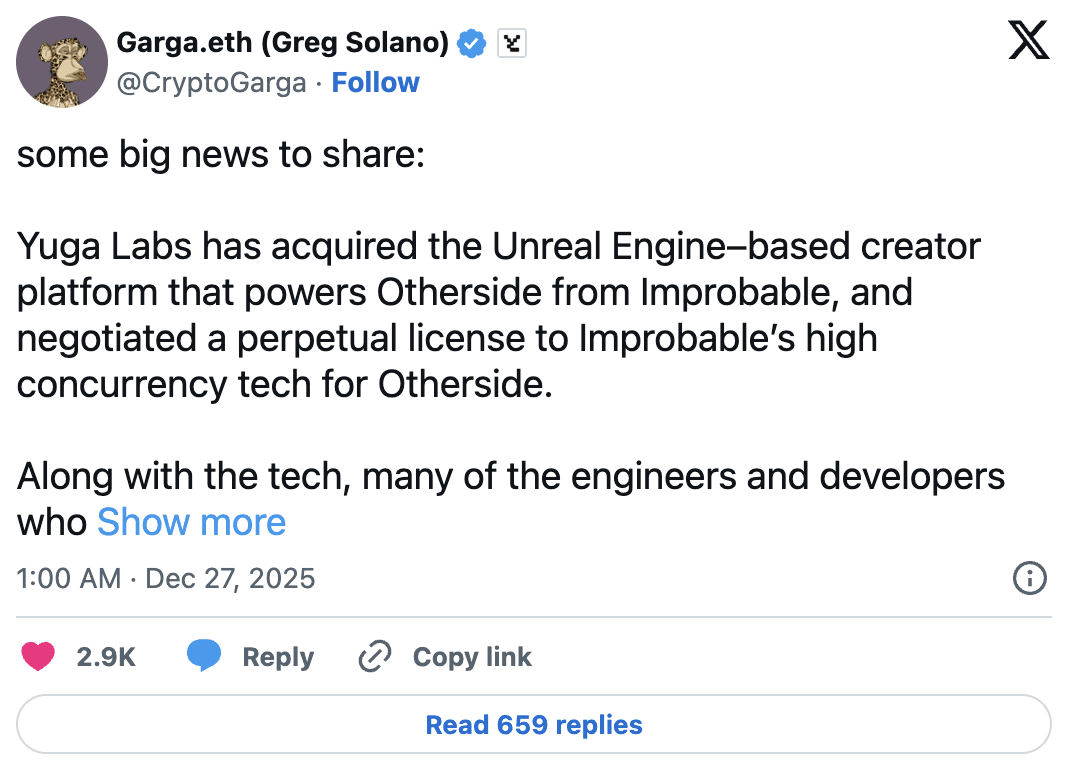
Yuga Labs, the parent company of BAYC, has acquired the Unreal Engine platform behind the metaverse game Otherside from UK-based multiplayer gaming technology company Improbable, co-founder Greg Solano said on X.
Under the agreement, most members of Improbable's development team are expected to join Yuga by early 2026. Yuga also obtained a permanent license to Improbable's high-concurrency technology, which enables thousands of players to simultaneously share the same online game space.
This acquisition comes at a time when Yuga is focusing more on Otherside and the Bored Ape Yacht Club NFT series following its sale of CryptoPunks, traditional PFP series, and the voxel character project Meebits earlier this year.
According to Yuga, bringing the platform in-house will accelerate the update speed of Otherside's creation tools and expand the use cases for Otherdeeds land NFTs, supporting large-scale multiplayer game testing already validated in record-breaking events. In the future, the project also plans to develop on ApeChain, a custom blockchain layer designed for handling in-game transactions.
Museum of Art and Light adds Rebecca Rose's digital artwork to permanent collection
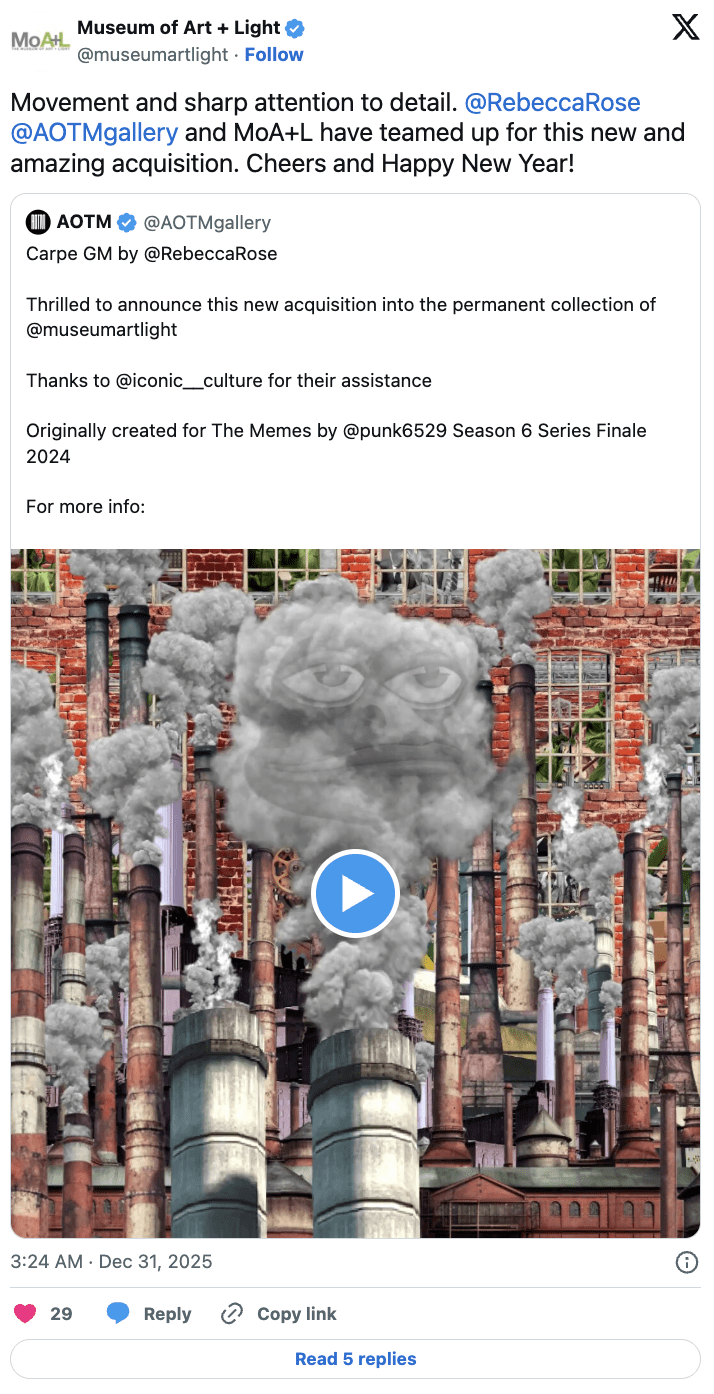
According to a post on X from the Museum of Art and Light (AOTM) on December 30, the Museum of Art and Light has added Rebecca Rose's digital artwork Carpe GM to its permanent collection.
This work is a short 3D digital video collage featuring Pepe the Frog, a long-standing internet character often associated with crypto culture, placed in an industrial factory setting to comment on modern work, power, and online communities.
This piece was originally created for 'The Memes' series, an NFT project led by multidisciplinary artist 6529, and was released in limited edition earlier this year.
Pudgy Penguins light up Las Vegas Sphere with holiday animations
The cartoon penguin NFT brand Pudgy Penguins, owned by entrepreneur Luca Netz, was featured in animated displays on the exterior walls of the Las Vegas Sphere arena during the Christmas period.
Starting from Christmas Eve, these characters appeared on the massive LED screens at Sphere, showcasing NFT images to millions on the Las Vegas Strip.
Pudgy Penguins was launched in 2021 as an NFT collection, and after Netz acquired the project in 2022, it expanded into physical toy sales. Prior to its appearance at Sphere this month, the Pudgy Penguins brand had maintained visibility through mainstream marketing and consumer product initiatives.

GAMEE and Azuki launch Azuki Alley Escape on Telegram
According to a December 23 announcement, GAMEE, Telegram's gaming platform under Animoca Brands, stated it has partnered with the popular anime-style NFT brand Azuki to launch Azuki Alley Escape, a new game that can be played directly within the Telegram app.
This game is a fast-paced platformer where players skateboard through an Azuki-themed world, earn rewards, and compete on leaderboards; some digital items can be acquired by playing or purchased using Telegram Stars, the app's in-app currency system.
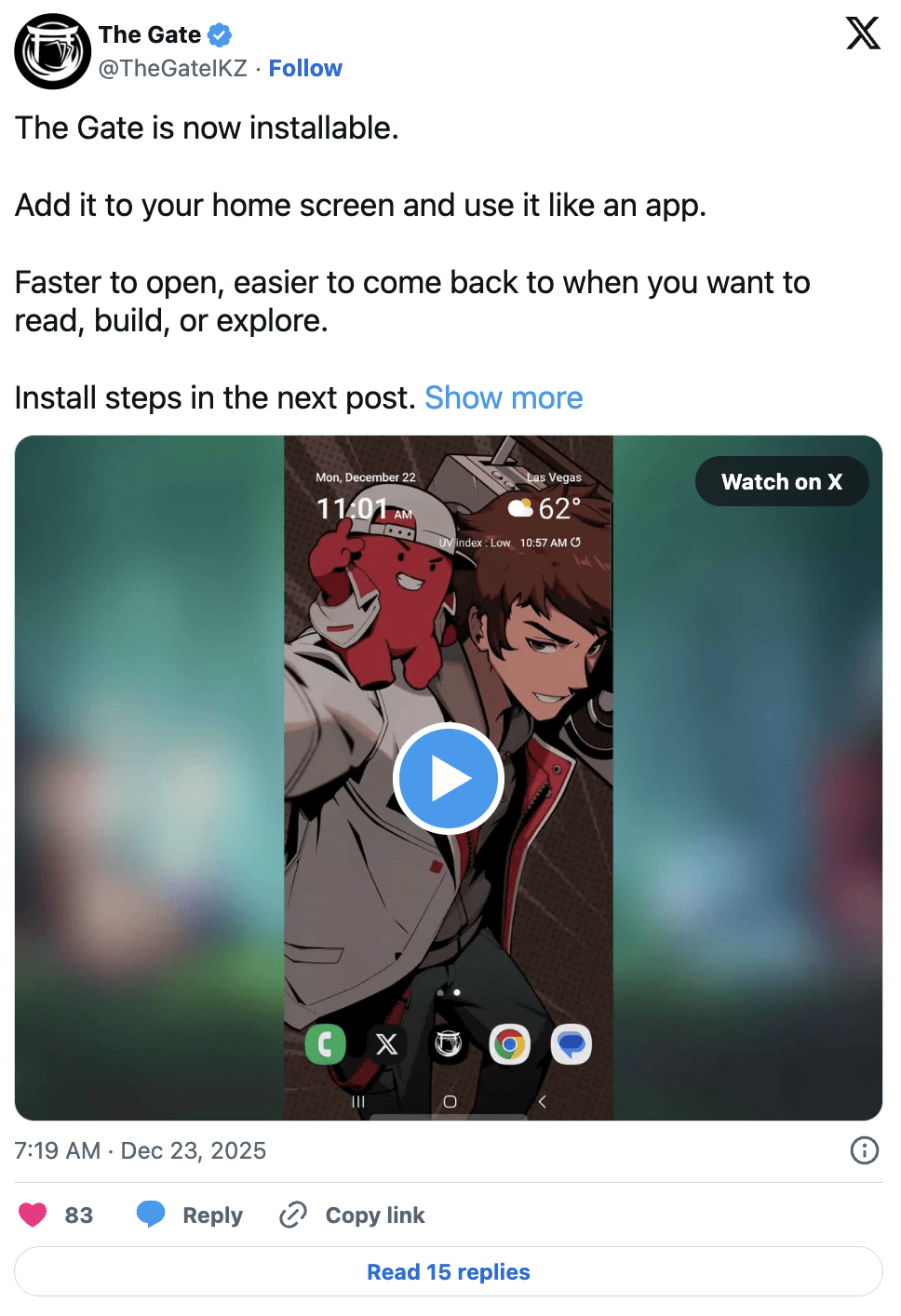
The companies stated this release brings Azuki's characters and stories to Telegram's large user base and lowers the entry barrier for users who haven't yet used a crypto wallet. Previously, Azuki has been working to deepen community engagement, including launching The Gate—a player-driven independent platform for an Azuki collectible card game.
These moves collectively indicate that Azuki is expanding its business beyond NFTs into gaming and fan engagement spaces—environments where users already spend their time.
Brazil approves a live orchestral performance based on Bitcoin price data
It has been reported that Brazil has approved a live symphonic project that will translate real-time Bitcoin price fluctuations into music.
The project has received approval under Brazil's Rua Neves Act, a federal cultural program that allows companies and individuals to fund approved art projects through tax-deductible donations.
During the performance in Brasília, an algorithm will convert Bitcoin price changes into musical signals to guide melody, rhythm, and harmony during the live orchestral performance.
Organizers said the goal is to help audiences experience market volatility and use sound to make abstract financial data more tangible.
Disclaimer: This content is for informational purposes only and should not be considered financial or trading advice. Mention of specific projects, products, services, or tokens does not constitute endorsement, sponsorship, or recommendation by OpenSea. OpenSea does not guarantee the accuracy or completeness of the information provided. Readers are responsible for verifying any claims made in this article and conducting their own due diligence before making any decisions.

#Meebits #YugaLabs #PudgyPenguins #azuki
Your favorite OpenSea content
Browse | Create | Buy | Sell | Auction

Follow and collect OpenSea Binance Channel
Stay updated with the latest news