Walrus Protocol's whitepaper outlines a decentralized storage network on Sui, emphasizing efficient blob storage for large unstructured data like AI models and media.
It introduces innovations in encoding, node reconfiguration, and economic incentives to handle churn and faults in permissionless environments.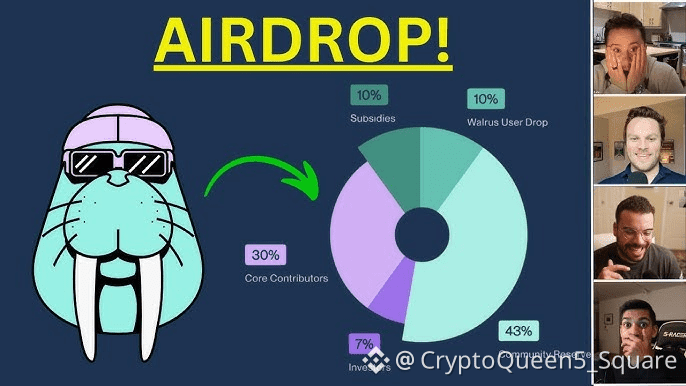
Core InnovationsWalrus employs "Red Stuff," a custom erasure-coding scheme that fragments blobs into slivers distributed across nodes, tolerating up to 1/3 Byzantine faults for recovery.
Sui blockchain coordinates metadata, proofs, and payments, enabling smart contract programmability without on-chain data storage.
The protocol supports epoch-based node committees (3f+1 shards via delegated PoS), with asynchronous storage proofs and challenges for verification.
Key Features:
Cost Efficiency: Up to 80-100x cheaper than Arweave/Filecoin via low replication and node-wide audits, not per-file checks.
Write/Read Flows: Writers prepay in $WAL (fixed terms up to 2 years), nodes acknowledge slivers; reads reconstruct from partial nodes with Sui proofs.
Reconfiguration: Dynamic epochs reassign shards securely, ensuring long-term availability amid churn.
Tokenomics: Staking secures nodes, rewards/slashes align incentives; pricing set by 66.67% stake-weighted votes per epoch.
Designed for AI datasets, NFTs, L2 data availability, archiving, and programmable media (e.g., Walrus Sites for decentralized hosting). Forward ideas include paid high-QoS reads and light node contributions.