


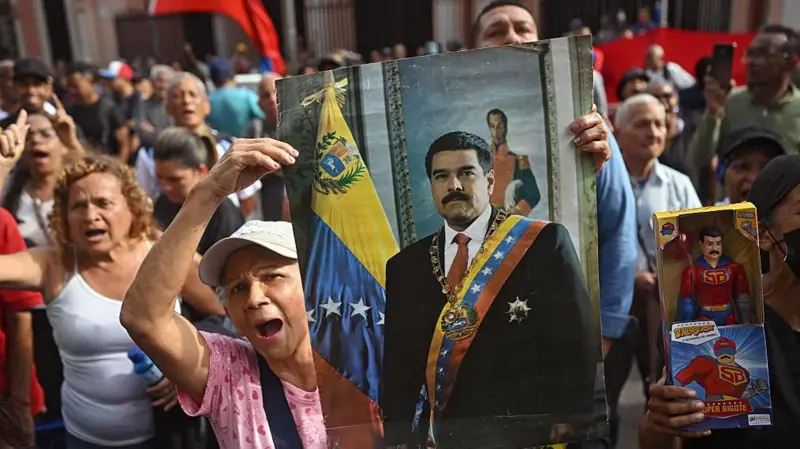
Many people think this move against Venezuela is about oil.
On the surface, that's correct—after all, it's the country with the world's largest proven oil reserves, even surpassing Saudi Arabia.
But if you only see oil, you're only seeing the first layer.
Go one layer deeper, and you find the dollar.
Over the years, Venezuela has been trying to bypass the dollar system for energy settlements, and 'de-dollarization' is a true red line for the United States.
But that's not the most critical part.
The real danger lies in:
This is not just a simple sanction, conflict, or resource grab—it's a demonstration at the rules level.
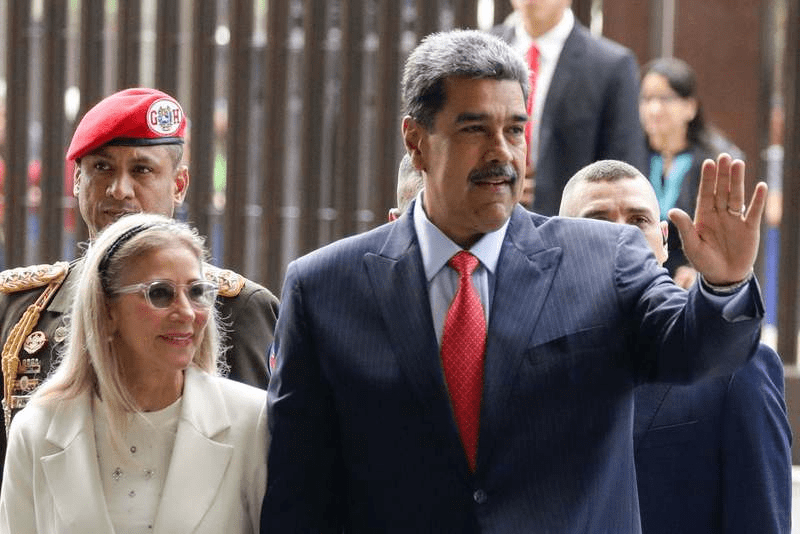
A head of state of a sovereign nation being directly brought to trial in New York.
Why New York?
Why here?
Because this is not a judicial technical issue, but a power assertion—
Sovereignty is no longer defined by borders, geography is no longer a barrier, and the final interpretation rights of rules are concentrated in one city.
What does this mean?
It means the U.S. is moving from being a 'guardian of rules' to a 'direct enforcer of rules'.
Post-WWII America is different from the British Empire.
It doesn't rely on colonies or direct occupation, but on building an entire system that appears neutral, rational, and globally shared.
Dollar settlement, technical standards, financial institutions, international organizations.
You don't need to obey orders, only 'follow the rules'.
The issue lies in—
When you're inside the rules, they represent order;
When you're pushed outside the rules, they become tools.
And now, what truly worries the U.S. is no longer just oil and the dollar.
It's that the industrial chain is changing.
Energy is shifting from oil to electricity;
From oil field control, to scale and starting point of new energy industry chain.
And in this new energy chain, the United States does not have an advantage.
So it's not about oil itself,
but about holding back the transition to new energy, holding back the future,
maintaining the old order where oil is irreplaceable and the dollar remains the core settlement currency.
That's also why the U.S. is targeting Latin America so heavily.
Latin America has never been meant for alliance, but for management.
Under the new logic, it may be repositioned as—
a 'nearshore backyard' for manufacturing reshoring.
Finally, what's truly worth worrying about is not whether a particular president will be arrested.
But a practical question:
When rules can be rewritten at any time,
When a single legal document from New York can redefine 'legitimate assets' and 'illegal assets',
then the risk is no longer whether you've done something wrong,
but whether you're still allowed to remain within the rules.
So perhaps the question shouldn't just be:
Who will be the next Latin American president被抓?
Rather, it's:
When consensus breaks down, what can we still rely on?