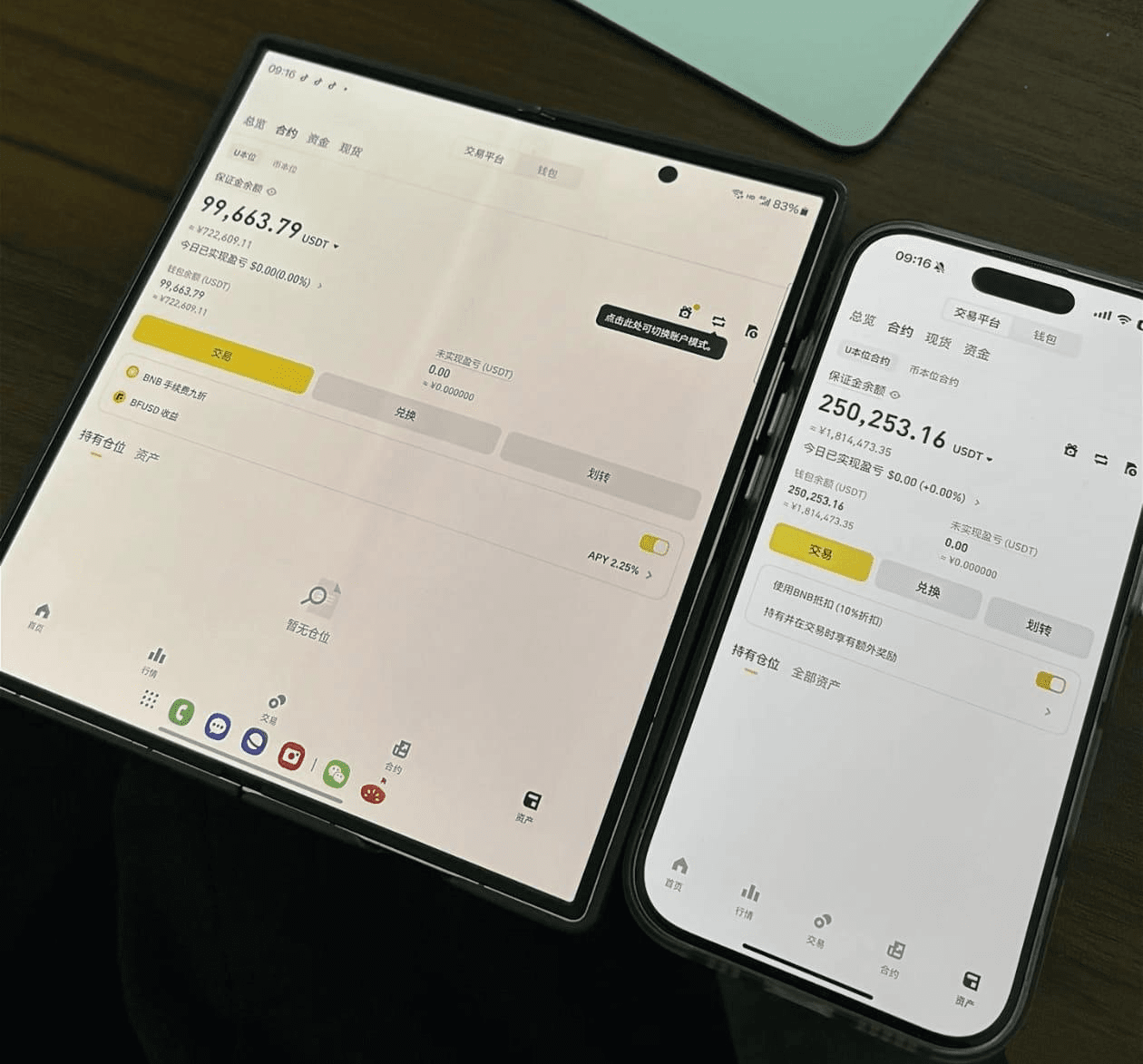
My answer is extremely difficult!!
After joining the circle for 3 years, I initially observed many experts' real trading recordings.
For example, BitFeiZhai, Wushi, and BitLamLam—these masters grew from a few thousand U to millions.
I noticed a phenomenon that these people are mostly 'left-side traders.' This trading style has a very high profit-to-loss ratio but a low win rate. For example, BitLamLam's win rate is even below 30%. Strictly speaking, many compounding traders are essentially 'guessing' the market subjectively.
Of course, their 'guessing' is based on long-term observation of Bitcoin price behavior and accumulated market intuition. Their trading strategies are highly effective under previous cycle patterns. For instance, the regularity in earlier bull and bear cycles was very obvious.
In a bear market, after a round of sharp declines, it slowly recovers over two years, and in the last year enters a great bull market, welcoming a super main rising wave at the end, especially during this last wave of main rising, there’s basically no major pullback! The trend is quite straightforward; left-side trading faces such a market and ends up losing badly.
However, if you carefully observe this round of bull market, since the new whales on Wall Street entered the market, the manipulation patterns of Binance and other manipulators have iterated.
The trend of Bitcoin has changed, no longer as “straightforward” as before. If you look at the K-line, especially since 2023, the trend of Bitcoin has changed dramatically! It has basically become a stepwise pattern, where at every step of price, there is a crazy washout and crash, precisely targeting leverage and creating various long and short traps. The washout phase lasts at least a dozen days and at most seven to eight months. Such a level of washout can devour a large part of the profits for perpetual contracts, it’s simply torturous.
But it’s not over yet. When most people think the washout is about to end and start to increase their long positions, the manipulator might not follow their wishes and instead crash sharply. You think it's bearish, but then the manipulator suddenly activates and pulls it back.
When you catch up, thinking, “Look, a large bullish K-line, standard 123 rule,” the manipulator will immediately create a false breakthrough and wash you out madly.
This kind of market further lowers the win rate of left-side traders and increases risks. It makes the total expected value of left-side traders' order profits less than zero; the more times it happens, the higher the probability of losing everything. The entry of institutions did not bring price stability; instead, in the gray areas of lacking regulation and ignoring rules, they colluded with exchanges to make the harvesting even more rampant and insidious.
Right-side trading seems to be more favored. But is it really that simple? The right-side trading system is complex, with low tolerance for errors, and without a mentor, the cost of self-learning and trial and error is astonishingly high. Therefore, various membership groups are rolling in; you teach them membership fees, and they teach you how to place orders. However, from my observation of many contract membership groups, stable profit earners are rare, while most are losing. For instance, in this round of black swan events, almost all observed aggregation groups were wiped out.
Only those collecting membership fees are guaranteed to profit! Your stop-loss and liquidation price are your life, while the group owner's stop-loss is your membership fee. However, the supply of novice traders is endless, and membership fees keep rolling in. What losses does he have? So I pay attention to some free groups, like some SMC strategy groups in Southeast Asian Chinese communities. Although they offer free teaching, they specify exchange platforms, and crucial indicators are only “lent” to you. Once you don’t trade for a few days or secretly use other exchanges, they will immediately reclaim access.
Moreover, do you think the current manipulators don’t know about SMC? Of course, they do. For example, during a live SMC session last night, the host analyzed vigorously; the order blocks and push blocks were drawn with great flair. However, these K patterns were intentionally drawn by the institutional manipulators. He thought they had revealed a flaw, but it was actually a trap set deliberately by the manipulators. What seemed to be a bullish OB + push block turned out to be a bearish ding-dong set up by the manipulators. Therefore, it didn’t go as the host wished, hitting stop-losses painfully, reversing to short, unable to catch a few points, and then rapidly rising again. I estimate that even if they timely closed their short positions, they might not break even.
It can be seen that these so-called high-win-rate free groups also have their failures. Moreover, such people's leverage is often set very high, starting from 40 times. If you learn and lose, it’s a huge loss. The group owner loses but still has rebates, and if it's a shady exchange, the group owner can even share in the liquidation fees. Thus, various signs indicate that manipulators force retail investors to buy spot assets honestly, earn minimal profits, bear the risk of being trapped, and become the 'cornerstone' of the market.
As for altcoins, even Dogecoin with two times leverage can be mercilessly washed out. The rolling strategies of those crypto veterans are becoming increasingly difficult to implement. So what should we retail investors do? Be patient; wait until the manipulators have sucked everything dry and the big bear market arrives, then layout.
In this era of high harvesting, apart from the big bear market DAC layout, or trying a small portion of positions with two to three times leverage based on this, I truly can't think of any reliable methods.
In the current market, the manipulators' game is essentially to turn perpetual contracts into a legal casino, with the core goal of destroying traders' mentalities. They want you to fall into a cycle of “fear-greed-doubt-anger” through repeated stop-losses, ultimately leading to irrational decisions. The goal of the manipulators is very clear: to force retail investors to buy spot assets honestly, while enduring high volatility and a dead-like consolidation.
Those who can't stand being washed out have fallen right into the manipulator's trap. Most of those who can endure it can only earn the market average profit, becoming the cornerstone of the market, allowing the manipulators to dance on top of them. This is the cruel truth. Regarding exchange fees, it is also a trap full of schemes.
I have observed that in some very short-term trades, whenever you see a large green bar with volume and instantly chase the market price, it is often very likely that within the next few seconds or even minutes, the price will rise, although the increase is small, theoretically, you still earn.
However, such small price increases often can't even cover the transaction fees. To make money, you must invest more time waiting, but whether the price will go up or down next depends on the manipulator's mood, thus increasing your risk.
Moreover, the exchange’s fee settings are very 'just right', just right enough to make your random orders' mathematical expectation far less than zero! Note the word 'far'. Therefore, the more you open, the more you lose.