
After 6 years of trading, I finally realized: what people call a 'trading system' is merely a chosen posture of loss
In the world of trading, the four words that most easily lead beginners astray are: seeking patterns.
Many people spend their entire lives trying to find a 'universal pattern' that guarantees profit whenever it appears. They approach the candlestick charts like old Chinese physicians, diagnosing through observation, listening, questioning, and palpation, attempting to avoid all false breakouts, bypass every consolidation zone, and catch every major uptrend.
But today, I want to tear off this warm veil and reveal an extremely counterintuitive truth:
1. Finding patterns is not to 'predict the future', but to 'establish standards'.
There is nothing wrong with finding patterns; if there is no specific pattern, you cannot establish trading standards. The problem is that many people treat 'standards' as 'prophecies'.
Do you think that finding a 'head and shoulders bottom' or the 'turtle trading rule' will allow you to avoid losses?
Wrong.
Just like when we do breakout trading, you will always encounter fluctuations after buying and always face false breakouts after chasing prices; this is the market's breathing, an inherent attribute of trading.
We must understand: establishing standards is essentially for self-response, not for the market to respond to you.
The meaning of standards is not to tell you how the market will 'definitely' move next, but to tell you: 'When the market moves this way, what should I do?' It addresses the issue of 'me', not the issue of 'the market'.
2. The first lesson of top traders: learn how to 'gracefully accept losses'.
If someone tells you that their strategy can help you avoid losses, they are either a scammer or an inexperienced novice.
As a trader, you must recognize a reality: standards, rules, and entry points cannot help you avoid losses; on the contrary, their only purpose is to enable you to 'reasonably incur losses'.
The first step for traders entering the market is not to learn how to make money, but to learn how to incur losses—more precisely, to accept the 'loss posture' you choose.
If you choose to do breakout trading, your loss posture is: continuously paying 'trial and error costs' in false breakouts to seek that explosive trend.
If you choose to do pullbacks, your loss posture is: repeatedly being 'slapped in the face' in trending markets to seek profits from fluctuations and retracements.
The difference between professional traders and retail traders is: retail traders always try to avoid losses, resulting in unclear losses; professional traders actively embrace losses, so they lose with peace of mind.
3. Analysts discuss 'truth and falsehood', traders discuss 'the present'.
On Zhihu, I often see people debating: 'How to identify true and false breakouts?'
This discussion is quite humorous in the eyes of practical traders; the term 'true and false' does not belong in the realm of trader discussions.
For analysts: if it rises after a breakout, it is true; if it falls back, it is false; they live in the past.
For traders: a breakout is an opportunity; a breakout is the present, and what is referred to as a 'false breakout' is something that will happen in the future.
We cannot use future outcomes to guide present decisions. What is the meaning of stop-loss? Stop-loss is not to prove you were wrong; stop-loss is to ensure that when high-probability (or low-probability) events like 'false breakouts' happen, your account is still alive.
We trade on signals of 'the present', while stop-loss addresses 'future' uncertainties.
4. Why is your account still losing?
Please review your trading details.
Many people lose not because of poor skills, but because they 'refuse to accept their loss posture'.
They want to do breakouts but cannot tolerate the stop-loss from false breakouts, so they change indicators; after changing indicators, they find they missed out on big trends, so they switch systems, like a hamster running on a wheel, trying to run faster than their losses, ultimately exhausting themselves.
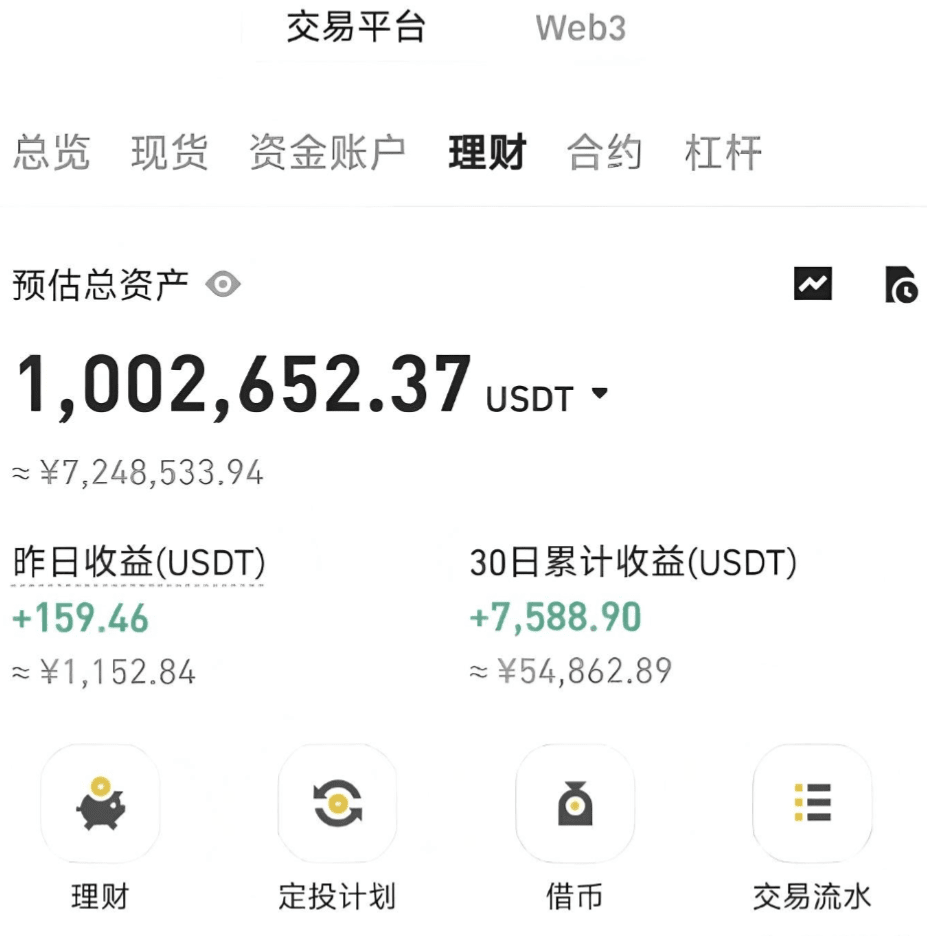
Look at my live trading data from the past few months:
Written at the end
Trading is not complicated; what is complicated is the human heart.
If you always think too much and do too much, if you are still sighing over every false breakout, it means you have not yet stepped into the door of professional trading.
Trading emphasizes: do less, act less.
My daily work ends after 10 minutes of preparation in the morning; what remains is calmly accepting the losses I should have and quietly waiting for the profits I should have.