
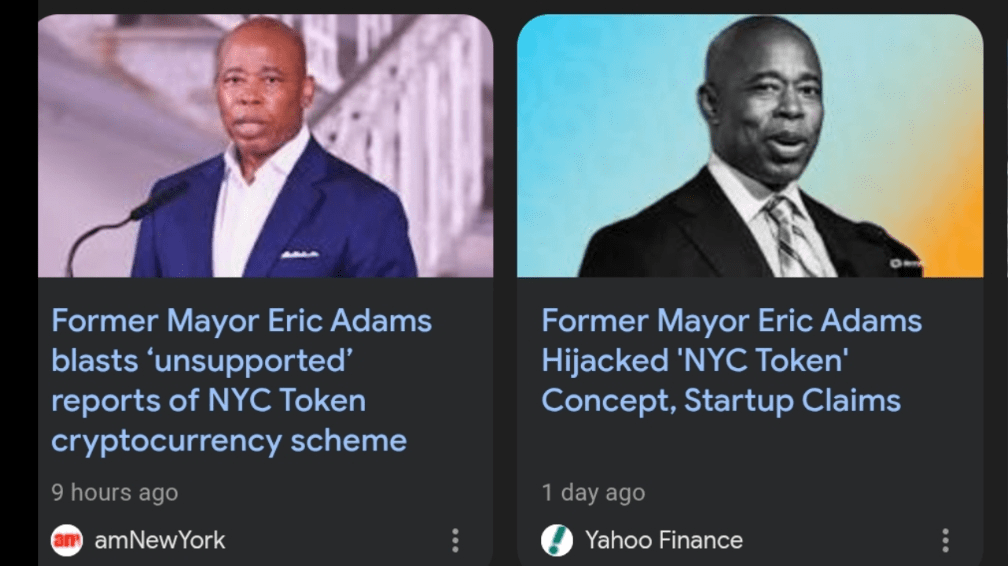
Hello beginners in crypto! Amid the hype around memecoins that often trigger FOMO (Fear Of Missing Out), it's crucial for us to remember that not everything that glitters is gold. Recently, there was a shocking case involving Eric Adams, former mayor of New York City, who launched a memecoin called $NYC Token. Instead of becoming a tool to "fight anti-Semitism and anti-Americanism" as he claimed, the token was allegedly victim to a rug pull—a classic scam scheme in the crypto world. This serves as a hard reminder for beginners: don't blindly follow trends without doing thorough research.
This article will discuss what rug pull is, details of the $NYC case, and simple tips to avoid becoming a victim. Remember, this is not investment advice—always DYOR (Do Your Own Research) and use money that you are prepared to lose.
What Is a Rug Pull?
Rug pull is a term in crypto that means "pulling the carpet" from under investors. This happens when the token creators (developers or influencers) aggressively promote their project, attracting many buyers, then suddenly withdraw liquidity from the trading pool. The result? The token's price plummets dramatically, investors suffer huge losses, while the perpetrators escape with millions in profit.
Usually, rug pulls happen in memecoins—meme-based tokens that often arise from social media hype such as X (Twitter) or TikTok. They lack real utility, relying solely on community and FOMO. A classic example: Tokens rapidly rise to market caps of hundreds of millions, then crash 80-90% within minutes.
Why does this happen often? Because blockchains like Solana or Ethereum make it easy for anyone to create new tokens cheaply, but regulations are still minimal. Beginners are often lured by the promise of a "moonshot" (huge gains), but forget to check on-chain data like ownership contracts or liquidity locks.
The case of Eric Adams and the $NYC Token
On January 12, 2026, Eric Adams announced the launch of the $NYC Token at Times Square, New York. The token instantly created hype, reaching a market cap of nearly $600 million in a short time. However, just about 30 minutes later, there was a large liquidity withdrawal of around $2.5 million, causing the price to drop 80% below $100 million. Some on-chain analysts say the actors (allegedly linked to the team or developer) made millions from this action.
Adams denies the rug pull allegations, claiming it was just "rebalancing liquidity" due to high demand. The company behind the token also denies the scam and states that the withdrawal was to keep trading smooth. However, on-chain data from platforms like Bubblemaps and Solscan shows a classic rug pull pattern: Related wallets buy massively, pump the price, then sell and withdraw funds. This case is similar to other celeb memecoins, such as Libra from Argentine President Javier Milei or Hawk Tuah from influencer Haliey Welch—all ended up losing for retail investors.
This is not the first time politicians have been involved in crypto. Adams was known as the "Bitcoin Mayor" because of his support for crypto while he was mayor. However, this case has disappointed many, as it tarnishes the image of the crypto industry that is trying to mature.
Reminder Tips for Beginners to Avoid Rug Pulls
As a beginner, don't let hype take over. Here are some basic tips:
Check Token Contract: Use tools like DexScreener or RugCheck to see if the liquidity is locked (locked) for at least 6-12 months. If it can be unlocked at any time, that’s a red flag.
Check Ownership: Ensure the developer renounces ownership (relinquishes control) after launch. If they still hold, they can manipulate.
Research the Team and Community: Who is behind the project? If anonymous or a celeb without a good track record, be cautious. Check X or Telegram for genuine discussions, not spam bots.
Start Small and Monitor On-Chain: Begin with a small investment. Use explorers like Solscan or Etherscan to observe large wallet transactions (whales).
Avoid FOMO from Social Media: Many hype posts on X are just pump and dump schemes. Verify news from credible sources, not just tweets.
Cases like this show that crypto is still wild, but with education, you can navigate more safely.
Also Read: The Power and Security of the Bitcoin Network: A Simple Explanation for Beginners
Conclusion
The case of Eric Adams and the $NYC Token is a reminder that in the world of memecoins, the risk of scams is always present—even from public figures. For beginners, focus on solid projects with real utility, such as established blockchain-based DeFi or NFTs. Don't let greed overpower common sense. If you are new, start learning from communities like Binance Square.
Share your experience in the comments!
#KriptoPemula #RugPull #Memecoin #Binance Sources: The Guardian, New York Post, The New York Times, Fortune, CoinDesk, The City, Yahoo Finance, Business Insider, Crypto Briefing, and on-chain reports from Bubblemaps and Solscan.
(This article is based on the latest news. Always check official updates because crypto moves fast.)
‼️NFA (Not Financial Advice): All information here is for educational and entertainment purposes only. Crypto is highly risky, prices can fluctuate drastically, and you may lose your entire capital. Do your own research before any investment.

