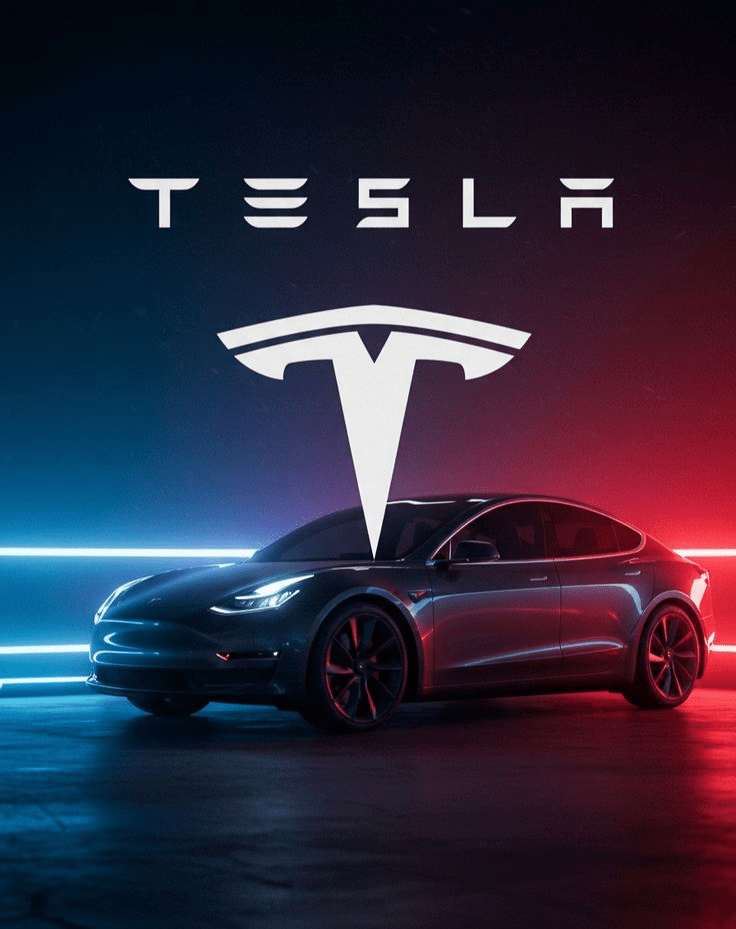
Tesla was founded in 2003 by engineers Martin Eberhard and Marc Tarpenning. The startup's goal was to prove that electric vehicles could be faster, safer, and more appealing than internal combustion engine cars.
A key moment was Elon Musk joining the project in 2004 as the lead investor and chairman of the board. Musk shaped Tesla's strategy as a company not only focused on cars but also on the long-term energy transition.
The first product was the Tesla Roadster (2008) — a sports electric car based on the Lotus Elise. It demonstrated that an electric vehicle could travel over 300 km on a single charge, which was a revolution for the industry.
Crisis and breakthrough period (2008–2012)
The global financial crisis of 2008 put the company on the brink of bankruptcy. However, Tesla managed to secure additional funding and went public on the Nasdaq exchange in 2010 — a rare case for an auto startup.
The real breakthrough was the Tesla Model S (2012) — a premium electric sedan that received numerous awards for design, safety, and innovation. Model S laid the foundation for Tesla's reputation as a high-tech automaker.
Scaling and global expansion (2013–2018)
After the success of Model S, the company began aggressive scaling:
Model X — electric SUV with Falcon Wing doors
Model 3 — mass-market electric vehicle aimed at a broad market
Launch of Gigafactory for vertical integration of battery production
Tesla has focused on:
own software,
continuous over-the-air (OTA) updates,
development of autopilot and AI.
It was during this period that Tesla became not just an auto company, but a technological platform.
Transition to sustainable energy (2016–2020)
Tesla expanded its business beyond cars:
solar panels and Solar Roof,
energy storage systems Powerwall and Powerpack,
solutions for industrial and government projects.
The company defined its mission:
"Accelerate the world's transition to sustainable energy."
In 2020, Tesla became the most valuable automaker in the world by market capitalization, surpassing traditional automotive conglomerates.
Modern era and the future (2021–present)
Tesla continues to develop:
Full Self-Driving (FSD) based on AI,
robotics (Optimus project),
own chips and neural network architectures,
new factories in the USA, China, and Europe.
The launch of Cybertruck and the development of autonomous transportation strengthen Tesla's position as a leader in the technological transformation of the automotive industry.