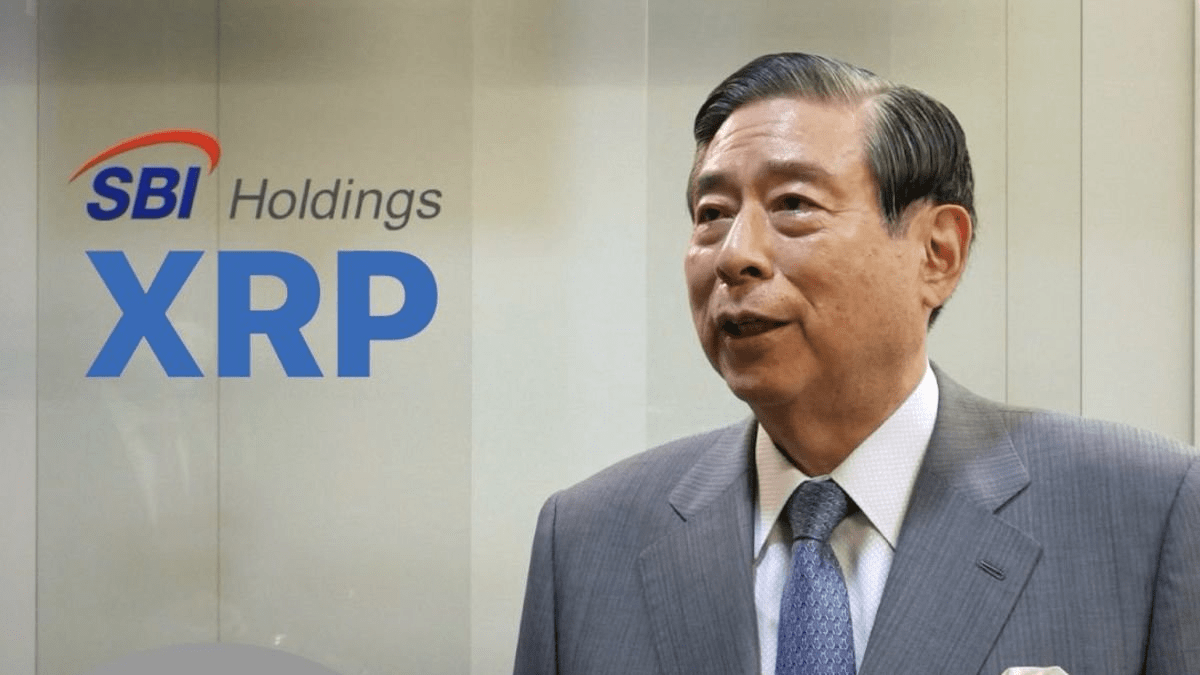
Yoshitaka Kitao, Chairman of SBI Holdings, the Japanese financial services giant, unveils a historic transformation: banks will begin adopting XRP for international payments this year. This announcement is not just a prediction, but a strategic confirmation that aligns with SBI's announcement of XRP incentives for the company's shareholders, solidifying the digital currency's position as the new global bridge currency.
Kitau: From vision to reality the decisive year for XRP 🎯
Kitau's statements come in a deeply strategic context, as he confirmed in his New Year's speech for 2026 that the ecosystem of digital currencies, particularly XRP, has become a cornerstone of the financial health of the SBI Group. This shift means that XRP is no longer just a digital asset; it is a vital infrastructure for cross-border payments.
The declared goal: Kitau expects to see widespread adoption of XRP by Japanese banks for international payments by 2026, with previous indications that 80% of Japanese banks will adopt Ripple technologies.
The Asian alliance: The joint venture SBI Ripple Asia leads efforts to deploy XRP-based payment solutions in Japan and Southeast Asia, with over 60 Japanese banks joining the Ripple network.
Exciting facts: Shareholder incentives build the XRP economy 💰
The connection between shareholder incentives and digital currency adoption is the most interesting tactic in SBI's strategy.
XRP incentives for shareholders SBI offers shareholders the option to receive their benefits in the form of XRP (for example, the equivalent of 2,500 yen of XRP for 100-499 shares) turning shareholders into XRP owners: this creates a massive base of individuals who own XRP directly, ensuring their loyalty to the currency and increasing its actual spread and use.
Investment in infrastructure SBI and Ripple plan to launch the stablecoin Ripple USD (RLUSD) in Japan by 2026. Securing liquidity: Launching a Ripple-backed stablecoin in a clear regulatory environment ensures the liquidity needed for international payment operations, enhancing XRP's role as a true bridge currency.
Japanese regulatory stability Japan provides a clear and supportive regulatory environment for digital currencies, unlike the ambiguity in other markets. Japan as the global laboratory: The success of XRP in Japan, supported by Kitau and SBI, serves as practical evidence of the possibility of global currency adoption, placing Japan at the forefront of the digital financial revolution.
The great confrontation: XRP vs SWIFT (SWIFT) ⚔️
Kitau and Ripple's strategic goal goes beyond merely improving payments in Japan; it aims to challenge the dominance of the traditional SWIFT system over global financial transfers.
We aim to make XRP the global bridge currency that significantly reduces costs and time compared to the traditional SWIFT system. Yoshitaka Kitau
With banks adopting XRP, money can be transferred in seconds at a low cost, threatening the slow and expensive business model that traditional banks rely on. This shift is not just technical; it is a revolution in financial efficiency that will lead to a redistribution of power in the global financial system.
XRP from digital asset to global infrastructure 🌍
Kitau's statements and SBI incentives confirm that XRP has surpassed the experimental stage. It is now an integral part of a massive institutional strategy aimed at integrating digital currencies into the core of the banking system. The year 2026 is not just a year for banks to adopt XRP; it is the year the world will witness a radical shift in how money moves across borders, led by Japan and Ripple's vision.
Will SBI succeed in turning XRP into the global standard for payments? All indicators suggest that the golden bullet has already been fired. 💥
#Xrp🔥🔥 #Ripple #TrendingTopic #crypto #news