

Plasma Coin and Its Potential Impact on Decentralized Finance Growth
Decentralized finance has grown at an incredible pace over the past few years, but it is still far from perfect. High transaction fees, network congestion, and complex user experiences continue to limit mainstream adoption. Plasma Coin enters this landscape with a clear promise: make stablecoin-driven DeFi faster, cheaper, and more practical for everyday use. Whether it lives up to that promise will matter not only for its own ecosystem, but for the next phase of DeFi growth as a whole.
Plasma Coin is the native asset of the Plasma blockchain, a network built with a strong focus on stablecoins and high-volume financial activity. Unlike many general-purpose chains that try to do everything at once, Plasma is designed around a specific use case: moving and using stable value efficiently. This focus alone sets it apart, especially in a market where stablecoins are already the backbone of trading, lending, payments, and yield strategies.
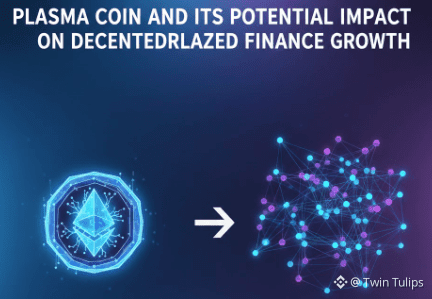
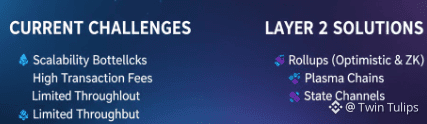
At a technical level, Plasma aims to combine strong security foundations with performance. The network is designed to support fast settlement and extremely low fees, making it attractive for users who move funds frequently. In DeFi, where strategies often require multiple transactions in a short period, reducing friction can dramatically change user behavior. When costs drop close to zero, activities that once felt inefficient or unprofitable suddenly become viable.
One of the most immediate impacts Plasma Coin could have on DeFi is in stablecoin circulation. Stablecoins are essential to nearly every DeFi protocol, yet they often suffer from the same problems as volatile assets when network demand spikes. High gas fees can turn simple transfers into costly actions, pushing smaller users out of the ecosystem. By prioritizing stablecoin transfers and optimizing the network for them, Plasma positions itself as infrastructure rather than just another speculative platform.@Plasma
This focus on infrastructure is important. DeFi growth does not only depend on innovative protocols or flashy yields, but on reliable rails that can support large amounts of capital without breaking down. If Plasma succeeds in offering a consistently smooth experience, it could attract liquidity providers, traders, and even institutions that have so far been cautious due to operational costs and unpredictability on existing networks.
From a user perspective, Plasma Coin also plays a role in aligning incentives across the ecosystem. As the native token, it is used for securing the network, participating in governance, and rewarding participants who contribute liquidity or validate transactions. In theory, this creates a feedback loop where increased usage strengthens the network, which in turn makes the platform more attractive for future users. If managed well, this kind of alignment can support sustainable growth rather than short-term hype.
Developer adoption is another area where Plasma could influence DeFi’s trajectory. Many developers are already comfortable building within familiar environments, and Plasma’s compatibility with widely used tooling lowers the barrier to entry. When developers can deploy applications without completely rethinking their architecture, ecosystems grow faster. More applications lead to more users, and more users bring m
#Plasma ore liquidity, reinforcing the network’s relevance within the broader DeFi space.
That said, Plasma’s impact will not be automatic. DeFi is highly competitive, and users are quick to move capital when incentives change. Plasma must prove that its low-fee model is not only attractive in the short term, but also sustainable. Networks that rely heavily on incentives without clear long-term value capture often struggle once early rewards decline. How Plasma balances user growth with economic sustainability will be a key factor in its long-term success.
There is also the question of concentration. A stablecoin-focused ecosystem can grow rapidly, but it also risks over-reliance on a small number of assets. If most liquidity is tied to one or two stablecoins, external risks such as regulatory pressure or issuer decisions could have outsized effects. Diversifying use cases beyond simple transfers and yields will be important for building resilience.
Despite these challenges, Plasma Coin represents a broader trend in DeFi: specialization. As the industry matures, not every chain needs to be everything. Some networks will focus on high-performance trading, others on privacy, and others on payments or settlements. Plasma’s emphasis on stablecoins and efficiency reflects a growing understanding that real-world financial use cases demand reliability above all else$XPL
If Plasma can deliver on its vision, it could help push DeFi closer to everyday utility. Cheaper transactions make experimentation easier. Faster settlement improves capital efficiency. Simpler user experiences lower the psychological barrier for newcomers. These factors may not generate headlines on their own, but together they form the foundation for meaningful adoption.
Ultimately, Plasma Coin’s potential impact on DeFi growth lies in whether it can quietly do what many networks struggle with: make decentralized finance feel less like an experiment and more like dependable financial infrastructure. The coming years will show whether Plasma becomes a core layer for stablecoin-driven finance or remains a specialized niche within a crowded ecosystem.
Do you think DeFi’s next growth wave will come from specialized networks like Plasma, or from improvements on existing major chains?

