
The clock in the trading hall of the New York Stock Exchange is about to break free from a century of constraints, and a financial revolution on the blockchain is quietly happening on Wall Street at three o'clock in the morning.
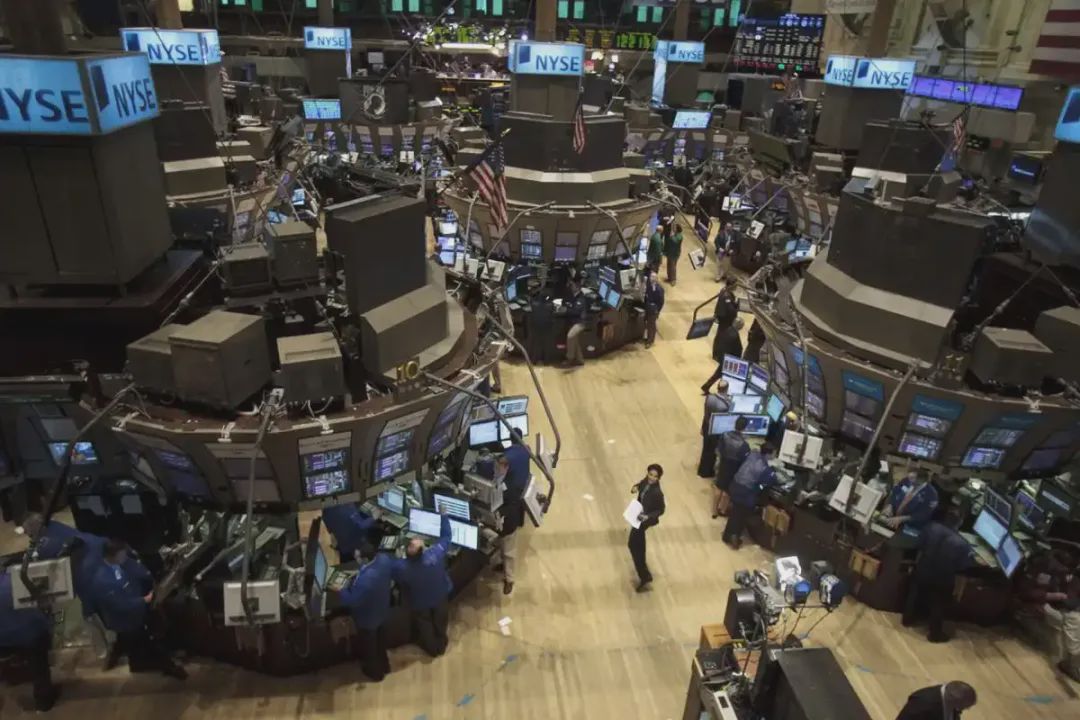
At three o'clock in the morning, the trading hall of the New York Stock Exchange is empty, but trading in the digital world has never stopped—NYSE has just announced plans to launch a tokenized securities platform that supports 7×24 hour trading, which will completely break the 6.5-hour trading tradition established in 1985.
This move is not only a positive response to Nasdaq's similar application submitted last year, but also marks the official entry of traditional financial giants into the core battlefield of the crypto world.
01 Midnight Bomb: The century-old exchange must 'never stop running'
The NYSE's trading schedule is like a history of financial evolution. In 1792, when 24 brokers signed an agreement under a sycamore tree, trading hours were entirely dependent on the weather and mood.
In 1952, the exchange canceled Saturday trading; in 1985, it was finally locked in at the current 6.5-hour trading window.
This tradition that has lasted for 41 years is about to be completely broken by blockchain technology.
The NYSE's 'stock tokenization solution on-chain' is not simply about extending trading hours, but a complete infrastructure revolution.
It will support 7×24 hour trading of U.S. stocks and ETFs, fractional trading, stablecoin settlement, and instant delivery—the latter two directly hit the pain points of traditional finance.
02 Whose Cake? The crypto 'moat' is disappearing
"Compared to the NYSE with an annual trading volume exceeding a trillion dollars, crypto RWA projects can almost be said to be nonexistent." A pessimistic comment from an industry insider reveals the harsh reality.
7×24 hour trading was once one of the proudest 'moats' of the cryptocurrency market, but this moat is now being filled by traditional financial giants.
The NYSE, with its vast asset base and global liquidity, could directly crush the crypto market's RWA track.
Even more frightening is that this system plans to combine existing matching engines with blockchain settlement, the massive scale of traditional finance, plus the efficiency of crypto technology, will form a terrifying combination.
03 Power Players: Some cheer, some pour cold water
"Nothing can stop this train of the era!" BTC OG and BankToTheFuture founder Simon Dixon excitedly wrote on social media. His accompanying image is meaningful—BlackRock CEO Larry Fink embracing Coinbase CEO Brian Armstrong closely.
Supporters see a huge entrepreneurial opportunity. Redstone DeFi co-founder Marcin candidly states: "This perfectly aligns with what we are going to do next."
But there is also plenty of cold water. BingX advisor Nebraskangooner sharply questions: "Why should we allow the stock market to trade 24 hours? No one wants that except trading platforms." MoonRock Capital's founder worries: "For the baby boomer generation, this is not good news; your lives have become tougher."
04 Technological Showdown: The Real Gap Between On-Chain and Off-Chain
The NYSE's proposal seems radical, but it still dances in shackles of traditional finance. Jake O, head of Wintermute OTC, points out the key: "Traditional infrastructure can extend trading hours but cannot solve T+1/2 friction."
The crypto market solved this problem years ago: 24/7 trading, instant settlement, global access, and no gatekeepers.
The NYSE's target users are still traditional institutions and compliant investors, while crypto-native users yearn for KYC-free trading, global liquidity allocation, and high leverage—these are two almost different worlds.
Investment firm L1D partner Louis T's complaint is incisive: "They don't seem to be bidding for our 'bear drug-style' tokens."
05 Countdown: The Blueprint for the Financial World in 2026
The SEC's approval is the first hurdle facing the NYSE's plans. Industry insiders expect that approval may not come until the end of 2026 at the earliest—this gives crypto projects a valuable window.
The true purpose of the NYSE is quite practical: trading volume and fees. Just like CEXs continuously launch new coins, traditional exchanges also need fresh blood.
In the short term, the NYSE even needs to learn from CEXs and DEXs how to operate on-chain trading products. An observer boldly predicts: "The NYSE and Nasdaq are not immune to falling from grace."
The ultimate winning hand is simple: where liquidity is, where attention is, where users are.
When the century-old golden sign of the NYSE meets the sleepless nature of blockchain, a genetic mutation in the financial world is occurring.
The 'barbarians' of the crypto world suddenly find that the guards on the walls have begun to use their weapons.
The beneficiaries of this transformation will not be a specific exchange or platform, but every ordinary person yearning for a freer and more efficient financial market. When the boundaries between stocks and tokens completely disappear, the true era of financial equality may finally arrive.#美SEC代币化股票交易计划
