

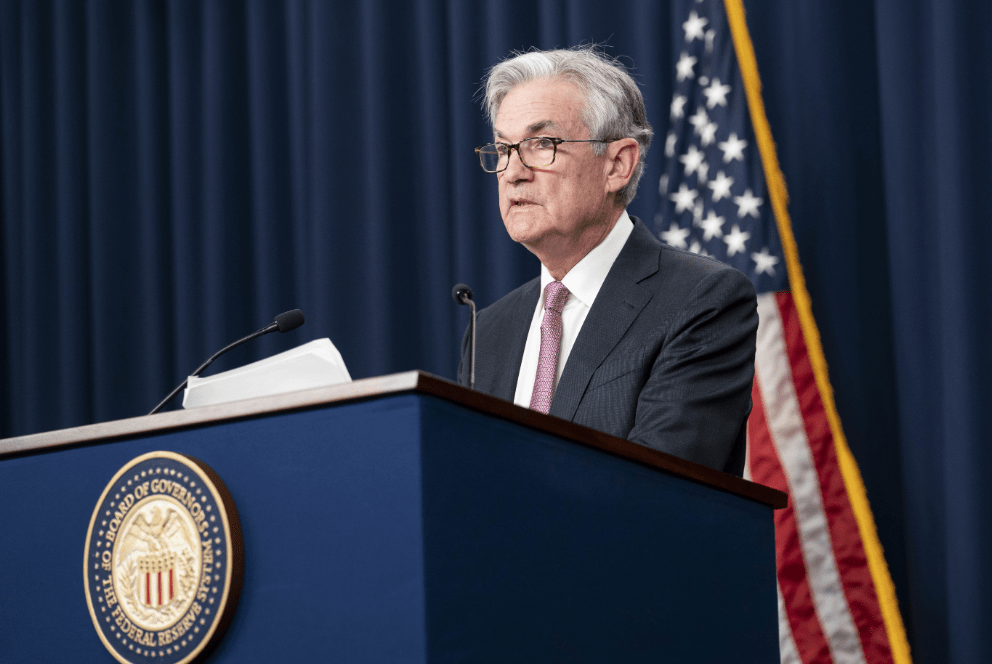
Facing a criminal investigation subpoena and threats of presidential removal, Federal Reserve Chairman Powell steps toward the Supreme Court steps, with over a century of Federal Reserve independence tradition behind him and a legal battle ahead that will determine the fate of the American central bank.
On January 20, 2026, the U.S. Supreme Court will hold oral arguments in the case of former President Trump's attempt to remove Federal Reserve Board member Lisa Cook.
Federal Reserve Chairman Jerome Powell plans to attend the hearing in person, while he is currently under criminal investigation due to a renovation project at the Federal Reserve headquarters. This legal battle has been described as 'the most significant legal test of the Federal Reserve's independence in over a century.'
 One, Event Background
The storm began on August 25, 2025, when Trump released an open letter announcing the 'immediate dismissal' of Federal Reserve Governor Lisa Cook.
● The letter accused Cook of issues with mortgage applications, stating that she repeatedly declared different residences as 'primary residences' in Michigan and Georgia to enjoy favorable loan conditions.
● Cook quickly responded, stating that 'there is no legal reason' for her dismissal and affirmed that she would continue to perform her duties. She denied any wrongdoing and has not faced any criminal charges.
In response to Trump's dismissal decision, Cook filed a lawsuit in the federal court in Washington, D.C., attempting to block her dismissal.
● On September 9, 2025, a district court judge ruled to prohibit Trump from dismissing Cook during the litigation process. Shortly thereafter, a federal appellate court upheld this injunction.
● On October 1, 2025, the U.S. Supreme Court ruled to temporarily maintain Cook's position and scheduled oral arguments for the case to take place in January 2026.
Two, The Key Role of the Supreme Court
● The U.S. Department of Justice, in documents submitted to the Supreme Court, stated that the lower court's order to prohibit the dismissal of Cook is 'another case of judicial improper intervention in presidential removal authority.'
● The Supreme Court will hear oral arguments in this case on January 21, 2026. Analysts pointed out that the key controversy centers on whether Trump can dismiss Federal Reserve governors based on his interpretation of 'good cause.'
● Jon Faust, an economics professor at Johns Hopkins University who previously served as a senior advisor to Powell and Yellen, expressed concern that even if Cook retains her position, the ruling could still undermine the Federal Reserve's shield against political pressure.
Three, Powell's Dilemma and Counterattack
As the Cook case unfolds, Powell himself is also under pressure. The U.S. Department of Justice served a subpoena to the Federal Reserve in September 2025, threatening to initiate criminal proceedings regarding his testimony before the Senate Banking Committee in June 2025.
● The investigation mainly focuses on the cost overruns of the Federal Reserve's office renovation project, which increased from an initial budget of $1.9 billion to nearly $2.5 billion.
● In a public statement on January 11, 2026, Powell indicated that the criminal investigation is intended to pressure the Federal Reserve because it has not quickly lowered interest rates as requested by Trump.
Kevin Hassett, the director of the White House National Economic Council, has downplayed the investigation into Powell, stating he expects the inquiry 'will not yield substantive results.'
● Hassett stated that he believes Powell's previous testimony regarding the Federal Reserve's office renovation project was truthful. However, he also claimed that if he were the Fed chair, he would 'insist on transparency.'
● Notably, Hassett was previously predicted to be one of Powell's top successors. However, during a speech at the White House on January 16, 2026, Trump hinted that he preferred to keep Hassett in his current position rather than nominate him as the next chair of the Federal Reserve.
Four, Trump's True Intentions
Since returning to the White House in early 2025, Trump has been urging the Federal Reserve to significantly cut interest rates, hoping to boost the economy and reduce government debt costs.
● Analysts believe that the attack on Cook represents a significant escalation of Trump's intervention in Federal Reserve policy. If Trump successfully dismisses Cook, he could appoint someone else to fill her vacancy, which would give his appointee a majority on the Federal Reserve Board.
● Former New York Federal Reserve President Bill Dudley warned that the market is underestimating the threat posed by Trump's move to dismiss Federal Reserve Governor Cook. 'Even if the likelihood of Trump controlling the Federal Reserve is extremely low, the effort itself is destructive. And once successful, the consequences would be unimaginable.'
Five, The Institutional Design of Federal Reserve Independence
The original intention of the Federal Reserve's institutional design is to ensure the stability of the financial system and to safeguard the professionalism and independence of monetary policy.
● According to U.S. (Federal Reserve Act) law, Federal Reserve governors are independent officials with a 14-year term and can only be removed for 'good cause,' such as serious misconduct, illegal behavior, or moral turpitude, and must go through legal procedures.
● Hu Jie, a professor at Shanghai Jiao Tong University's Shanghai Advanced Institute of Finance, stated that the independence of the Federal Reserve is protected by U.S. law and is widely recognized by various sectors of society and regulatory agencies. Any attempts to turn it into an administrative appendage could provoke market turmoil.
Six, Global Market Reactions
● This dismissal controversy has triggered turbulence in the financial markets. Following the news, the yen appreciated nearly 0.5% against the dollar amid risk aversion.
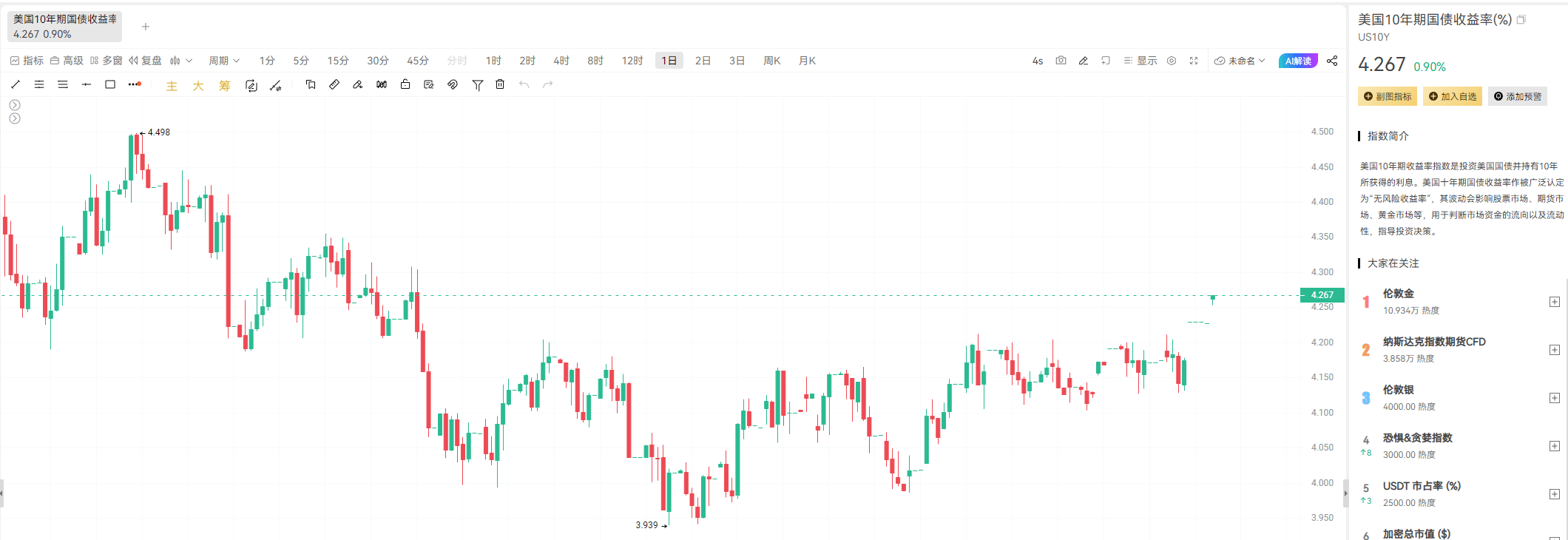
● The yield on U.S. 30-year Treasury bonds widened its decline, rising 5 basis points to 4.94%. Concerns that the Federal Reserve's loss of some independence could lead to accelerated inflation caused the 30-year Treasury yield to approach 5% at one point.
● Robert Savage, head of market strategy and insights at BNY Mellon, stated that firing Cook is a 'historic test of presidential power in the United States,' and the loss of the Federal Reserve's credibility in its independence will pose long-term risks to U.S. bonds and the dollar.
Analysts believe that if Trump gains the power to veto and select regional Federal Reserve presidents through the Federal Reserve Board, the boards of the various Federal Reserves will face tricky political issues.
● Bai Xue, Senior Vice President of Research and Development at Dongfang Jincheng, believes that Trump's actions may, to some extent, influence the future monetary policy and institutional direction of the Federal Reserve, leading to risks of politicization and short-termism in future policy decisions.
● From a global perspective, the weakening of the Federal Reserve's independence could undermine the dollar's status as a reserve currency and pose challenges to global financial stability.
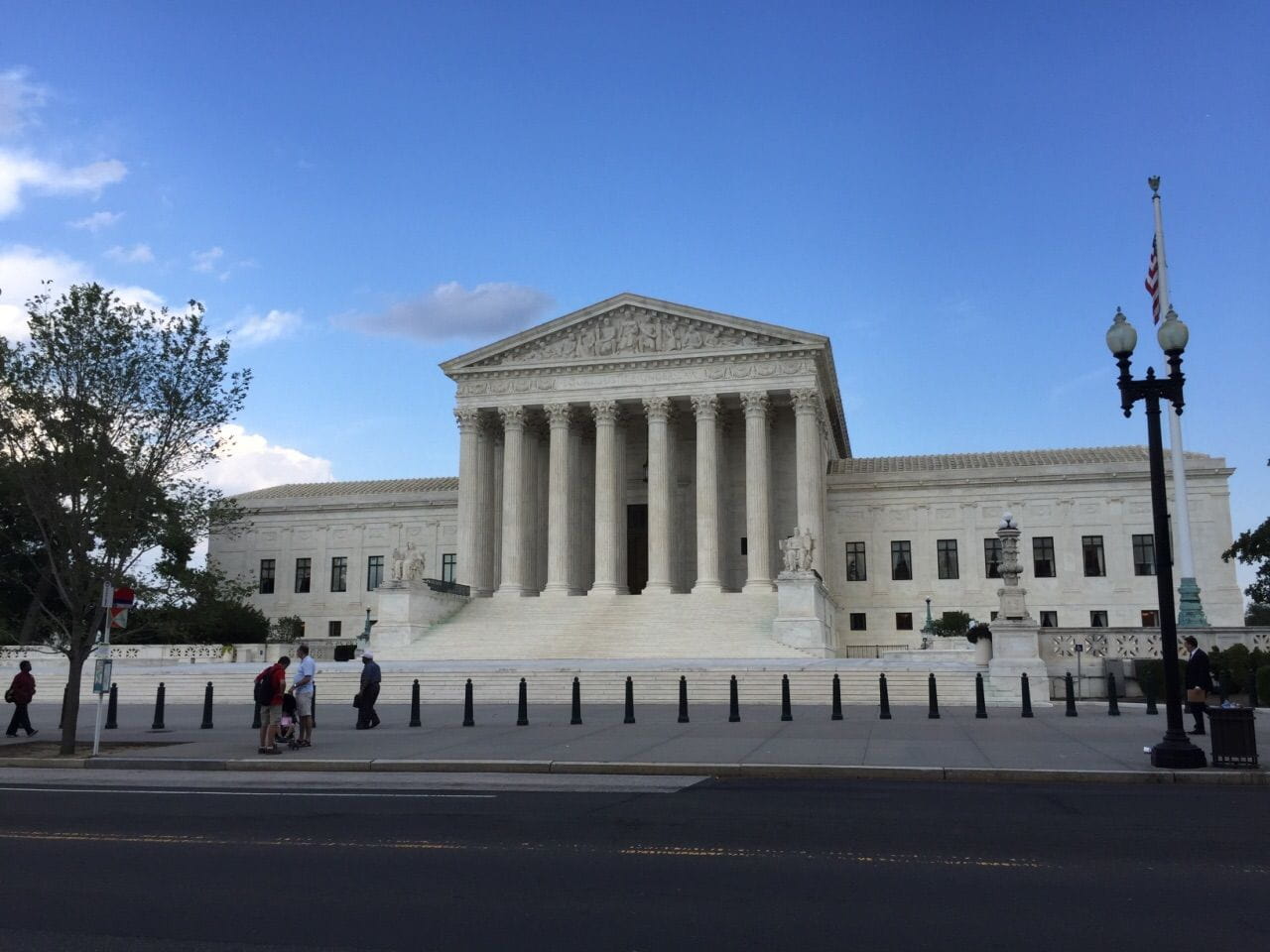
Outside the Supreme Court, reporters are waiting for Powell's appearance. The Federal Reserve chair's term will end in May 2026, and his nominated successor has not yet been made clear.
Regardless of the final ruling, this case has already left an indelible mark on the chronicle of U.S. monetary policy. The investigation by the U.S. Attorney's Office for the District of Columbia is ongoing, and the renovation of the Federal Reserve headquarters seems to metaphorically suggest the 'structural reform' facing the U.S. central bank itself.
The financial markets are holding their breath, not only focusing on the direction of interest rates but also on a fundamental question: the future of the Federal Reserve—will it continue as an independent technocratic institution or gradually take on the characteristics of a political appendage?