


In blockchain discussions, speed is often treated as the ultimate benchmark. Faster blocks, lower latency, and quicker confirmations are easy to measure and easy to market. These metrics look impressive in isolation, but for stablecoins, speed alone does not determine whether a system is actually useful. What matters more is consistency — the ability for the same action to produce the same outcome, repeatedly and predictably.
Stablecoins are increasingly used for real financial activity such as payments, settlements, treasury movements, and cross-border transfers. In these contexts, teams are rarely optimizing for the fastest possible confirmation. Instead, they optimize for reliability. A transaction that confirms quickly can feel impressive in a demo, but reliability is what allows systems to scale beyond experimentation and into everyday use.
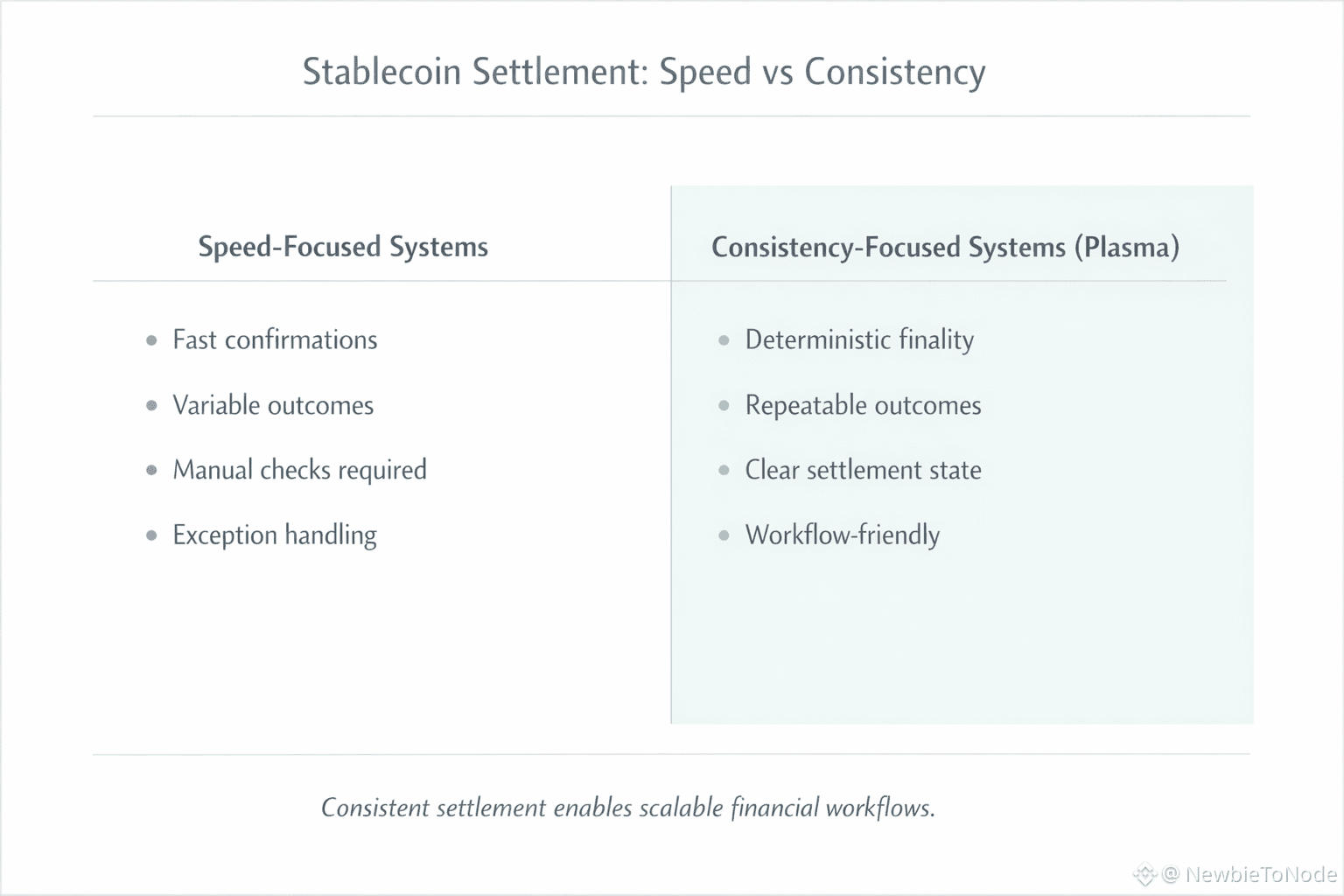
This is where Plasma’s design philosophy becomes relevant. Instead of treating stablecoins as just another asset running on a general-purpose chain, Plasma is built around stablecoin settlement as a primary function. By focusing on deterministic settlement through PlasmaBFT, the network aims to ensure that once a transaction reaches finality, its state is clear, dependable, and easy to reason about for downstream systems.
Consistency reduces operational overhead in ways that are not always visible at first. When outcomes vary, teams compensate by adding manual checks, fallback procedures, and exception handling. Over time, these layers accumulate and become the hidden cost of a system. When settlement behavior is repeatable, workflows can be designed around known states rather than assumptions. Accounting, reconciliation, reporting, and monitoring become easier to automate, and fewer resources are spent managing edge cases that arise from uncertainty.
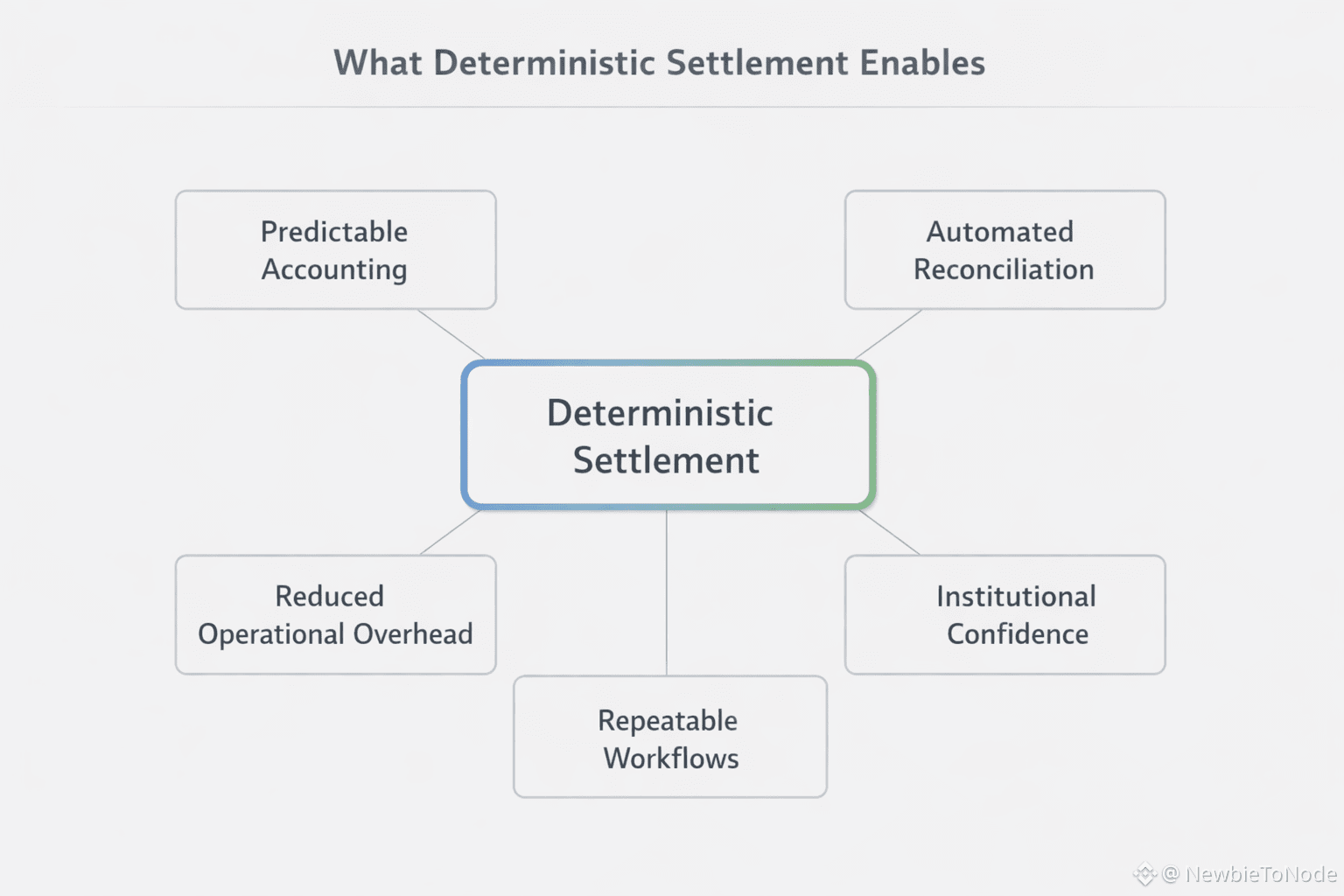
A stablecoin-first approach also changes expectations around infrastructure. Stablecoins function as units of account and mediums of exchange, not speculative instruments. Infrastructure that supports them needs to prioritize clarity and predictability over novelty. Plasma’s architecture reflects this shift by emphasizing settlement determinism rather than headline latency numbers or peak throughput claims.
As stablecoin usage grows, the ability to repeat the same process at scale becomes increasingly important. Systems that behave consistently allow organizations to standardize internal processes, reduce training overhead, and build confidence in automation. Over time, this consistency compounds into lower operational risk and more efficient financial workflows.
Performance in settlement networks should therefore be measured by how reliably they support repetition. Systems that behave the same way under the same conditions allow users and institutions to plan with confidence, allocate resources effectively, and integrate stablecoin flows into existing financial operations without constant supervision.
As stablecoins continue to mature into core financial infrastructure, networks designed around consistency rather than speed alone may prove more durable. Plasma represents this direction, with settlement built to be repeatable, understandable, and dependable — qualities that matter more as stablecoins move from experimentation into long-term financial use.

