

Dusk’s recent appearance on the screens of traders feels sudden, but the narrative surrounding its development has always been deliberately incremental. While the price movement in January 2026 is nothing if not notable, it is the series of milestones reached that made Dusk suddenly understandable to a set of institutional needs for auditability, privacy, and regulation. Dusk’s progress on its mainnet earlier in the month advanced Dusk out of proof of concept into production readiness for compliance-minded groups. This is significant because institutions trade certainty for excitement, and a live mainnet with a known level of privacy support is a significantly different animal than a whitepaper or testnet.
If you are following market analytics, you should know why these discussions escalated in sound by taking a look at this token’s numbers. By mid-January 2026, DUSK was seen well above its late-2025 levels, as its market cap broke into nine figures, and trading volumes are rising aggressively in highly volatile sessions. . The market is attempting to price the shift in narrative, not just the momentum.
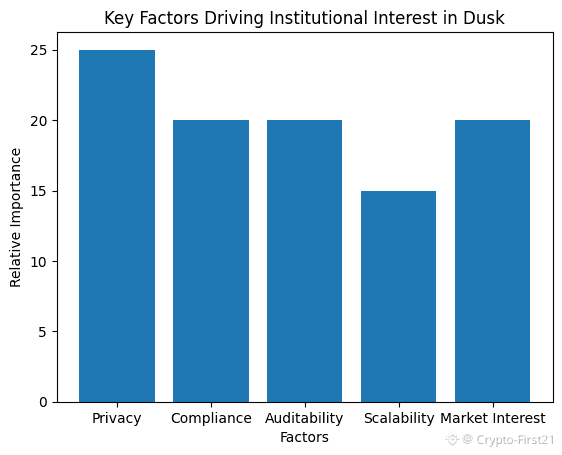
The key to this story is Dusk’s philosophy of privacy as a function of regulated finance. In short, a system has been developed where transactions and smart contract results can be hidden while still being known to be correct. Rather than making ledger statements, amounts of transactions, and programs of smart contracts visible to all participants in a network, Dusk employs cryptographic techniques to conceal potentially sensitive information while verifying adherence to procedures in regulated finance. The point is significant: institutions want neither secrecy nor anonymity nor any other form of privilege; what they want is controlled revelation, where sensitive information is concealed but demands of regulated finance are satisfied.
“A good bit of this cryptographic talk about Dusk can seem scary, and it’s helpful to take it in steps. Zero-knowledge proofs are an important part of this. They enable one to prove a statement true while keeping the statement itself secret. A trading party can prove it has sufficient funds to complete an action in this manner, for instance, without revealing its account level completely. . “Confidential transactions” achieve the same thing, keeping quantities obscure but permitting them to be legitimate by not revealing how they came to be created or destroyed. Dusk implements these concepts for smart contracts so that contracts could act on “private inputs” yet produce “verifiable outputs.” Imagine it as “sealed paperwork” that may be verified as genuine.
Why has it become salient now, and why does the timing matter? For the previous year, there has been greater clarity emanating from the regulatory community regarding data protection, particularly as relates to dealings in finance. Meanwhile, there has been more attention paid to tokenized securities and real-world assets as well. These do not mix well when placed in a situation where all transactions and balances are transparent, as in the case of a public ledger, or in this instance, a blockchain. In January 2026, Dusk’s changeover into a production-ready network reflected all of this.
From a traders' perspective, it makes quite a bit of sense. During the process of a project from being theoretically relevant to being practically relevant, overshooting does happen. the sharp movements of DUSK on the charts of January indicate that it is primarily driven by speculation as well as reevaluation of the use case that it offers going forward in the future. Some people are simply trading based on momentum, while others are speculating based on the potential that Dusk infrastructure may offer with respect to regulated digital assets.
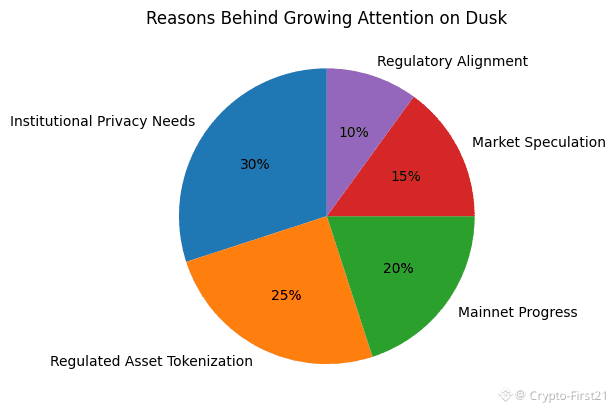
"But what truly matters more than price is execution. The real-world institution will be very concerned with what happens under stress situations. They will want to know if private smart contracts can be scaled, how fees perform under congestions, and how disclosures are made if a regulatory body or court demands access to information. The strategy of Dusk focuses on the concept of ‘Selective Disclosure,’ which ensures that certain parties get the chance to disclose information related to transactions whenever there is a legal requirement."
There are trade-offs to be made. Privacy-preserving systems are not simpler than transparent systems. They involve more crytography that impacts performance. Analytics systems need to be rewritten to operate on ciphertext. It takes time for institutions to act because errors are costly. Based on my observation of such technologies, it is the ones that invest in infrastructure from the outset that succeed.
A factor that is often given less importance is predictability on the economic front. This is because institutions dislike surprises. They find it important that they know how transaction costs are determined. They need clarity on the motivation mechanisms for validators. They like predictability on network upgrade mechanisms. The token economics and BFT mechanism will be carefully analyzed by market professionals. They will also be carefully evaluated by risk professionals.
But what makes the current state of the art different, and therefore what makes Dusk special? It is certainly not offering something novel. What makes it special is that it solves a very specific, but very important, problem of secure, auditable blockchain infrastructure for the financial industry, with confidentiality as its primary focus. Most blockchains are optimized for speed or interoperability. But very few are optimized for confidentiality while being auditable. That is a difficult problem, and it takes longer to explain, which is why it tends to be ignored until the right moment.
Personally, I consider the current step to be the starting point, not the finish line. The January 2026 attention wave is helpful in that it provides liquidity, developers, and scrutiny. It is what happens next that will be the true test. Will institutions run pilots? Will tokenized securities actually settle on the network? Will auditors and regulators sign off on the disclosure mechanisms? Those outcomes mean a much great deal more than the short-term price fluctuations.
For any onlooker trying to assess Dusk today, the question is not whether it will outrun next week, but rather whether its security model actually aligns with the realities of institutional finance. If so, then recent attention makes sense; if not, then the market will readjust accordingly. The point: Dusk has forced an important conversation back into focus, which is that privacy is not the opposite of regulation. When carefully designed, it can be one of its biggest allies.
