

If we look at KGeN in a more realistic coordinate system, it resembles a company that has already survived the cold start phase, rather than a newly launched token waiting for narrative relay. The most counterintuitive aspect of this project is not how complex the technology is, but that it generated revenue first and then allowed the token to catch up.
Everything starts from a piece of data that doesn't resemble Web3 much: ARR
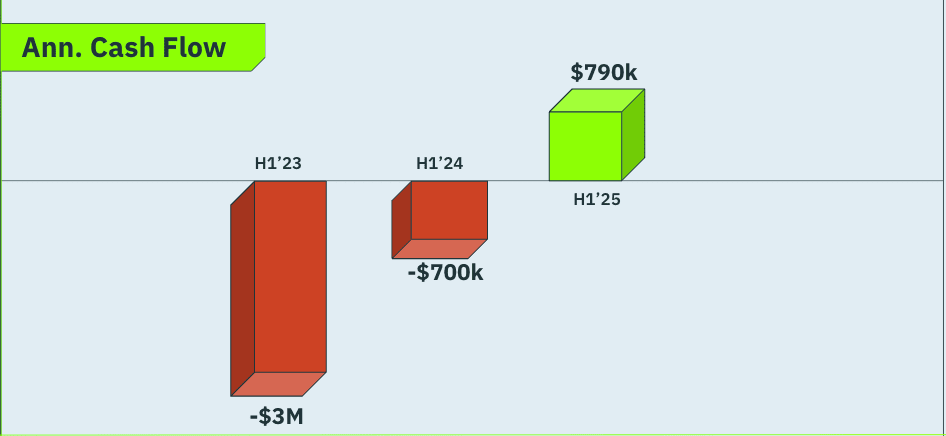
KGeN has currently disclosed an annual recurring revenue of over 80 million USD. This number is not considered mythical among traditional startups, but in the context of Web3, it is already rare enough. More importantly, this is not achieved through one-off collaborations or subsidies, but is contributed by paying customers over time.
From a research perspective, the significance of this detail far exceeds any narrative in a white paper. It indicates that KGeN has completed the most basic commercial validation: someone is willing to pay for its services over the long term. In an increasingly bubble-rejecting market environment, this stable cash flow itself is a filtering mechanism.
What it truly sells is not traffic, but 'trustworthy human participation'.
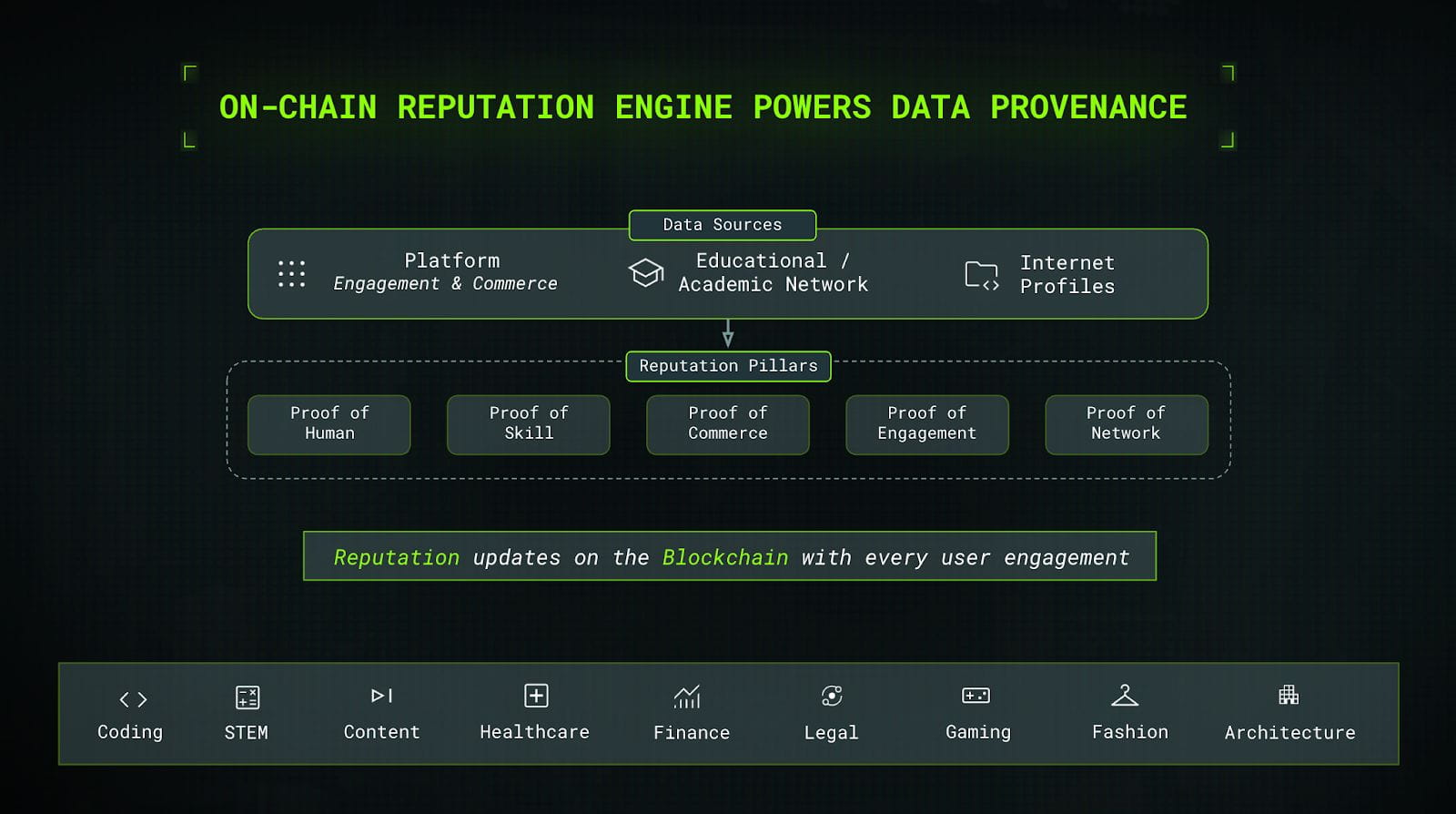
The core business of KGeN is easily misinterpreted as 'doing user distribution' or 'providing growth tools'. But upon deeper analysis, it becomes clear that what it sells is not traffic, but something scarcer: verifiable human participation capabilities.
Currently, KGeN covers about 48,900,000 verified real users, and these users do not simply exist; they are tagged with identity, skills, and behavioral characteristics. For enterprises, this means they are not buying exposure, but rather 'real human behaviors that can be called upon'.
This just leads to KAI.
The essence of KAI: turning human feedback into infrastructure.
KAI is the part of the KGeN system that is most easily underestimated. It is not chasing the hot narrative of AI, but is solving a long-standing problem that has never been standardized: how to scale the supply of high-quality human feedback.
KAI provides AI training and evaluation services such as RLHF, TTS, and multilingual annotation based on this verified user network for enterprises. In other words, what KGeN is doing is transforming decentralized human participation into 'feedback capabilities' that enterprises can purchase in the long term.
For AI companies, the effectiveness of models ultimately depends on the quality of human signals, which is precisely the most difficult part to scale and also the hardest to outsource. The value of KGeN lies in its productization and processization of this matter, and there are people continuously paying for it.
Back to the token: it may not be lively, but it stands on cash flow.
Structurally, KGEN is not designed as a narrative-centric token. It is more like a 'tool that stands behind the business'. The token is positioned in the flow path of protocol revenue, connecting two types of real demands:
One type is the user acquisition budget from game manufacturers;
Another type is the B2B revenue brought by AI data services.
This means that the demand for tokens does not completely come from secondary market sentiment, but is directly related to the scale of protocol business. Whether this logic holds will ultimately not be determined by the narrative, but by the revenue curve.
Real-world variables: this is not a path without resistance
Of course, this model is not without issues.
Can AI-related revenues continue to amplify?
Has the valuation already reflected growth expectations in advance?
In the process of business expansion, will the growth rate slow down?
These variables cannot be hedged by any grand narrative in advance.
The last judgment: this is a rare 'traceable' Web3 project.
The uniqueness of KGeN lies in the fact that it provides the market with a set of continuously verifiable indicators: ARR, customer count, AI business progress, and user network scale. You don't need to believe its story; you just need to look at its books.
In a market filled with vacuous narratives, projects that can continue to speak with data rather than slogans are already few and far between.
