

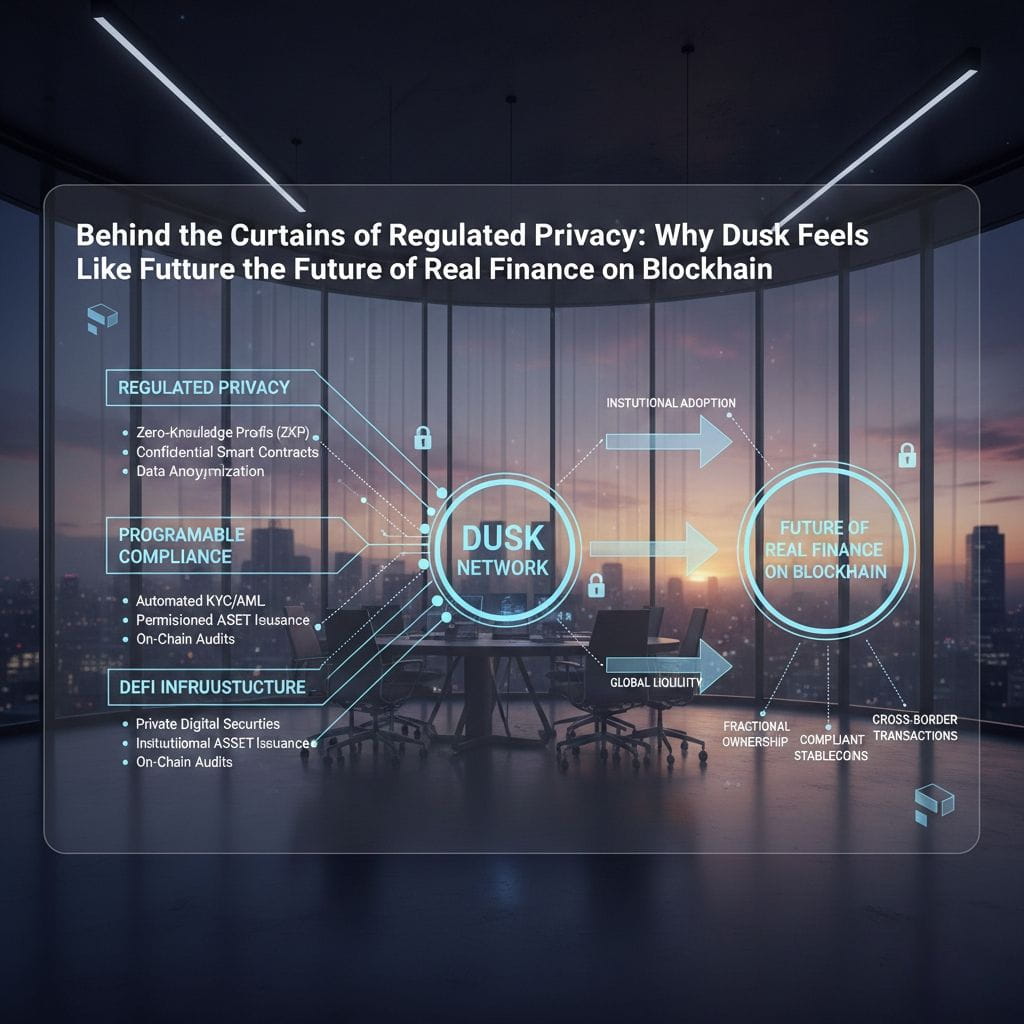
I usually don’t get excited easily by layer-1 blockchains, because most of them promise speed, scalability, or decentralization but forget about how real finance actually works. Dusk felt different from the very first time I looked into it. Founded back in 2018, Dusk wasn’t chasing hype cycles or meme narratives. It was quietly building something far more serious — a blockchain designed for regulated finance, where privacy and compliance can exist together without compromise.
What really stands out to me is how Dusk treats privacy. On most blockchains, everything is open for everyone to see, which might sound transparent but doesn’t work for institutions, banks, or real-world assets.Dusk understands this reality. It uses advanced cryptography to make transactions private by default, while still allowing authorized parties to audit when needed. This balance between confidentiality and accountability feels like something traditional finance has been missing, and Dusk brings it natively on-chain.
The architecture of Dusk is another reason it feels so thoughtfully built. Instead of forcing everything into one rigid system, it uses a modular design. This means the core network focuses on security and settlement, while execution layers handle smart contracts and applications. For developers and institutions, this flexibility matters. It allows innovation without sacrificing stability, which is exactly what large financial players look for before touching blockchain infrastructure.
What I find most interesting is Dusk’s clear focus on real-world assets and compliant DeFi. This isn’t about anonymous yield farming or unsustainable incentives. Dusk is positioning itself as a foundation where equities, bonds, funds, and other regulated assets can live on-chain in a legally sound way. That vision feels realistic, especially as governments and regulators are no longer ignoring blockchain but actively shaping its future.
Looking at recent activity, the ecosystem has been steadily maturing. Network upgrades, tooling improvements, and growing on-chain usage show that this project is moving with intention, not noise. On exchanges like Binance, the DUSK token has gained renewed attention as more people start understanding the narrative behind regulated and privacy-first infrastructure. It’s not just about price movement, but about recognition of long-term value.
The DUSK token itself plays a central role in the network. It’s used for transaction fees, staking, and securing the blockchain. Staking isn’t just a reward mechanism here; it’s part of how the network stays decentralized and trustworthy. Over time, as more applications and institutions use Dusk, the demand for the token naturally ties into the growth of the ecosystem rather than short-term speculation.
When I think about the future, Dusk feels well positioned for what’s coming next in crypto. Regulation is no longer a question of “if” but “how,” and most blockchains were not designed with this in mind. Dusk was. As tokenized real-world assets grow and institutions look for compliant public infrastructure, networks like Dusk could become essential rather than optional.
To me,Dusk represents a quieter but stronger kind of innovation. It’s not shouting for attention, yet it’s building the kind of foundation that global finance could realistically adopt. In a space full of experiments, Dusk feels like a blueprint — one that understands both blockchain ideals and real financial systems, and knows how to bring them together.
