

Forget how the altcoin season operated in the previous cycle. The current altcoin market is completely different from the last season
The flow of money into crypto has changed. The big players who used to drive the prices of altcoins have been replaced by other big players, but there is one problem: the new big players do not push altcoins in the old way, so how should we invest?
1. How did the old altcoin season operate?
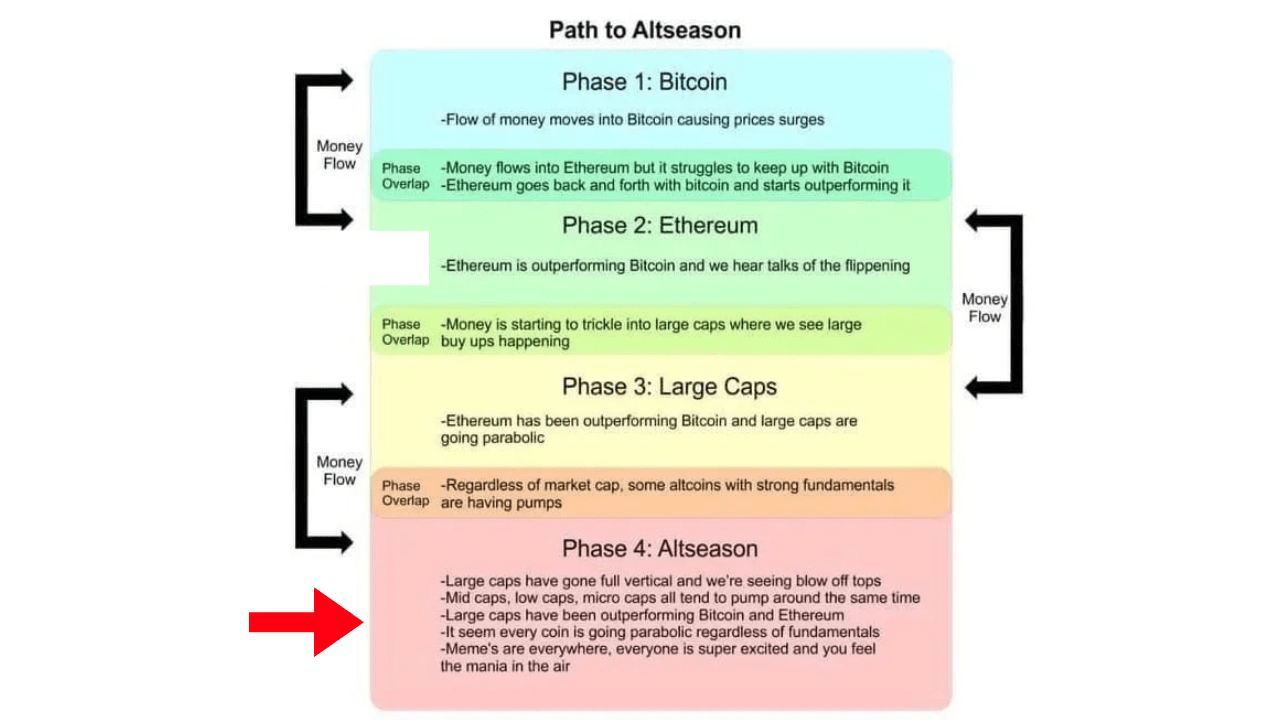
In previous cycles, we must have been too familiar with cash flow charts like this:
Bitcoin up => Ethereum up => Major L1/L2 altcoins increase => Memecoins/lowcap => Shitcoins grow and end the cycle.
And to operate the cash flow smoothly like this, in the previous season we had entities such as:
Typical market makers in the previous season included: Alameda Research, Wintermute, Jump Trading,..
- Lending platforms: Genesis, BlockFi, Celsius, Voyager lend with easy conditions, helping to create a huge source of liquidity flowing into the market.
- Major exchanges such as: FTX, Binance listed new coins and launched many promotional campaigns to encourage users to trade.
- Finally, there are proprietary trading firms, these firms are willing to buy into risky coins and quickly sell them back when the market heats up.
The above factors have helped the crypto market operate smoothly and in the right order as shown in the chart above.
2. How has the new altcoin season changed?
However, the operation of altcoins over the past year has not been functioning like that anymore due to the following factors:
- The emergence of ETFs: One characteristic of this cycle is the emergence of ETFs, which helps traditional funds flow into crypto, however, this is a large amount of money and capital, they are extremely cautious, so the money only flows into major coins like Bitcoin, ETH, Sol,.. and they have no demand to invest in altcoins which are high-risk coins.
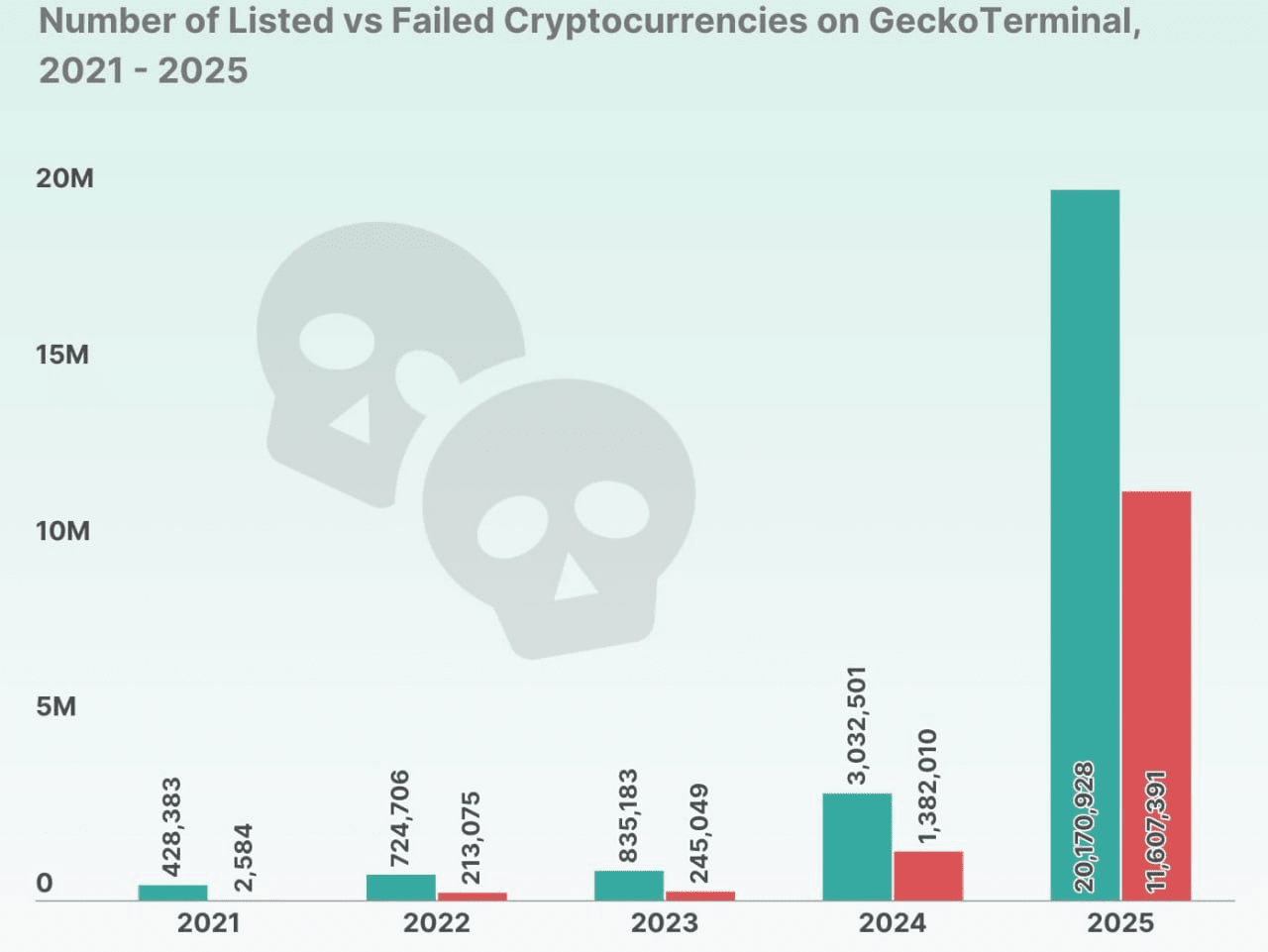
- The number of coins reached a record: According to CoinGecko, the number of tokens created each year increases exponentially: in 2021 there were about 428 thousand, in 2022 it increased to 724 thousand, in 2023 it was 835 thousand, in 2024 it skyrocketed to over 3 million, and in 2025 it exploded with over 20 million new tokens. With a huge number of coins and liquidity not increasing too much, it is obvious that there will not be enough "fuel" to pump the prices of all coins like before.
- The mindset of players has changed: Alongside the market's growth, the knowledge of participants will surely increase, old price-pumping tricks, old tactics have been seen through by players, so the difficulty will increase many times.
In summary, these are the main reasons why altcoins this season do not grow strongly like before.
3. New rules of the game and how to adapt
So, do altcoins still have a chance to help us change our position, or should we just "play it safe" by only investing in major coins like Bitcoin, Ethereum,.. like large investment funds? From my perspective and observation of altcoins as well as speculating on the development of the market in the near future, I think we still have opportunities but with a completely different approach.
The old liquidity system has collapsed, but a new system is gradually taking shape and is operated by completely different entities: traditional financial organizations.
For example, we have Blackrock, which is building its own digital asset research department, analyzing each token like they do with stocks. Morgan Stanley launched a Bitcoin ETF and a series of crypto products. Cantor Fitzgerald began issuing token analysis reports according to institutional standards. These are names managing trillions of USD, and they are gradually entering the game.
However, these giants cannot invest recklessly like retail investors. They are bound by internal regulations, by laws, by accountability to clients. They are only allowed to invest in assets that meet legal standards and have sufficiently large liquidity. This will lead to a stronger market differentiation. A small number of compliant altcoins will benefit greatly when institutional money truly comes in. The rest will continue to drown in depleted liquidity, regardless of how favorable macro conditions may be.
So how do we know which coins can survive? Here are 5 basic criteria that people can refer to.
Addressing real needs: Does the token have real users or does it only survive by pumping the token? Is there a motivation for users to stay? If the answer is no, then that project is unlikely to last long.
The ability to meet organizational standards: Can large funds buy, hold and trade this token without violating internal regulations or laws? Coins that fall outside this scope will find it very difficult to have a foothold with institutional money.
Transparent and fair tokenomics: Is the token release schedule transparent? How many tokens will be unlocked? Where does the value for holders come from?
Has actual revenue: Does this crypto project generate a source of income? And how is that income used? Buy/Back or create fees for holders? Some projects have demonstrated value while most other projects are just promises, and of course, the tokenomics of these projects are also very sustainable.
Is the project aligned with major trends?: Does the project belong to any trending/narratives that are booming? Privacy, Perpdex?

These five criteria may seem very obvious when assessing a project, but in previous cycles, the quick money-making and profit-seeking caused these criteria to be forgotten. Because at that time, the mindset was that buying recklessly would still yield profits.
But let's look back at the altcoin season of 2021, when no one cared about these things because liquidity was abundant, just buy and there would be someone to buy back at a higher price, buying recklessly would still yield profits if it was in the right trend.
Ultimately, it is certain that alongside the emergence of institutional money, crypto will still retain its wild nature as before, however, the number of altcoins operating in the old way will decrease and be purely pump-and-dump, so finding them will be very difficult. If you are a non-crypto investor or have "less time" in crypto, you should invest based on value as this is a safer way and aligns with the future development of the crypto market.
#Altcoin #CYCLE


