Beneath the thriving facade of the crypto world, the congestion of underlying payment networks, high and unstable transaction fees, and the fragmented cross-chain ecosystem have always been high walls that obstruct large-scale applications from taking root. Many users have hesitated due to transaction fees exceeding the principal on small transfers, and numerous developers have been left in awe in the face of complex infrastructure. It is in such a dilemma that the emergence of the Plasma ecosystem and its core token XPL is not just another attempt to chase narrative bubbles, but a pragmatic revolution aimed at reshaping the foundations of on-chain finance with efficiency and compliance.
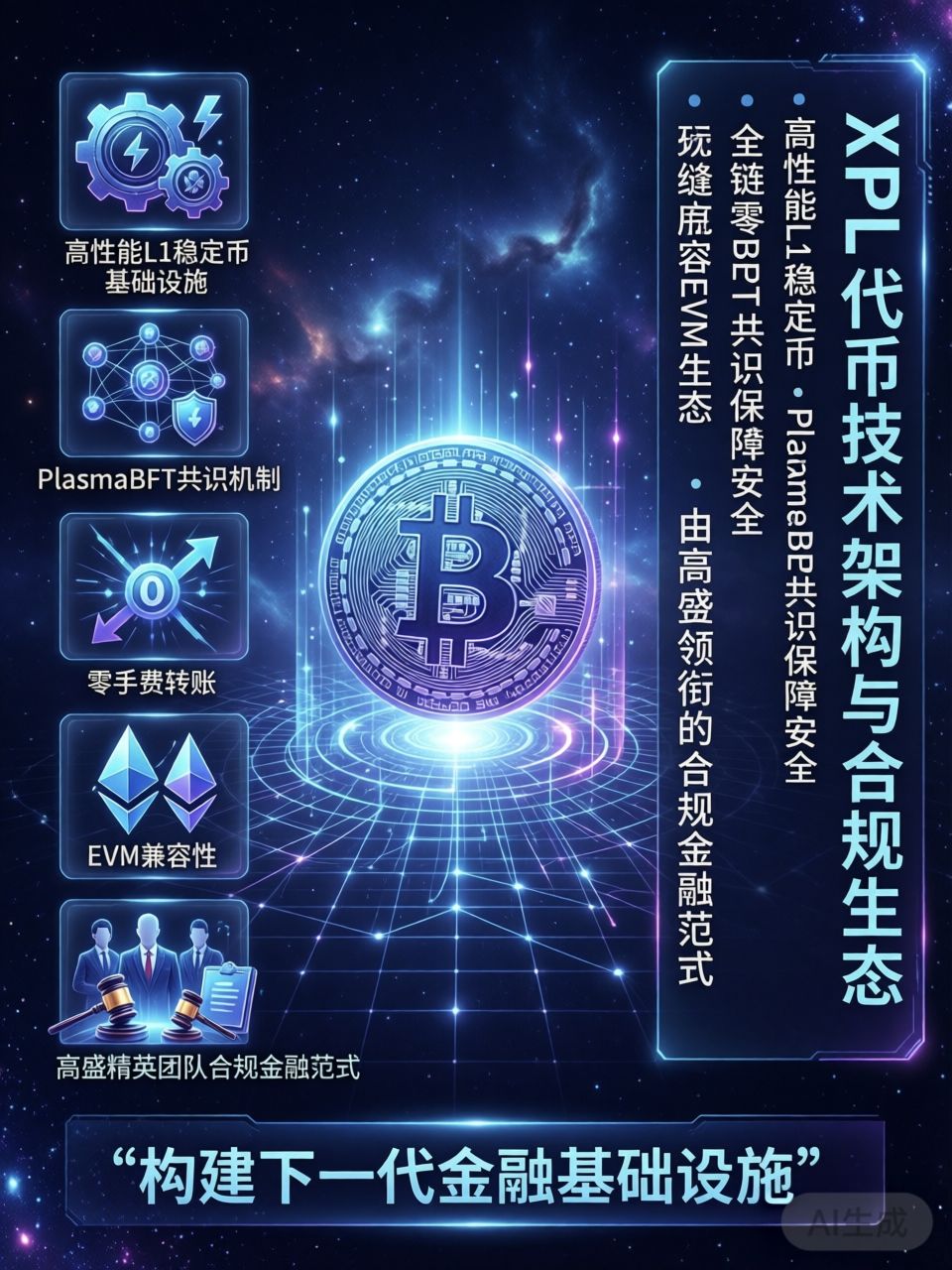
$XPL 's value foundation is deeply rooted in its pursuit of performance and user experience. It relies on the innovative PlasmaBFT consensus mechanism to achieve second-level transaction confirmation, with peak processing capacity (TPS) exceeding 3000, making high-frequency, low-cost financial activities possible. One of its most disruptive settings is that staking XPL allows for zero-fee stablecoin transfer services, targeting a long-standing pain point in the industry. Meanwhile, its architecture is fully compatible with the Ethereum Virtual Machine (EVM), allowing a large community of DeFi, NFT, and blockchain game developers to migrate and deploy at almost no cost, instantly accessing an efficient and low-cost new network.
However, the most striking aspect of the XPL ecosystem may lie in its rare team and resource composition behind it. Its core members mostly come from traditional financial and tech giants like Goldman Sachs, Apple, Microsoft, and Bloomberg, with figures like Tether CEO Paolo Ardoino and the former chair of the U.S. Commodity Futures Trading Commission (CFTC) on board. This gives the project a distinct 'regular army' character: their logic is not a disruptive experiment of anonymous geeks but emphasizes efficiency, compliance, and institutional credibility. They choose to anchor security in the Bitcoin network, which is both a tribute to Satoshi Nakamoto's philosophy and a signal of safety and stability to the traditional world.
This 'suit elite' entry mode is a double-edged sword. Its advantage lies in the project's ability to quickly connect with traditional finance through top-tier resource integration and compliance understanding, such as strategically positioning itself within the vast ecosystem closely tied to USDT, paving the way for institutional capital entry. But skepticism arises: is this too 'Web 2.5'? Is a network dominated by former Wall Street elites, pursuing extreme efficiency, sacrificing the original 'decentralization' spirit of blockchain to some extent? It resembles an upgraded global clearing center built on blockchain technology; does this represent the evolution of blockchain, or is it traditional finance donning a more efficient technological guise?
The market's reaction is equally complex and real. XPL initially attracted a lot of attention with generous airdrop activities, achieving rapid growth in total locked value (TVL) in the ecosystem. However, the token price has experienced significant corrections from its peak, reflecting the market's calm after the frenzy and the test of continued selling pressure. Especially with the upcoming unlocking of tokens for the team and investors, as well as the launch of the official staking plan, this will pose a direct challenge to the market's absorption capacity. This is not only a topic XPL needs to face but also a pressure test all similar projects must undergo, transitioning from capital-driven to value-supported.
Looking ahead, a fundamental question arises: what kind of on-chain financial future do we really need? Is it more inclined towards a 'primitive city-state' built by anonymous geeks, filled with idealism but potentially volatile, or a 'digital financial special zone' dominated by compliance elites, highly efficient and stable but possibly slightly centralized? XPL is attempting to answer this question with its unique path. It may not be the ultimate answer to decentralized fundamentalism, but it certainly provides a corridor of practical significance and feasibility for blockchain technology to serve the real economy on a large scale and embrace traditional funds.
Ultimately, $XPL may not lead to a binary revolution but rather a profound fusion evolution. It signifies that on-chain finance is entering a new stage of diversified development: pursuing ideals without rejecting efficiency, and building trust in the process of embracing innovation. Regardless of short-term price fluctuations, this attempt itself is an important step in helping the entire industry break through bottlenecks and move towards maturity.