
By the end of 2025, the global collectibles market and the Web3 innovation sector will jointly welcome a historic intersection.
If we say that half a year ago, the large-scale on-chain of Pokémon cards (PTCG) was merely seen as an accidental ignition of the 'alternative RWA' track; by early 2026, the market has clearly provided an answer: this is by no means a one-time speculation, but a deep upgrade from 'asset digitization' to the construction of an on-chain ecology of 'mainstream IP and physical assets'.
1.1 The 'Stabilizing' Effect of Top Assets
Just a few weeks ago, Logan Paul auctioned the PSA 10 level 'Pikachu Illustrator' card, with a starting price of 6 million dollars, once again refreshing the global understanding of 'paper value'. The robustness of such top physical assets is not only a celebration in the collector's circle but has also become a 'value anchor' in the on-chain market.

At the same time, many RWA-PTCG-related suppliers have suddenly emerged in the Web3 space, and keen investors have already discovered: the valuation logic of Web3 TCG is returning from the empty 'small image consensus' to the solid 'physical asset background'.
1.2 Jackson.io and Cardz.game: Leaders in the right direction
It is in this paradigm shift that the PTCG RWA product launched by Jackson.io and Cardz.game has emerged.
Unlike early-stage projects that merely stayed at 'putting cards in a vault and issuing an NFT', the collaboration between Jackson & Cardz.game has anchored two core aspects of track evolution from the very beginning:
Standardization and transparency: With Jackson's deep accumulation in the field of physical cards, all listed cards go through authoritative appraisal such as PSA/CGC, ensuring the 'native authenticity' of RWA assets.
Liquidity reshaping: Leveraging Cardz.game's on-chain protocol, transforming traditional collectibles with low turnover into on-chain assets with high-frequency interaction attributes, addressing the pain points of 'difficult monetization and high thresholds' in the traditional market.

1.3 From 'islands' to 'ecosystems'
Jackson.io and Cardz.game are going further; they are not just selling cards, but building a new frontier of PTCG on the chain that is 'verifiable, tradable, and gamified'.
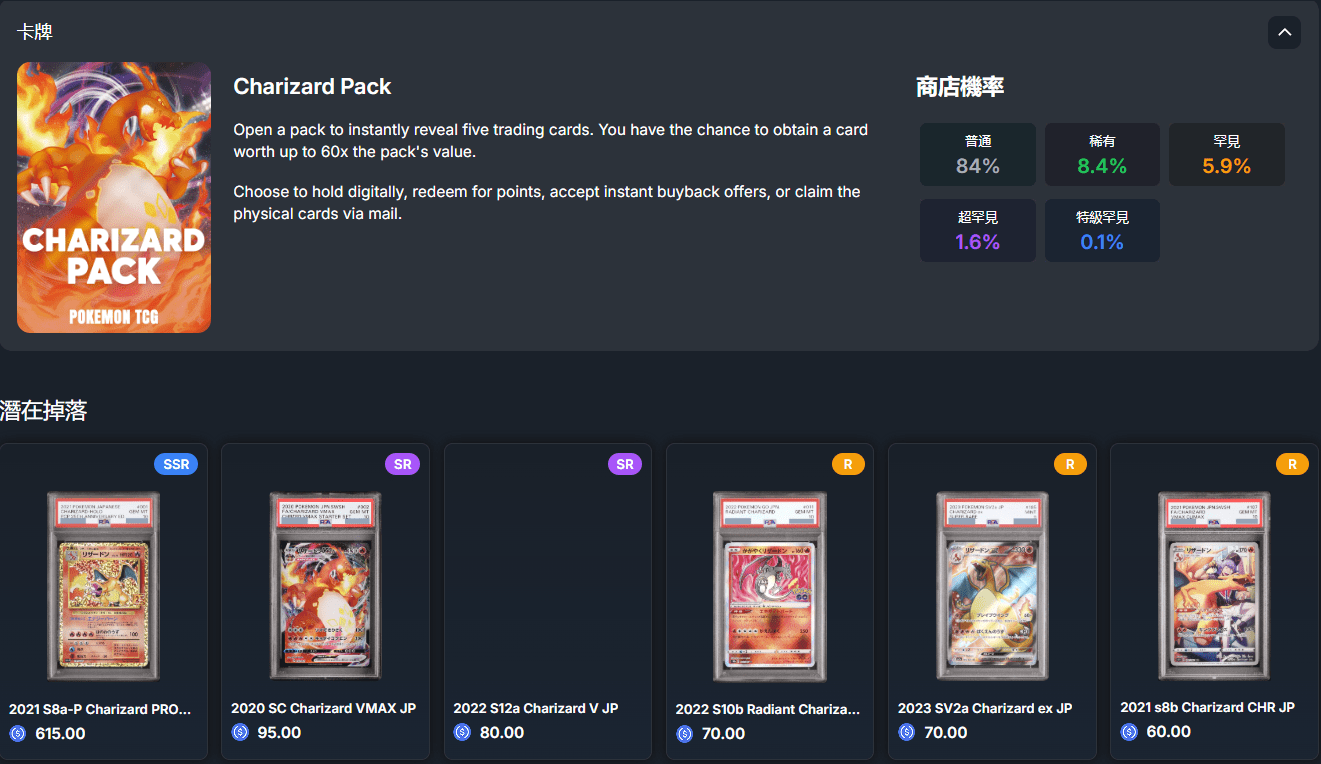
When players open a Pokémon card pack hosted by Jackson on the Cardz.game platform, what they buy is no longer just probability, but a 'hard asset' backed by real physical value that can circulate instantly around the globe.
Value closed loop: How to create an internal driving system of 'positive EV'
As mentioned earlier, the competition in the card game track in 2026 has risen from 'traffic battles' to 'system battles'. A healthy ecosystem hinges on whether the funds invested by users can create a virtuous cycle.
2.1 Rejecting 'probability black boxes', embracing transparent EV
Jackson and Cardz.game have abandoned the traditional model of excessively exploiting players in product design. By ensuring 'limited-time limited-release' and 'real-time public drop rates', they guarantee that the expected value (EV) of every card pack remains within a healthy range.
Anchoring effect: Each Pokémon card on the chain is benchmarked against PSA rating prices.
Repurchase support: Drawing on the industry's leading 90% instant buyback mechanism, combined with the liquidity pool provided by JacksonLP, players still maintain a high underlying value in their assets even if they do not open a 'God card'.
2.2 The 'liquefaction' of assets: From custody to second-level transactions
Traditional card consignment often requires several weeks of logistics and quality inspection. On the Jackson platform, this process has been shortened to seconds. I speculate it won't be long before Jackson can achieve that once the physical goods are confirmed in storage, the mapped NFT can achieve instant circulation on Cardz.game's secondary market. This is not wishful thinking; I believe this 'digital speed of physical assets' is entirely achievable and is the engine driving continuous capital inflow.
Cultural resonance: The reconstruction of fan economy empowered by top IPs
Web3 should not just be an overlay of technology; it should be an extension of emotions. As the world's largest IP, Pokémon (PTCG) has a community consensus that is the strongest moat for Jackson & Cardz.game.
3.1 From 'consumers' to 'owners'
In traditional models, players are merely the harvesting targets of IP value. But in the Jackson ecosystem, by holding specific RWA cards or participating in community groups, players participate in governance, engaging in a chain-based co-creation of IP. This allows players to own assets while enjoying rights:
Customized rights: The platform periodically launches IP-derived revenue sharing and exclusive holder activities, allowing cards to no longer just lie as paper pieces in a safe but to be the 'key' to unlocking Web3 exclusive rights.
3.2 'Social currency' that transcends circles
By integrating social gameplay with Cardz.game (such as multi-player unboxing and achievement badges), PTCG is becoming a digital social currency, closely stitching together the traditionally isolated collectors and active crypto natives.

Future vision: Defining benchmarks in the wave of 18.6 billion RWA
Looking globally, the market value of non-stablecoin RWA is expected to exceed 18.6 billion USD by the end of 2025, with the most growth potential being emotional assets represented by TCG.
4.1 The vast sea of cross-chain interoperability
As the scale of assets expands, Jackson & Cardz.game may consider laying out a multi-chain ecosystem in the future. In the future, assets held by users on Sui or Solana will be able to achieve seamless interaction through underlying protocols, breaking the liquidity islands further.
4.2 The birthplace of phenomenal applications
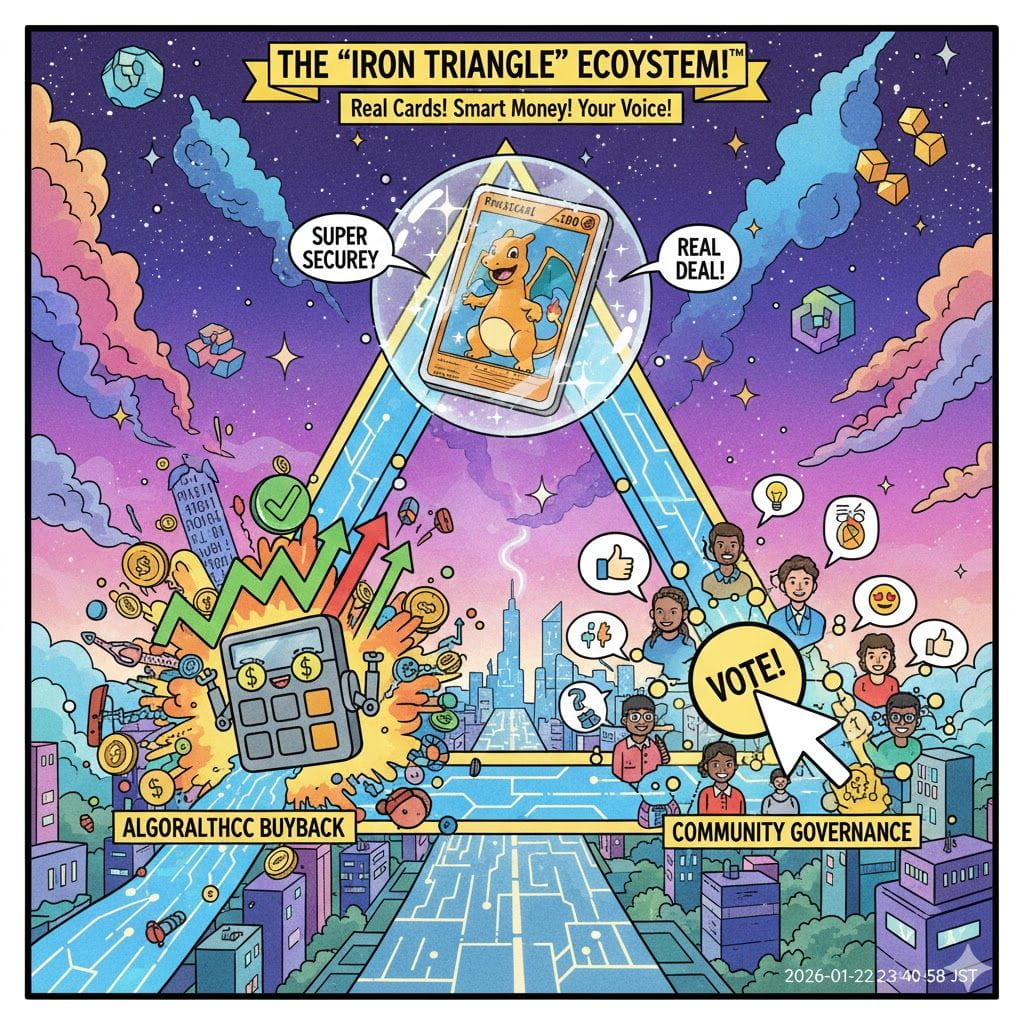
We predict that with the maturation of token mechanisms like $BIRB and the accelerated entry of mainstream IPs, TCG-RWA will give birth to truly phenomenal applications. Jackson and Cardz.game, with their 'physical custody + algorithmic buyback + community co-governance' triangular model, may become a new ecological model of the RWA-PTCG industry.
Capturing deterministic Alpha in complexity
The market in 2026 no longer believes in pure narrative bubbles; it favors tangible, touchable, and profitable real assets.
In the face of a multi-chain and specialized market environment, Jackson.io and Cardz.game provide investors and collectors with a clear navigational tool: here, every card has traceability, every transaction has a chain to follow, and every passion has a price to rely on.
In this cultural and economic network woven with transparency, fairness, and dreams, the story of TCG-RWA has just begun.