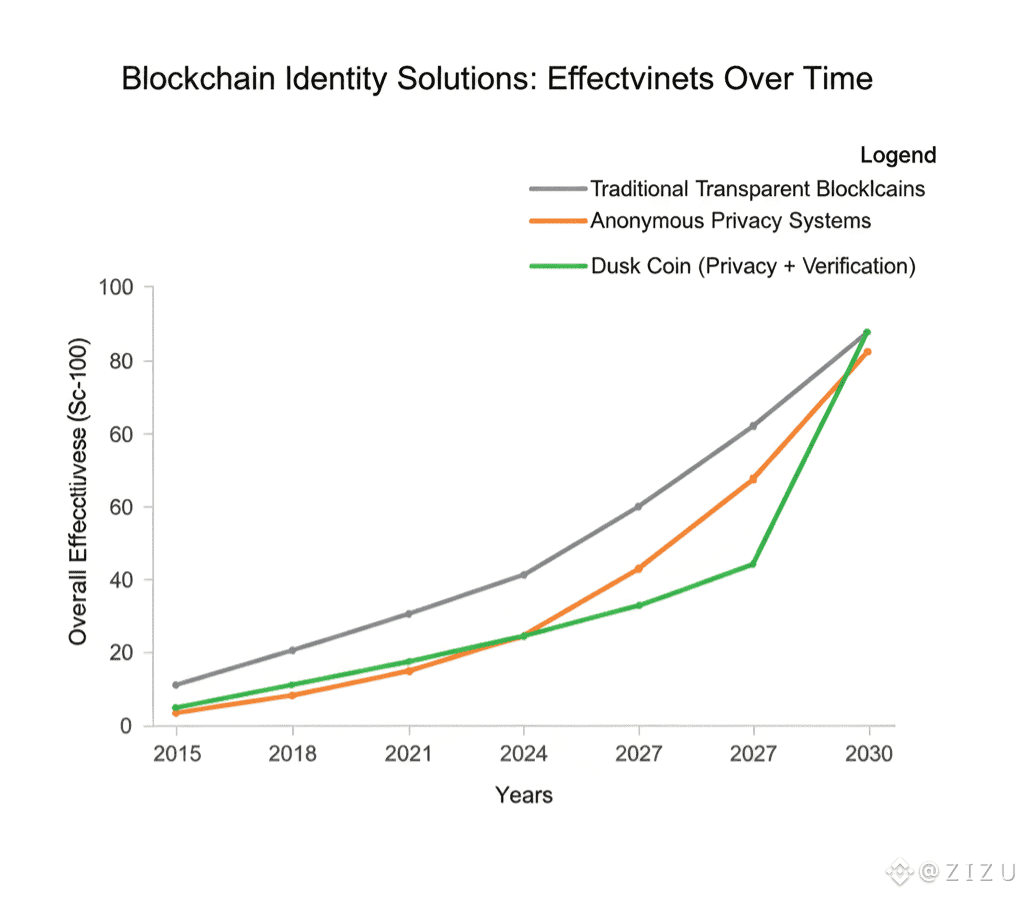
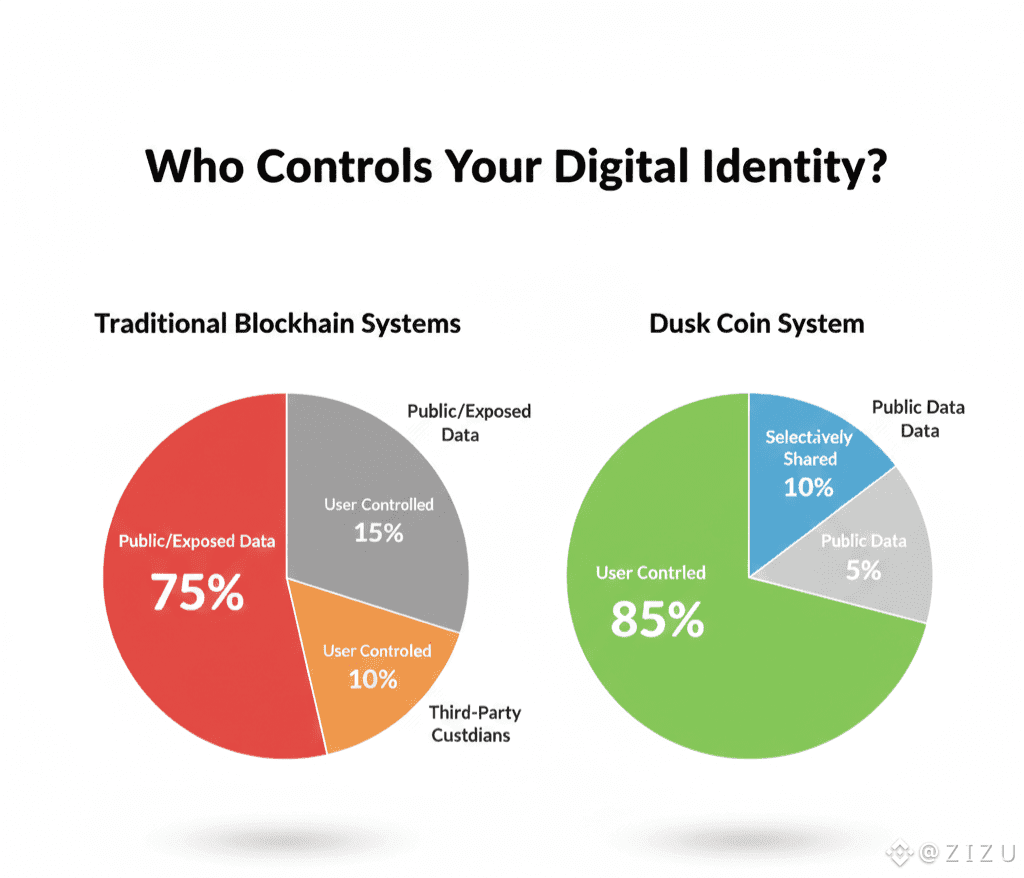
Digital identity is one of the most critical yet underappreciated challenges in blockchain. While decentralized systems promise freedom and ownership, the reality is that identity verification, privacy, and trust are often at odds. Dusk Coin offers a unique solution by embedding privacy into identity management, creating a system where individuals and institutions can interact confidently without sacrificing personal or strategic information. From my perspective, this integration could reshape how we think about identity in decentralized networks.
Traditional blockchains often equate identity with public visibility. Wallet addresses, transaction histories, and contract interactions are transparent and immutable. While this allows verification, it creates a paradox: users are either anonymous to the point of untraceability or entirely exposed. Neither extreme is suitable for practical adoption. Dusk Coin addresses this by allowing participants to prove legitimacy or compliance without revealing extraneous information, providing a middle ground that feels far more realistic. Personally, I find this approach elegant and necessary.
Digital identity in financial systems carries high stakes. Exposure of personal or corporate data can lead to exploitation, regulatory penalties, or loss of competitive advantage. Dusk Coin allows participants to retain control over what they disclose, essentially giving them ownership over their own identity in the digital world. From my perspective, this is more than just a technical improvement—it is an ethical choice that respects autonomy.
The system also enhances trust without compromising privacy. For instance, users can verify qualifications, ownership, or authorization through cryptographic proofs without exposing sensitive details. This makes interactions safer, more efficient, and more credible. Personally, I see this as a critical enabler for complex applications such as regulated finance, legal agreements, or cross-border transactions.
Another advantage of Dusk Coin’s approach is reducing identity-related friction. In many blockchains, verification requires revealing extensive data or relying on third-party intermediaries. Dusk Coin’s selective disclosure model streamlines identity verification while minimizing exposure. From my point of view, this is essential for scaling real-world adoption because it balances usability with security.
The privacy-first design also encourages innovation in decentralized applications. Developers can create solutions that rely on verified identities without risking sensitive information. This opens doors for sectors like healthcare, supply chain, and institutional finance, where identity and privacy are simultaneously critical. Personally, I believe this could accelerate meaningful blockchain adoption in industries that have historically been hesitant.
From a governance perspective, privacy in identity has profound implications. Voting, decision-making and organizational participation can be conducted confidentially yet verifiably. This prevents social pressure or strategic manipulation while maintaining accountability. In my view, this represents a new paradigm in decentralized governance, one that respects both privacy and collective responsibility.
Security is another key benefit. Digital identity exposure creates attack vectors. Publicly visible wallets, transaction patterns, and behavioral data can be exploited. By keeping sensitive identity-related information private while ensuring correctness through cryptographic verification, Dusk Coin significantly reduces potential vulnerabilities. Personally, I find this combination of privacy and security to be a defining feature.
Moreover, Dusk Coin respects the psychological dimension of identity. In many transparent systems, participants alter their behavior due to fear of observation. This affects both financial decisions and collaborative participation. By protecting sensitive identity data, Dusk Coin allows participants to engage authentically, make strategic choices confidently, and participate without undue pressure. From my perspective, this human-centered approach is rare and powerful.
Critics may argue that private identity systems can reduce transparency or auditability. Dusk Coin counters this concern through selective verifiability. Actions, qualifications, and compliance can all be proven without unnecessary exposure. Personally, I see this as a sophisticated balance between accountability and privacy that few networks have achieved.
Ultimately, Dusk Coin’s integration of privacy with digital identity is forward-looking. It recognizes that real adoption requires more than speed, decentralization, or throughput. It requires systems that respect individuals and institutions while enabling secure, verified participation. From my perspective, this is a critical step in moving blockchain from speculative hype to practical, everyday utility.
In conclusion, Dusk Coin demonstrates that privacy and identity can coexist in a decentralized system. Participants can retain control, institutions can verify legitimacy, and developers can innovate without compromise. Personally, I see this as one of the most promising aspects of the network, offering a blueprint for how digital identity should function in the next generation of blockchain ecosystems.