

When I first started looking into the Real-World Asset space, I noticed that most projects chase the same thing. More chains, more apps, more noise. Dusk takes a very different path. Instead of spreading itself thin across every Web3 trend, it focuses on one clear direction: integrating directly with traditional financial markets. In my view, this approach feels slower on the surface, but much stronger underneath. Dusk is not trying to replace the financial system overnight. They are working to become part of it.
At its core, Dusk Network is built with one clear idea in mind. If blockchain wants real adoption, it has to work within existing financial rules, not outside them. That is why Dusk’s strategy is not about launching dozens of DeFi experiments. It is about building infrastructure that regulated institutions can actually use, trust, and scale with. This mindset shapes everything they do in the Real-World Asset ecosystem.
One of the strongest examples of this strategy is Dusk’s partnership with NPEX, a licensed stock exchange based in the Netherlands. This is not a marketing collaboration or a limited proof of concept. From what has been shared, this is a full migration plan that brings traditional securities onto blockchain rails in a serious way. That distinction matters. Many projects talk about tokenization, but very few are trusted enough to work directly with a regulated exchange.
The scope of this partnership already tells a powerful story. The goal is to tokenize NPEX’s listed securities, representing more than €200 million in real value. This is not a theoretical number or a future promise built on assumptions. These are existing, regulated assets that already trade in the traditional market. Bringing them on-chain is not about creating something new from scratch. It is about translating real financial instruments into a blockchain-native form without breaking the rules that govern them.
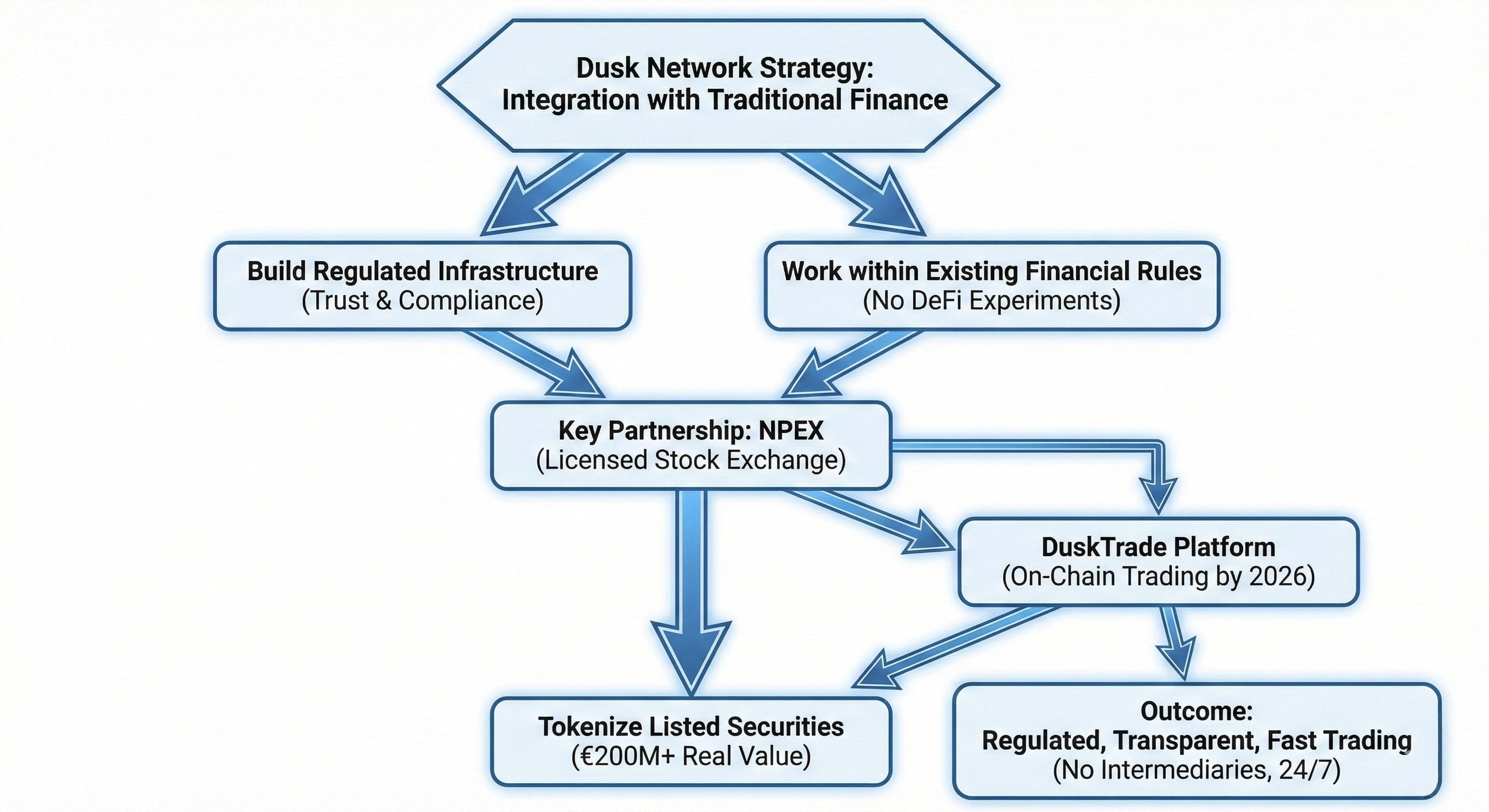
From a trading perspective, this is where things become even more interesting. By 2026, the DuskTrade platform is scheduled to go live, allowing users to trade these tokenized securities directly on-chain. Think about what that means in practical terms. Instead of relying on closed systems, limited trading hours, and heavy intermediaries, these assets can move with the speed and transparency of blockchain while still respecting compliance requirements. For traders and institutions alike, that combination is rare.
What stands out to me is the significance of this move for the network itself. This integration brings immediate, high-quality liquidity tied to real-world markets, not speculative tokens. At the same time, it acts as a real stress test for Dusk’s compliance-first design. Handling regulated securities on-chain is not forgiving. Every rule, every restriction, and every reporting requirement has to work flawlessly. There is no room for shortcuts.
In that sense, this partnership positions Dusk in a very unique role. It is not competing with exchanges or trying to become a flashy front-end brand. It is placing itself as the backend infrastructure for a regulated European stock exchange. That is a quiet position, but a powerful one. If it works as intended, it sets a precedent for how traditional finance can migrate to blockchain without losing control, trust, or legal clarity.
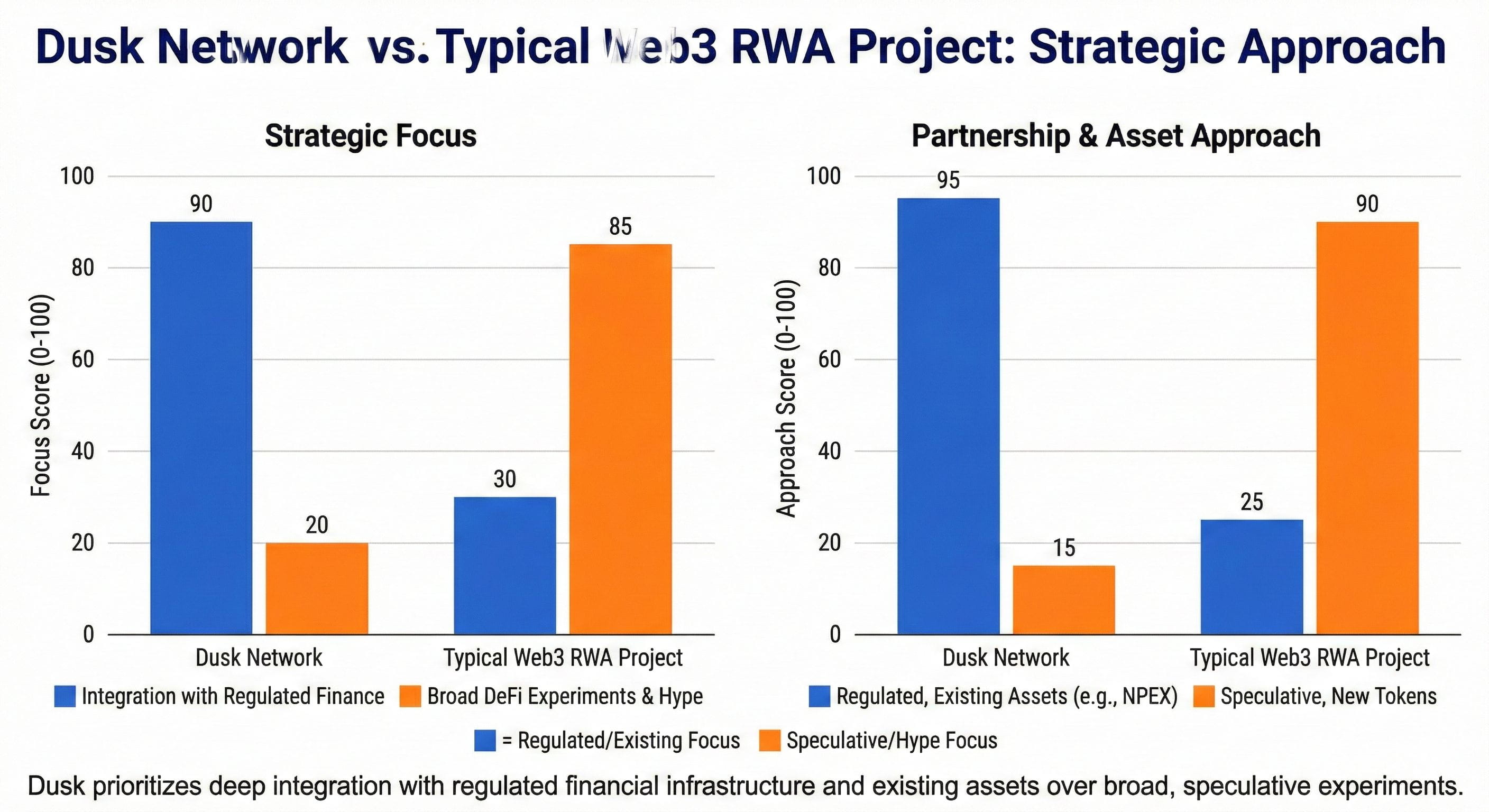
In my understanding, this is what makes Dusk’s Real-World Asset strategy different. It is not built on hype cycles or fast narratives. It is built on real institutions, real assets, and real trading environments. The NPEX integration is not just another partnership announcement. It is a signal that blockchain infrastructure is mature enough to handle the demands of regulated finance, and Dusk is positioning itself right at that intersection.
This approach may not attract instant attention from every corner of Web3, but over time, it could prove to be one of the most meaningful paths forward for blockchain adoption in the real financial world.
