

Blockchain adoption is often discussed in terms of apps, DeFi, and tokens. But the fundamental unit of real economic interaction is money movement — how value flows between people, businesses, and systems. Plasma reframes the narrative: instead of building a stack for arbitrary applications, it constructs a payment stack optimized for stablecoins and real-world value flows. This article explores how that stack is structured, and why it matters for global financial activity.
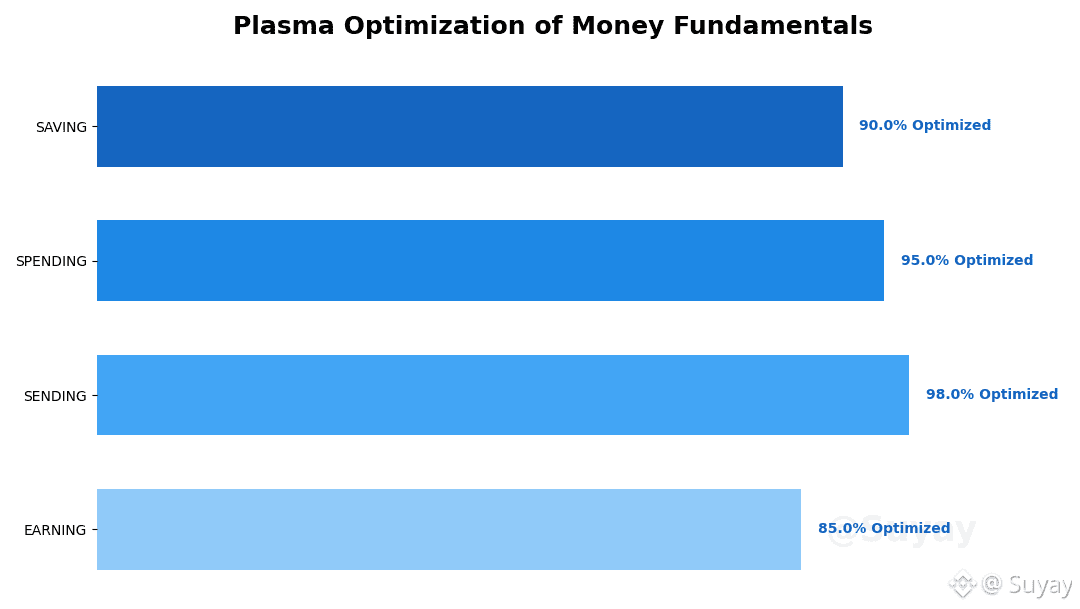
At its core, Plasma treats stablecoins as first-class citizens. Stablecoins present four key value propositions: permissionless access, programmability, low cost, and fast settlement. These properties enable stablecoins to function as digital money and serve as the backbone of a payment stack that supports saving, spending, sending, and earning — the four fundamental use cases of money itself.
Layer 1: settlement and base execution
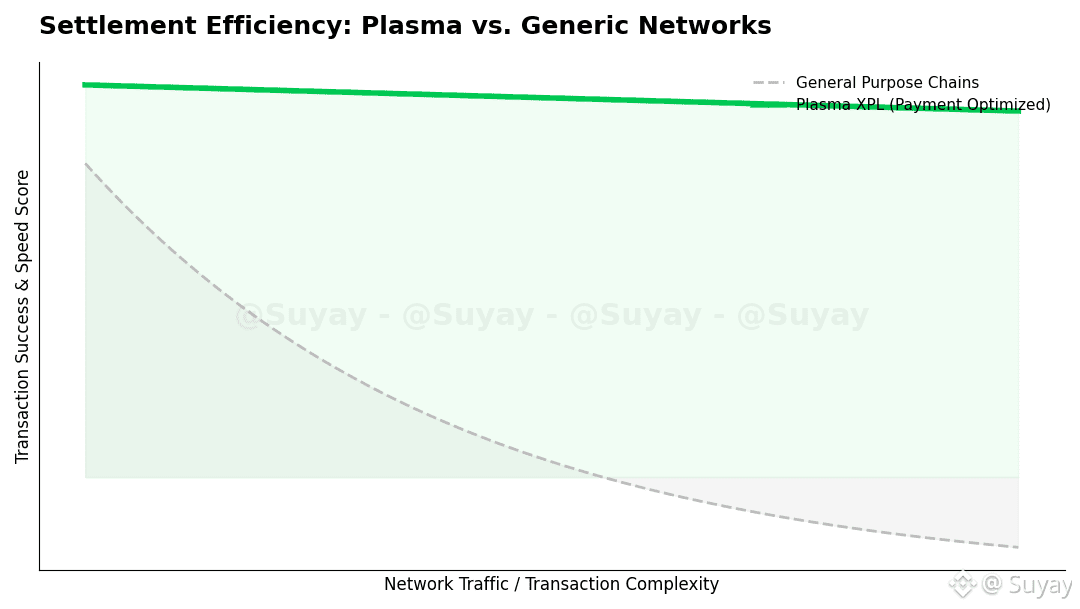
The payment stack begins at the settlement layer — the foundation where money actually moves. On Plasma, stablecoins like USD₮ are not treated as afterthoughts, but as base protocol elements. This design dramatically reduces friction: stablecoin transfers on Plasma can be fee-free at the protocol level (for USD₮), with near-instant finality and high throughput, enabling economic activity at virtually traditional payment-rail speeds.
These properties matter because they define the cost and predictability of the entire stack above. When the settlement layer is predictable and cheap, developers can build more complex money flows without being derailed by volatile fees or congestion.
Middleware: integration and APIs
Above settlement sits the middleware layer: tools and services that make money flows programmable and accessible. Plasma supports robust developer tooling, APIs, SDKs, and point-of-sale modules that allow seamless integration of stablecoin payments into applications, checkout systems, and financial products.
This includes support for payment partners such as international payout platforms, fx settlement engines, fiat-on/off ramps, and API-driven wallets that bridge legacy finance and blockchain rails. Partners listed in Plasma’s documentation span wallet platforms, cross-border payout services, crypto-to-fiat bridges, and global compliance interfaces — all essential for real-world money movement.
Middleware extends the settlement layer’s capabilities, turning raw value transfers into usable products: instant merchant payments, payroll systems, gig economy payouts, mobile wallets, and loyalty platforms. This layer is what translates blockchain primitives into real financial instruments.
Application layer: end-user experiences
At the top of the payment stack are services and experiences that interact with end users. These include wallets, merchant checkout systems, remittance apps, payroll interfaces, and fintech front ends that make sending and receiving money intuitive and accessible. Plasma’s payment stack supports these experiences with consistent rails that abstract away blockchain complexity.
For users, this means stablecoin money movement feels as natural as sending a text message or tapping a card — because the underlying rails are designed for payment, not experimentation.
Ecosystem dynamics and network effects
Real-world adoption depends on network effects. As payment flows increase, liquidity deepens and costs fall. This encourages more participants — merchants, fintechs, wallets — to integrate stablecoin rails. Recent ecosystem news highlights Plasma’s partnerships aimed at enhancing payment infrastructure and liquidity: collaborations with stablecoin issuance platforms and tools that bring institutional and retail flows into Plasma’s stack.
These real-world integrations show how the stack extends beyond technical design into a living economic system, connecting issuer, settlement, intermediary, and consumer layers.
Why Plasma’s stack matters
Unlike traditional blockchains that layer payments on top of a general-purpose platform, Plasma builds payments into the foundation. By engineering a stack where settlement, tooling, and interfaces are all payment-centric, the network lowers barriers for real money movement. This unlocks low-cost cross-border transfers, programmable merchant settlement, payroll engines, and financial products previously difficult to achieve with conventional rails.
The payment stack is Plasma’s answer to one of crypto’s oldest questions: how does blockchain deliver real economic value? For Plasma, the answer is clear — by structuring on-chain money flows in a way that mirrors how money works in the real world, and by enabling every layer of the stack to operate with stability, liquidity, and purpose.

