Imagine sending money across borders in under a second, with fees so low they're practically invisible, all while tapping into institutional-grade liquidity that's already handling billions. That's not some distant crypto dream—it's happening right now on Plasma, the stablecoin infrastructure reshaping how value moves in the real world. As someone who's been deep in the trenches of blockchain innovation, I've seen plenty of projects promise the moon, but Plasma delivers with a laser focus on practical, everyday utility that bridges DeFi with traditional finance.
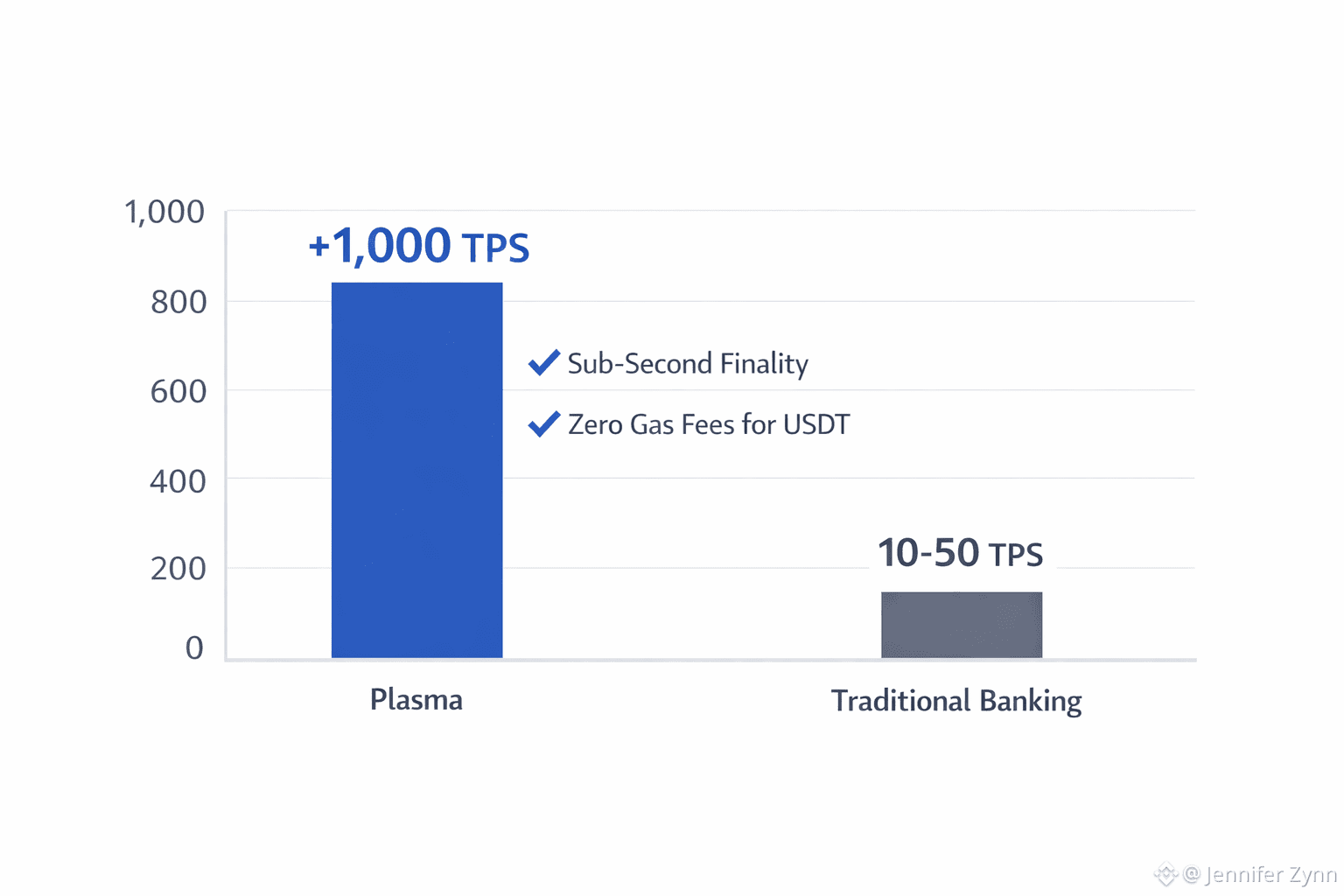
At its core, Plasma is engineered as a specialized Layer 1 blockchain optimized for stablecoin payments, leveraging a full EVM stack powered by Reth for seamless developer compatibility. This means Ethereum-based apps can deploy without a hitch, but with performance tuned for high-volume transfers. The PlasmaBFT consensus mechanism achieves sub-second finality, supporting over 1,000 transactions per second and block times under one second. It's anchored to Bitcoin for unmatched security and neutrality, minimizing trust assumptions in bridging while enabling stateless scalability. What sets it apart is the stablecoin-first economic model: gasless USDT transfers, where fees are paid directly in stablecoins, eliminating the need for volatile assets and aligning perfectly with dollar-denominated operations for businesses and institutions.
Diving deeper, Plasma's innovations in account abstraction and consensus optimization address real pain points in scalability. It introduces zero-fee stablecoin solutions for large-scale Web3 apps, integrating cross-chain liquidity to facilitate decentralized financial services. Competing head-to-head with solutions like INTMAX and Rollups, Plasma leads the modern Plasma camp by prioritizing payment scenarios and data availability performance without compromising security. For instance, its atomic settlement feature replaces outdated T+2 models in capital markets with instant, simultaneous asset and payment transfers, slashing settlement risks, collateral requirements, and back-office costs. This programmable infrastructure supports compliant, auditable transactions, making it ideal for regulated environments and hybrid setups that evolve industry standards.
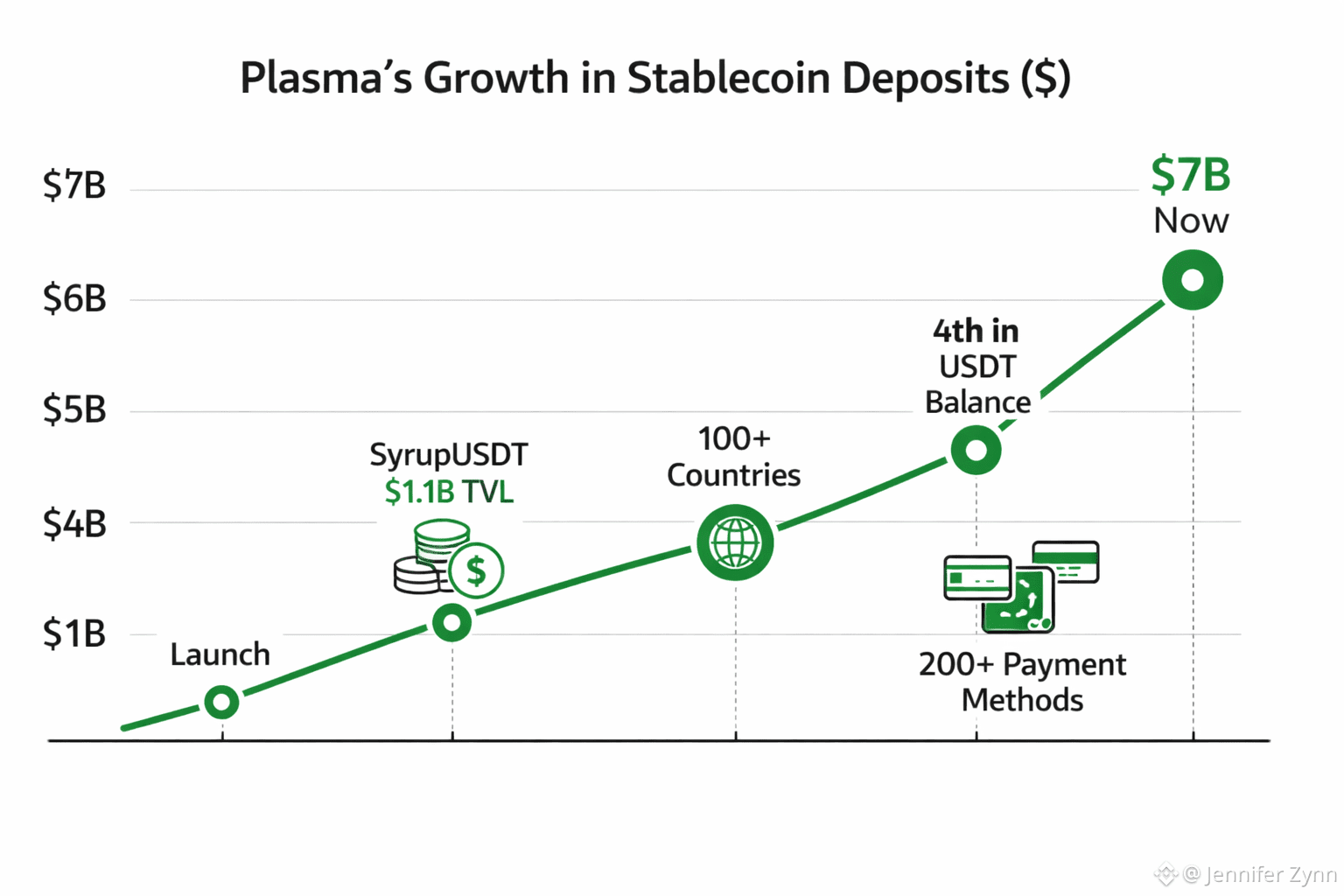
The real proof is in the adoption metrics and partnerships driving this ecosystem. Plasma holds $7 billion in stablecoin deposits across 25+ supported stablecoins, ranking as the fourth-largest network by USDT balance. It operates in over 100 countries, handling more than 100 currencies and integrating with 200+ payment methods. Recent integrations underscore its momentum: Confirmo processes over $80 million monthly for enterprise clients in e-commerce, trading, forex, and payroll, now accepting USDT on Plasma with zero gas fees. SyrupUSDT, in collaboration with Maple Finance, has surged to over $1.1 billion in TVL, offering institutional-grade onchain asset management. Fluid's architecture on Plasma provides deep stablecoin liquidity for builders, while CoWSwap enables MEV-protected swaps with zero gas fees.
Further expanding real-world utility, Rain allows spending USDT at 150 million+ merchants worldwide, and Holyheld supports card expenditures and bill payments via SEPA in 30+ countries. Oobit, backed by Tether, brings USDT to 100 million+ Visa merchants with instant merchant payouts. MassPay connects global merchant payouts in 200+ countries, establishing USDT as the default rail. On the yield front, Axis introduces USDx for resilient arbitrage returns, and EURØP by Schuman.io offers Euro-backed stablecoins with institutional yields through Upshift vaults. Even custodians like Cobo enable 500+ APAC institutions to run low-fee stablecoin payments, and exchanges like Kraken join over 30 others integrating Plasma's efficient rails.
Plasma's ecosystem is bolstered by strategic backers like Paolo Ardoino of Tether, U.S. Treasury Secretary Scott Bessent, former CFTC Chairman Chris Giancarlo, and Crypto and AI Czar David Sacks, plus over 100 partnerships that amplify its global reach. Tools like LocalPay open millions of Southeast Asian merchants to USDT, and Daylight's $50 million USDS and USDT DayFi vault turns deposits into energy infrastructure credits. Fractional assets shine too, with Tellura's COPR enabling 24/7 trading of custodian-held copper settled in USDT. Etherscan's integration simplifies exploration, cementing Plasma as a hub for transparent, efficient stablecoin flows.
What makes Plasma invaluable is how it disappears into the background—making stablecoin movements feel as normal as swiping a card, yet with blockchain's censorship resistance and speed. For developers, it's a playground for building primitives around remittances, payroll, treasury ops, and cross-border settlements. For users, it's predictable performance without the congestion of general-purpose chains. In a world where stablecoins dominate onchain transfers for their low fees and value stability, Plasma positions itself as the neutral settlement layer powering the next era of digital money. If you're exploring how blockchain can solve real financial frictions, Plasma's blend of tech prowess and practical integrations is where the action is.