
CZ's shocking speech at Davos: How will cryptocurrency end the 'iron rice bowl' of traditional finance?
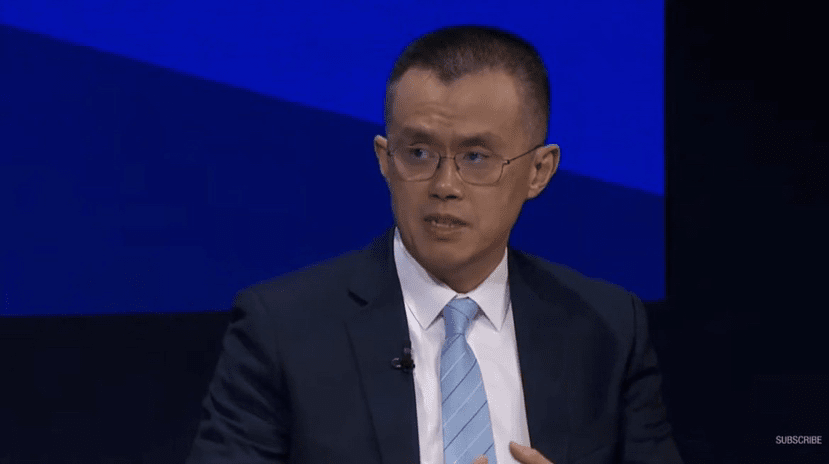
At the 2026 Davos World Economic Forum, a highly anticipated discussion quietly kicked off. The legendary figure from the cryptocurrency world, Binance founder CZ (Changpeng Zhao), shared the stage with century-old traditional banking giants.
The topic is no longer 'Should cryptocurrencies exist?' but rather strikes at the core: 'How does it integrate into the global financial system?' This dialogue marks a turning point for an era—cryptocurrency has transformed from a fringe player to a backbone of financial infrastructure.
CZ's speech was down-to-earth and pragmatic, avoiding empty conceptual hype and instead directly addressing the pain points of traditional finance, emphasizing practical applications and future potential.
I will summarize CZ's insightful content and expand it into an in-depth analysis, taking you behind the scenes to see how cryptocurrencies are quietly disrupting the global financial landscape. Ready? Let's find out.
First, CZ highlighted a core shift: cryptocurrencies have moved from "fringe experiments" to "global financial infrastructure."
Recalling the 2023 crypto market crash, that storm wiped out countless investors, yet Binance withstood the extreme test. CZ proudly shared data at a forum: at the peak of the crash, Binance's highest daily withdrawals reached $7 billion, accumulating to $14 billion within a week, while the system operated normally without any glitches. This stands in stark contrast to the traditional banking model. Traditional banks rely on fractional-reserve banking, making them vulnerable to collapse under liquidity shocks—think of the 2008 financial crisis, how many banks collapsed due to bank runs? CZ's argument hits the nail on the head: on-chain systems are inherently more robust because they are transparent, auditable, and free from human intervention. Imagine a future where the global financial system is fully on-chain; funds will flow with lightning speed. Binance has already surpassed traditional exchanges in trading volume—this isn't boasting, but data speaking for itself. Crypto is no longer "alternative finance," but "the real financial back-end." What does this transformation mean for ordinary people? It will lower the financial barriers, allowing hundreds of millions of people in developing countries to easily access global markets, instead of being kept out by high fees and bureaucratic approvals. The banking giants at Davos, after hearing this, have probably begun to reflect on the fragility of their own systems.
Next, CZ talked about a revolutionary innovation in the payments field: making crypto payments "invisible" and seamlessly bridged.
This is perhaps the most relatable part of the entire speech. Why are users reluctant to use cryptocurrency directly for purchases? Because it's too cumbersome! Who wants to switch wallets, confirm transactions, and wait several minutes before buying a cup of coffee? CZ's vision is: users pay with credit cards or Apple Pay, and the system automatically deducts the amount from their crypto wallets in the background, with merchants receiving fiat currency. The entire process is seamless for the user; crypto operates efficiently behind the scenes. This sounds like science fiction, but the technology is already in place. Binance has already tested similar bridging systems in several countries, such as in partnerships with Visa or Mastercard. Why is this so crucial? Because the key to mass adoption lies in "zero learning cost." Think of the widespread adoption of smartphones: people used apps without learning programming. Similarly, once crypto payments become widespread, explosive growth will be unstoppable. CZ predicts that once bridging technology matures, the global payments market will be reshaped. Traditional bank international remittances often take several days and incur fees as high as 5%, while crypto bridging only requires seconds of settlement with negligible fees. This is a boon for cross-border e-commerce, migrant workers, and SMEs. At the Davos Forum, CZ's viewpoint resonated with the traditional financial giants in the audience, who knew that if they didn't keep up, this trillion-dollar pie would be snatched away.
Asset tokenization is what CZ sees as the next trillion-dollar battleground.
He revealed that they are in talks with over a dozen governments to digitize physical assets such as real estate, bonds, and government bonds on the blockchain. This is not a small-scale operation, but a strategic transformation at the national level. The benefits of tokenization are obvious: a surge in liquidity, a sharp drop in costs, 24/7 trading, and no need for intermediary approvals. In traditional finance, buying and selling real estate often requires months of approval and layers of fees, but after being tokenized, everything becomes a digital asset that can be traded globally and split. For example, some US states have begun piloting real estate tokenization, allowing investors to buy "shares" of properties and trade them like stocks. CZ is optimistic about government-led tokenization because it can inject fresh blood into the old economy. Consider that the global bond market is over $100 trillion; if 10% were on the blockchain, it would release enormous liquidity. Traditional banks that cling to paper contracts and manual reviews will be left far behind by programmable finance. CZ's statement here reveals optimism: 2026 will be the year of tokenization's explosion, with institutions like BlackRock already involved, and the issuance of Bitcoin ETFs is just the beginning. In the future, your retirement savings and real estate investments may exist in the form of tokens, readily convertible to cash. This transformation will reshape wealth distribution, allowing ordinary people to participate in high-end asset investment, rather than having it monopolized by the elite.
The rise of AI agents has led CZ to position crypto as the "native currency of the future".
With the rapid development of AI technology, intelligent agents will autonomously handle transactions, investments, and payments without human intervention. CZ stated that crypto is the best partner for AI because it is digitally native, provides instant settlement, and is borderless. Imagine your AI assistant automatically optimizing your investment portfolio in the middle of the night: scanning the market, buying undervalued assets, transferring dividends, all running in crypto, doubling efficiency. Why not fiat currency? Because fiat currency is limited by bank operating hours, exchange rate fluctuations, and cross-border controls. In the AI era, machines need a 24/7 operating monetary system, and crypto perfectly fits the bill. At Davos, CZ's view sparked heated discussion—traditional banking giants began to worry that their role would be marginalized in the AI wave. Binance is already developing AI-friendly tools, such as automated wallets and smart contracts. In the future, AI agents may manage global supply chains, financial derivatives, and even national budgets. CZ's prediction is not unfounded: according to a McKinsey report, the application of AI in the financial sector will create trillions of dollars in value, and crypto is the fuel for that. This presents a huge opportunity for Web3 practitioners, but it also serves as a reminder that regulation needs to keep pace to prevent the misuse of AI for money laundering.
Regarding regulation, CZ holds a realistic view: it is too early to have a unified global regulatory system.
Rules vary widely across countries, some cracking down on money laundering, others imposing heavy taxes, and still others restricting licensing. A one-size-fits-all approach only stifles innovation. CZ suggests implementing a "regulatory passport"—a cross-border mutual recognition mechanism—to allow compliant companies to expand easily. He mentioned his own amnesty in the US as a signal of a policy shift: regulation is softening, but the pace varies from country to country. At the Davos Forum, these words brought relief to banking giants—they feared overly lenient regulations but also knew that crypto was irreversible. CZ's experience is a case in point: from Binance's compliance journey to his current freedom, he proved that cooperation, not confrontation, is the way forward. In the future, regulation will focus on anti-money laundering and consumer protection, rather than prohibiting innovation. This is good news for the crypto industry: under a stable framework, institutional funds will flock in.
Finally, CZ looked ahead to the arrival of a supercycle, but emphasized that "we should look at actions rather than empty talk."
Institutional giants like BlackRock and JP Morgan have gone from skepticism to supporters, demonstrating that crypto has solved the problem for 140 million unbanked people globally. Binance's user base growing from zero to 300 million is living proof of this. Trump's supportive policies on crypto, institutional investment, and the widespread adoption of crypto bridging will collectively drive a surge of capital. This isn't about getting rich quick through cryptocurrency speculation; it's about truly transforming the financial system, allowing money to flow faster and more equitably. While CZ didn't provide a specific timeline, he hinted that 2026 will be a pivotal year. The atmosphere at Davos has changed: traditional finance is no longer hostile but rather seeking integration.
CZ's speech was like a breath of fresh air, directly addressing pain points and not selling unrealistic dreams. The traditional banking "iron rice bowl" is facing disruption, and encryption will reshape everything. As a Web3 enthusiast, I believe this is just the beginning. The future is here; are you ready to embrace it?#达沃斯世界经济论坛2026 #CZ

